‘Broken-up’ Roll Cake with Strawberry-Apple Compote

Yesterday marked my mother’s birthday. That officially makes her 26 years older than me, the cumulative years brimming with untold betterness, wisdom, coolness. My solid, grounded, pretty momma, whose self-efficiency and absurd organisational skills combined with favourable wit and wackiness make her the paragon of cool. She probably cries at night over why I haven’t reached that particular degree of coolness.

Unsurprisingly, I made cake. Cake is just a little dot in the field of foodstuffs she likes, the carb fiend that she is. She’s the sort who can sit back, legs propped on the counter, cradling a baguette stuffed with salted butter and marmalade. Lunch=sorted. She’s of solid character with an even more solid appetite. Cake to her is either meh or MMPH; she knows exactly when something is good or not. Thankfully, this sufficed, and accompanied the night’s celebration perfectly. Tip#1: I imagine that this particular cake, what with all its strawberry and apple and light-heartedness, would go superbly with a tall, thin glass of champagne!

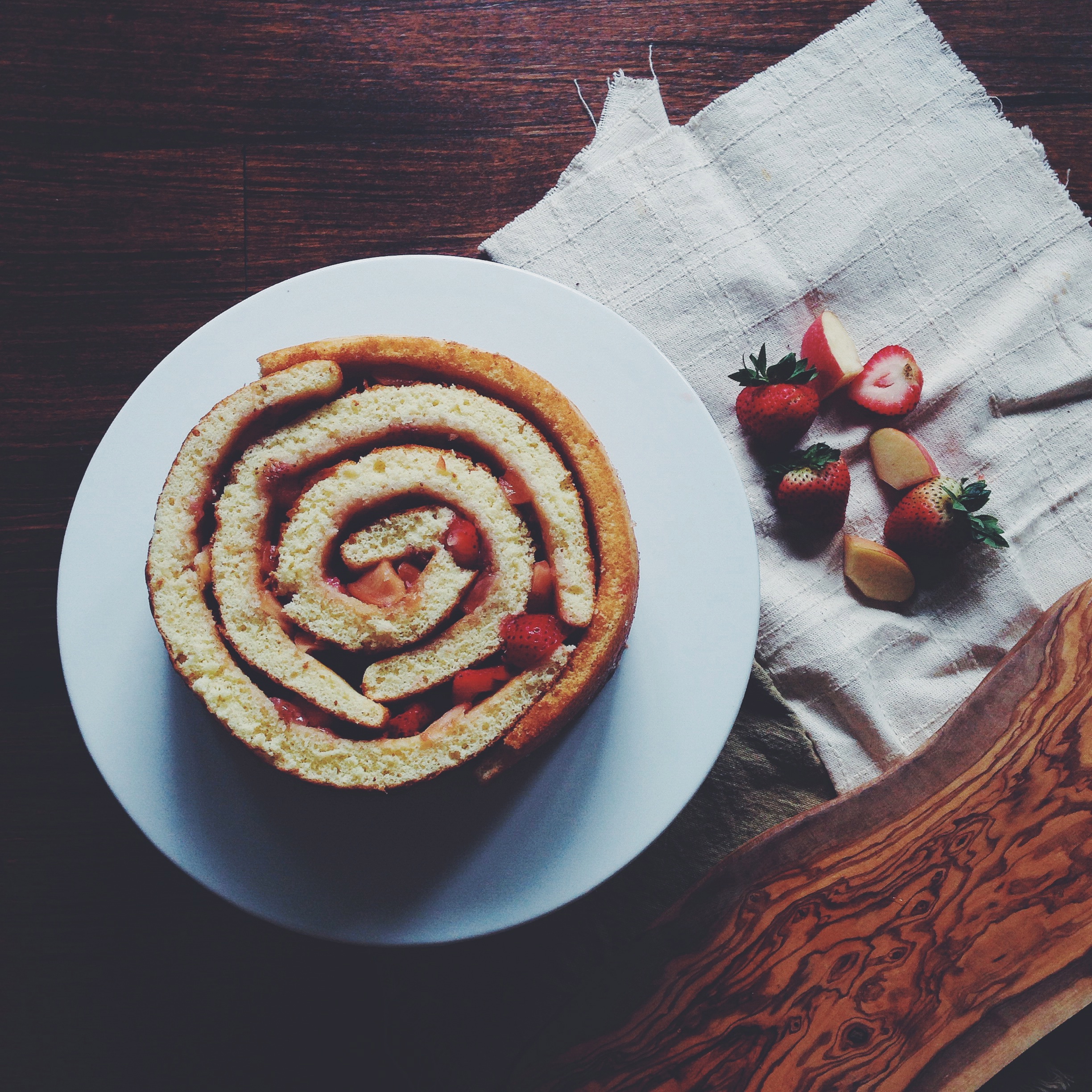
It’s funny to look at these pictures now. I didn’t intend to wax lyrical over anything, I never meant for it to work, this was supposed to be a fingers-crossed-I-hope-it’s-alright-and-thank-god-mummy-wont-give-a-damn sort of experiment. This broken-up roll cake, as I have termed it, is indeed meant to be broken up. I figured that if it resembled a monster slice of swiss roll from the top, it would be all too easy for the whole thing to unravel from a single, exposed ends. So the mind was made up; I decided to make a simple sponge, cut it into vertical strips, and roll each around one another. The best part is that if any breakage occurs (spot the slight one in the middle coil), you can slot in some cut strawberries to add to the theme, the whimsical grandeur. Rusticity doesn’t deserve any bashing.

Alone, it resembles a maze in action, but really is so easy to put together. The cake itself takes a mere 5 minutes, though the strawberry-apple compote of course takes a little while longer. Make the compote a day ahead if you wish, to ensure that it’s fully cool before using on the cake. The sponge is light, sweet, but with enough body to withstand the mild rolling, and I love how the compote moistens the tall sides, making everything ever so slightly tart.
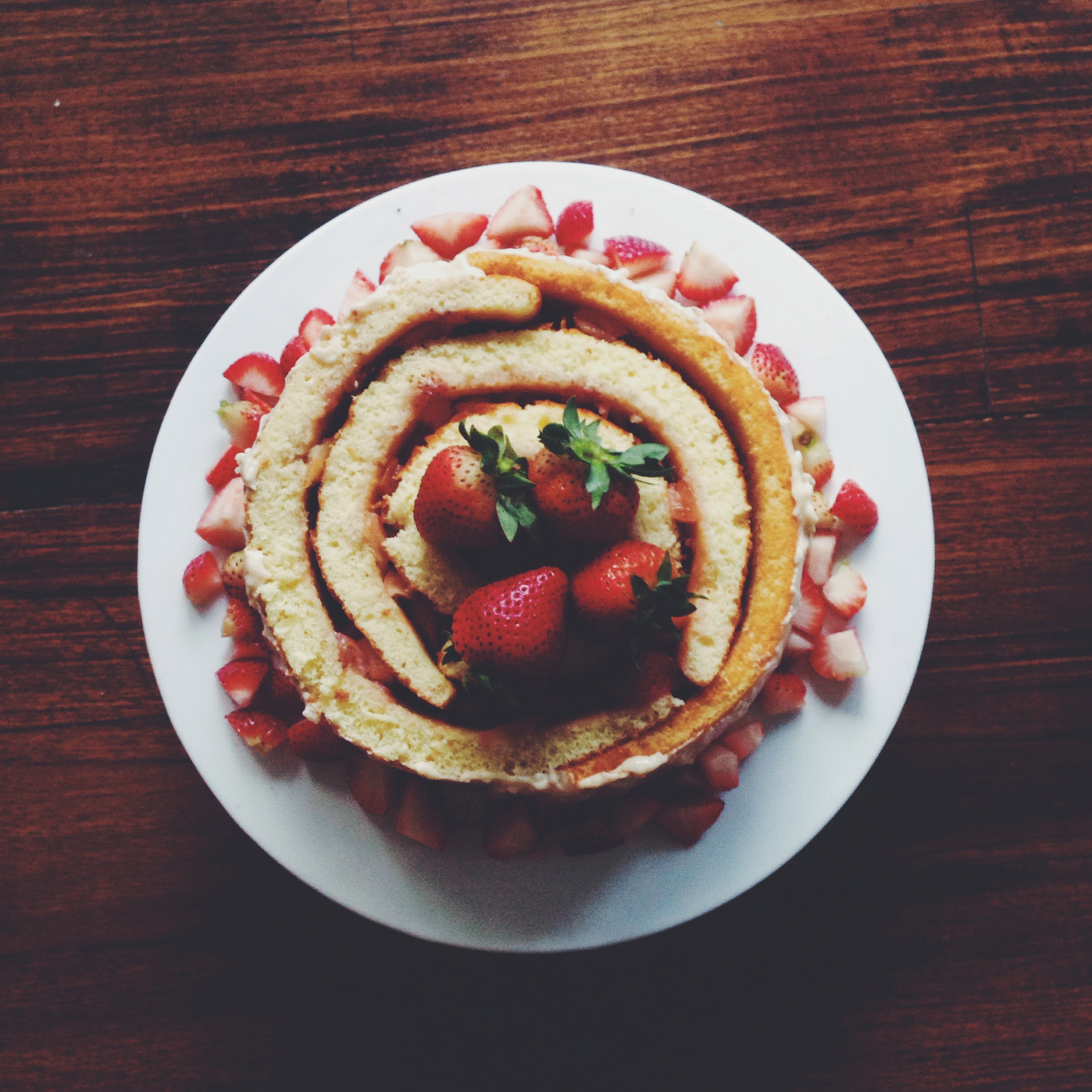
‘Broken-up’ Roll Cake with Strawberry-Apple Compote and Strawberry Cream Cheese Buttercream (makes one 9-inch wide cake)

Ingredients for the cake:

120g (3/4 cup+ 1tbsp) all-purpose flour

1 tsp baking powder

pinch of salt

3 eggs

145g (2/3 cup) white sugar, and set aside 2 tablespoons of extra sugar in a small bowl

1/2 tbsp water

Ingredients for strawberry-apple compote:

220g apple, chopped into small pieces

120g strawberries, chopped into small pieces, and reserve a few whole strawberries for garnish.

100g (half cup) white caster sugar

1 tsp vanilla extract

2 tsp cornstarch mixed with a tablespoon of water in a small bowl.

Ingredients for strawberry cream cheese buttercream:

50g soft, unsalted butter

100g icing sugar

75g cream cheese, at room temperature (or just microwave on high for half a minute if cold from the fridge)

30g pureed strawberries (or take same mass of strawberries, microwave on high for a few minutes and then mash with a fork)

First, make the strawberry-apple compote. Put all the chopped fruit, vanilla extract and sugar in a a medium saucepan and place the pan on medium-high heat. Stir with a wooden spoon until you can see that the sugar has dissolved(no more visible crystals/lumps of the stuff). At this point, the juices from the strawberries will have started to leak. Reduce the heat to medium-low and let the mixture cook for 15-20 minutes, stirring occasionally so the heat is spread out throughout the mass of fruit and sugar. Just before taking off the heat, pour in the cornstarch-water mixture and mix in thoroughly. The mixture will thicken and lighten slightly. Take off the heat and let cool completely by placing it in the fridge. If you’re making this a day ahead, cover with cling film and let rest in the fridge overnight.

Now for the roll cake. Preheat your oven to 250C (480F) (I tried my hand at the same method used for Linda L’s vertical roll cake!). Grease and line a large baking sheet with parchment paper. In a medium bowl, whisk together the flour, baking powder and salt, and set aside. In another larger bowl and with an electrical whisk or beater, beat together the eggs and sugar until the mixture doubles in volume and is incredibly pale and fluffy. This will take around 7-10 minutes, depending on the temperature of where you live and how powerful your beaters are. The beating is done when you lift your beaters and the mixture is visibly more ‘sticky’ than how it first appeared, and leaves a ribbon-like trail before quickly dissolving into the rest of the mixture again. Once you reach this stage, tip in (or sift, if you’re anal like me) the dry mixture, add the water, and gently fold everything together using a rubber spatula. Make sure all the dry mix is evenly incorporated and you end up with a smooth, aerated, pale batter. Pour this onto your greased and lined pan and bake for 5 minutes, no more and no less, in the oven.

For the frosting, beat together the butter and half of the powdered sugar in a large bowl. then, beat in the cream cheese and pureed strawberries. The mixture will look too liquidy to handle. At this point, beat in the rest of the icing sugar, making sure to scrape down the sides with a spatula, combining everything nicely and evenly. Pop the bowl in the fridge for later usage.

Once the cake is finished, remove it from the oven and let the pan cool on a wire rack. Sprinkle the top with the 2 tablespoons of sugar you reserved at the start, and then sprinkle your counter with a little extra sugar. Once the cake is fully cool, carefully tip it onto your counter, so that the top is facing down. Remove the pan (it helps to tap the pan with a knife first) and the parchment paper. The underside of the cake should look slightly blotchy; pale and brown here and there. Spread the cooled strawberry-apple compote on the cake, using your fingers to place all the small bits of fruit evenly if you wish. Make sure all the juices soak into the cake’s entire surface. With a sharp knife, cut the cake into four strips, starting from the short side. Take one strip and start rolling normally from the top. Then, take the next strip and place one of its ends near the end of the first strip, as you can see from the picture above. Wrap it around the first strip. Repeat with the 3rd and 4th strips. Once you’re done with the last strip, wrap the sides of the cake with cling film and place in the fridge for at least an hour, or overnight if making a day ahead.

Once ready to serve, take an offset spatula and spread the strawberry cream cheese buttercream along the sides of the cake. This buttercream is softer and less malleable than your usual buttercream thanks to the puree and cream cheese, so it must be stored in the fridge (on your cake stand) right up until serving. Place a few fresh strawberries on top for extra garnish, if you wish.

Almond Butter Cookies

A. B. C. Should I continue with D, E, and F?

Dense, Easy, Flourless. WOW that went down well. I swore that would take longer than expected.

I never meant to do it– promise. This Almond Butter Cookie action (hopefully the acronym stuck the first time you read it) pounced on me instead of the other way round. People have things for things, and my thing yesterday morning was almond butter. I eased a dribble down a side of toast, drizzled on some honey, then some course sea salt. It’s easy to contemplate life over breakfast. Almond butter honey toast is magical. Why not turn your jar into a batch of bloody easy cookies?

Processed with VSCOcam with f2 preset

The very next morning, I decided to have one for myself with some newly bought macadamia butter (yes! It’s real!), raspberry jam, and more chopped almonds. Exquisite. Sometimes simplicity is key, but the lavish combination didn’t hurt this aching almond affinity.

I’ll give you just a line: Dense, chewy, buttery (in the most nourishing sense). These cookies are slightly crumbly due to the natural texture of raw almond butter, hence putting it just a rung up on the fragility ladder, but the lovely squidgy interior of slight under-doneness, packed with lush, nutty almond flavour, makes this one bowl affair way worth it. Alright. A couple of notes on this jazzed up loveliness:

– once the cookies are baked, leave them! For a half hour or so before touching. They are soft and rather fragile once out of the oven, so you don’t want to fiddle with them too much.

– use raw, natural almond butter, and make sure that all the natural oil (which usually rests on top of the more solid mass of almond butter in the jar) is thoroughly mixed in, using a knife or spoon.

– you may add whatever you like after getting the base recipe straight, be it chocolate chips and almonds (as in my case), or perhaps crushed biscuits (?) and sea salt. The versatility of a cookie is something to herald and marvel at. It’s pretty impossible to exhaust all possibilities and combinations..

Almond Butter Cookies (flourless, makes around 16 medium cookies)

Ingredients

1 cup almond butter

1 teaspoon fine salt

75g white caster sugar

65g soft, light brown sugar

1 tsp baking soda

1 egg

Optional: half a cup of chocolate chips/ nuts/ crushed biscuits

Preheat your oven to 177C (350F), and line and grease 2 cookie sheets. In a bowl, mix together all the ingredients listed above (yes, in that order, if you wish). Using 2 tablespoons, spoon a tablespoonful of mixture onto the cookie sheet(s), each circle of batter placed at least an inch apart from each other. There is no need to flatten the cookies as they will spread out on their own during the baking process; they should be slightly flattened balls of almond buttery goodness on the baking sheet. Bake in the preheated oven for 9-11 minutes. Mine were done by 9 minutes. Leave to cool on a wire rack for at least a half hour before touching, and then serve with glee.

Naked Moist Chocolate Cake with Salted Caramel Creme Fraiche Frosting

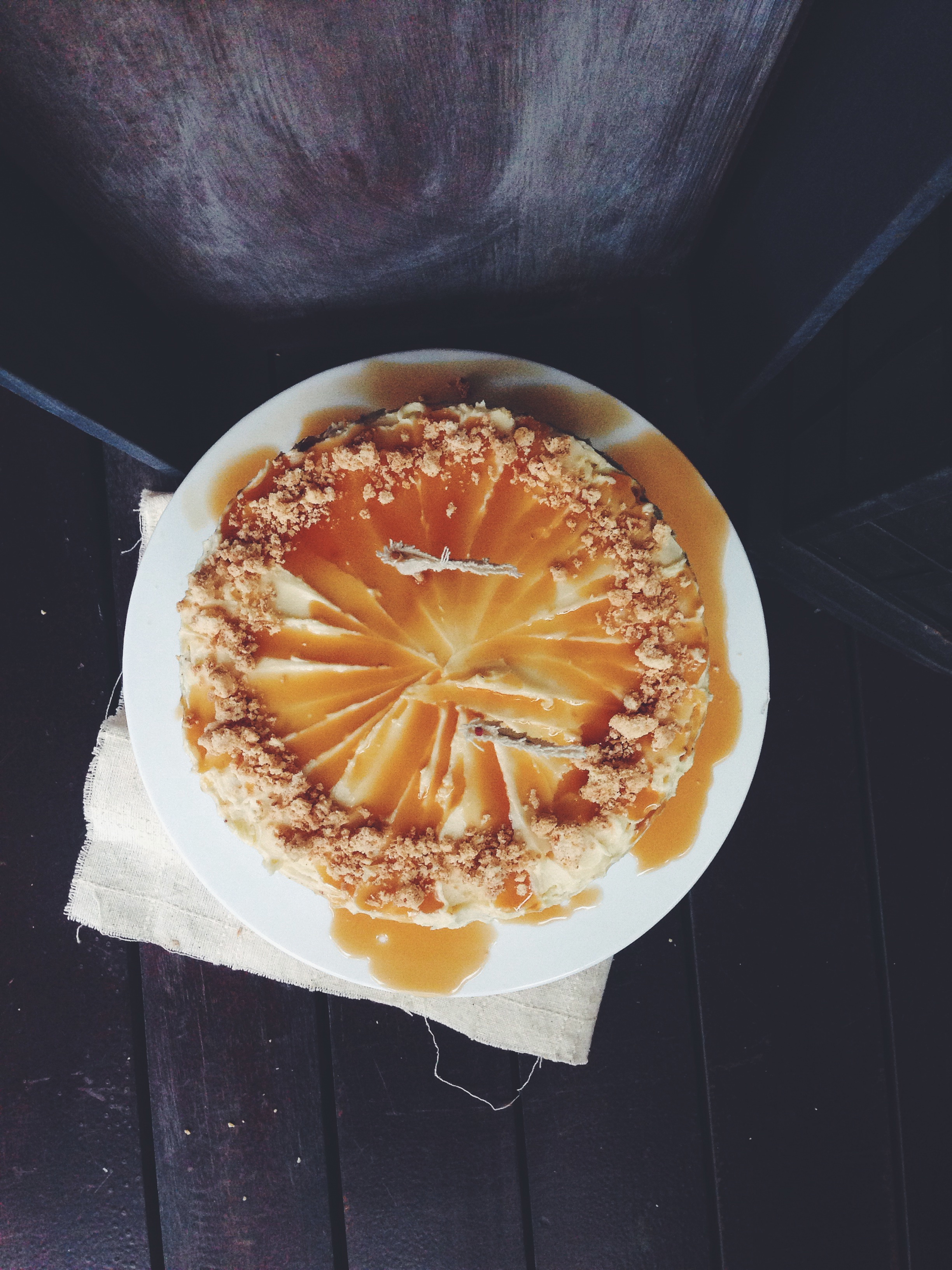
Thunder now. I’m loving the endless precipitation in this otherwise stifling furnace. When trivialities seem to take hold of life, there are always certain important people to bring me back down to Earth, and there’s, well, cake. Hey, childhood fancies, it’s been a while. Processed with VSCOcam with f2 preset Processed with VSCOcam with f2 preset I think it only de rigueur to celebrate a special occasion with something a little more elaborate. ‘F’ and ‘L’ are the initials of someone pretty damn special in my life, and special people deserve something a little more elaborate, more celebratory, more.. regal if a little rustic. Chocolate and salted caramel has been done before, tried and tested, stamped with approval, signed off in girlish curlicues. But I daresay this endeavour is a bit more wild, and not quite so predictable in taste and texture with the addition of crushed meringue and lavish drizzles of homemade salted caramel. The waterfall effect of the buttercream frosting does a bit of justice to the ‘naked’ cake; I here term it as such because the ridges and painfully thin outer layer of frosting allow the bottom halves of each chocolate cake layer to be seen, for a subtle gradient effect, the salted caramel running slowly between the ridges, cutting through the purposeful flaw. Mimicking the movement of pale frosting. Godspeed. Processed with VSCOcam with f2 preset Processed with VSCOcam with f2 preset If you are wondering why the two pictures above look a mess, I’d gladly point the finger at that solo stack of plates. An unfinished crumb coat was almost completely wrecked when the stack of three layers, frosting in tact between each, toppled over and collided into the side of the stack. But this cake held its own, unflinching. Sometimes, failures or mishaps really do prove someone, or something’s worth. Despite the delicate moisture of the cake, its sweet and slightly bouncy crumb, the collision underscored a hidden robustness, making me hold this cake in the highest regard. It deserved to be treated right, after not letting me down. Processed with VSCOcam with f2 preset Processed with VSCOcam with f2 preset Processed with VSCOcam with f2 preset This amalgamation of flavours imparts subtle, simple decadence. The chocolate cake of our childhoods is wrapped with the familiar indulgence of sweet and salty caramel, with a bit of zip thanks to a squeeze of lemon and fresh Maldon. The first time I tried the cake with all its components, I did think the salted caramel crème fraîche frosting lacked oopmph, my tongue betraying the anticipation of a more sophisticated flavour profile. Hence, I did a mini batch of frosting after this cake was made, altering the salt and creme fraiche content to taste. In all honesty, a slice of this stuff is good warm or cold, and can be stored for at least a week in a fridge, or a couple of days at room temperature. And finally, I really don’t know what could possibly beat fresh, homemade salted caramel…? Moist Chocolate Cake With A Salted Caramel Creme Fraiche Frosting (makes a three-layer, 8-inch wide cake) For the cake: (cake recipe adapted from here) 300g (3 cups) cake flour, or all-purpose flour if you don’t have cake flour on hand 300g (3 cups) white caster sugar 150g (1 1/4 cups) cocoa powder 3 tsp baking soda half tsp of fine salt 1 1/2 teaspoons baking powder 380ml (around 1 1/2 cups) buttermilk 180ml vegetable oil 3 eggs at room temperature 2 tbsp vanilla extract 1 1/2 cups (370ml) freshly brewed coffee For the salted caramel frosting: 340g salted butter 4 tbsp créme fraiche 980g powdered sugar 180ml (slightly less than 3/4 of a cup) of salted caramel (ingredients for this down below) For the salted caramel (recipe adapted from personal trials): 1 tbsp light corn syrup 5 tbsp (75ml) water 1 tsp vanilla 125ml (around half a cup) of heavy cream 110g (1/2 cup) white sugar juice of half a lemon (approximately a teaspoon) 1 tsp fine sea salt Preheat the oven to 177C (350F) and line three 8-inch circular cake pans with parchment paper (trace around each pan with pencil on the parchment paper and then cut out neatly). Spray the bottoms of the pan before laying on each piece of parchment, and then spray lightly again. Set these pans aside. In the large bowl of an electric mixer fitted with a paddle attachment, sift in the dry ingredients– cocoa powder, flour, sugar, baking powder, baking soda and salt. Stir on low speed until combined. The same can be done with just a large bowl and a whisk if you don’t have an electric mixer. In a separate medium bowl, whisk together the buttermilk, oil, vanilla and eggs. Stir in the fresh coffee. With the mixer on low speed (or without a mixer), add the wet mixture into the dry. Use a spatula to scrape down the sides of your bowl and make sure everything is well combined. The batter should be sticky, dark, glossy and liquidy. In fact, the wetter, the better. If your bowl of batter looks too dry, or drops off the back of your spoon or paddle too slowly (it shouldn’t really ‘drop’ at all, really), add at least 2 tablespoons of milk. Drop each pan on your counter to knock out excess air bubbles. Use a weighing scale to ensure there’s an equal amount of batter in each pan. For this recipe, there was around 750g of lush chocolate batter in each pan, and each layer is rather thick. Place the pans in the oven (you can place 2 in first if your oven can’t fit three, which is usually the case, and then pop the last one in afterwards). Bake for 35-40 minutes, before removing from the oven and let cool on wire racks. Mine took 36 minutes, and a wooden skewer inserted into the centre of the pan should come out dry, with a few moist crumbs clinging to the very tip. While the cakes bake, make the salted caramel. Put the corn syrup, water and sugar in a saucepan and place over medium heat. Stir together with a wooden spoon and let the mixture come to boil. In a separate medium bowl, mix together the lemon juice (add less if you like your salted caramel less ‘lemony’), vanilla and cream. Once the mixture in the pan comes to a boil, stop stirring (to prevent crystallisation) and let boil for a while. This will take at least 5 minutes or so. If it looks like one part of the pan is turning darker faster than the other parts, then gently swirl the pan to distribute the heat and quicken the chemical reaction. Slowly, the sugars will all caramelise and the whole mixture will suddenly turn a dark amber. At this point, turn off the heat and add the cream mixture. Stir in the salt to taste. The mixture will bubble almost immediately, before lightening and turning a lighter caramel shade. If the mixture seizes, don’t fret!! Simply put the pan back on a low heat and stir until everything amalgamates nicely again, which will take 2-3 minutes. All is good, all is good. Make the buttercream. In an electrical or handheld mixer, beat the salted butter, which should be slightly cold but not too frigid, and the créme fraiche, until pale, creamy and fluffy. Sift in the icing sugar in thirds, and beat well to combine. Add half a cup of salted caramel (125ml, or slightly more, all to taste)  and beat briefly to distribute the caramel’s colour and flavour. The buttercream should be smooth and not too runny, so I suggest adding the salted caramel bit by bit to get the right consistency. Once the cakes are cool, assemble. Remove the circular pieces of parchment from the bottoms of the cooled cakes, and place one in the middle of a cake stand. Using a third-cup measurement, measure out a third of a cup of buttercream and spread onto the first layer. Place a little more on top if the layer of frosting doesn’t look thick enough. Place the second layer on the first, and do the same. Repeat with the third layer, but this time, spread more buttercream down along the breadth of the cake, creating a thin crumb coat to catch any excess crumbs. Let the whole cake set in the fridge with the crumb coat for at least a couple of hours, or overnight. After this period, use more buttercream to cover up any obvious bits of brown on the outside. Use the blunt edge of a butter knife to create the ridged, naked, waterfall effect, going from the bottom up. It’s much easier than how it might read here, I promise! In any case, the decoration is entirely up to you. Once you have run the butter knife up along the sides for the entire circumference of the cake, do the same for the top, but direct the butter knife movement towards the centre, so you get the ‘wheel’ effect, as can be seen in the third last photo above. Drizzle the top with leftover salted caramel and, if you wish, crumbled biscuits of meringue.

Breakfast Special: Try This Now

Processed with VSCOcam with f2 preset

The gap in your knowledge must be filled. Certain Eureka! moments cannot, must not cease to be conveyed to the masses (however small my audience is; don’t want to sound all high and mighty here). I like discoveries and surprises, be it with regard to random tidbits of information I come across on the net or in books, or when I put two and two together in the kitchen and suddenly I get five but it works. Unless you dislike bananas or yoghurt or, well, butternut squash (sigh), I’m (almost) on my knees begging you to put the three together.

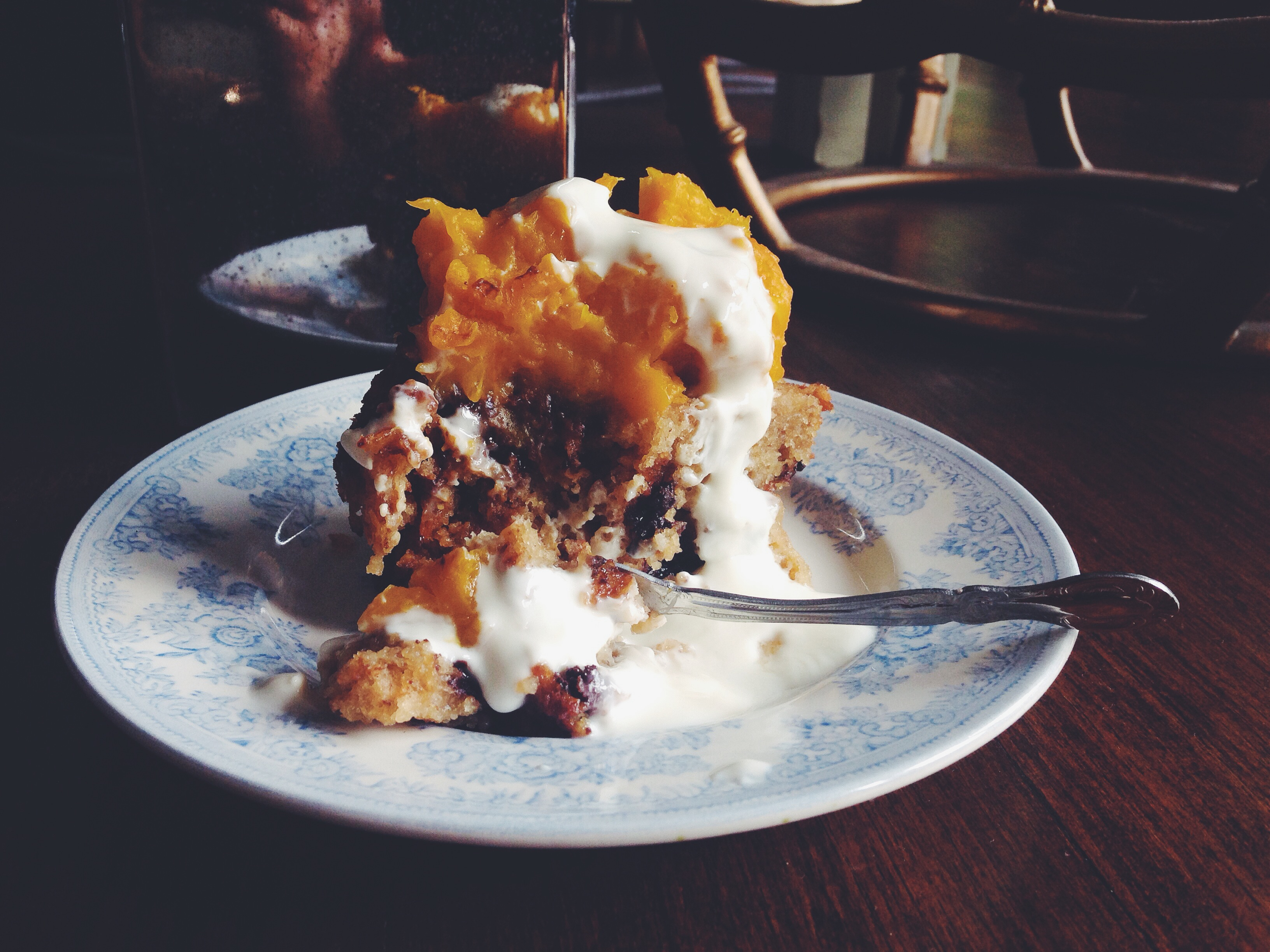
What you see above, friends, is really a simple construction: a thick slice of the bestest, moistest, chocolate chip banana bread cut in half and stacked, topped with homemade butternut squash candy puree (oh you just wait), drizzled with plain yoghurt, and a crumbled leftover brownie. I have already posted the recipe for two of those components, the only thing left is the squash candy purée. I learnt the recipe from a family member, after watching her cook the stuff and label it a ‘Filipino delight’. It was a little hard to adapt this because she doesn’t measure anything, however after just one spoonful of the delightful stuff, I can see why she does it the way she does– it’s all according to taste, and how sweet your butternut squashes are in the first place. What you get is a rich, thick, sweet plateful of orange purée. It’s like a healthy orh nee, or yam paste, but with a distinct squash flavour and undertones of coconut!

Processed with VSCOcam with f2 preset Processed with VSCOcam with f2 preset

You may find the recipes for the moist banana bread (the recipe yields a plain loaf, but I threw in a cup of chocolate chips for extra goo and decadence; the chocolate also makes the perfect pairing with the banana here) and the brownie here and here. The brownie recipe was written to incorporate an additional cream cheese swirl, but I used salted caramel in place of that this time. Bits and bobs of sweet, salty goo. You may also leave that out, or you may wish to leave out the brownie component altogether, which would be just as sublime (see pictures right above).

Butternut Squash Candy Purée (makes enough for 2 servings)

one large butternut squash

240ml water

200-240ml coconut milk

3-5 tablespoons of light/dark brown sugar (range is due to difference in taste and the natural sweetness of the butternut squash you have on hand)

half teaspoon of salt

In a heavyset saucepan, add the water, salt and butternut squash, turn on the heat and let everything come to a boil. This will take around 10-15 minutes. Once boiled and the butternut squash is soft and tender, use a large spoon or potato masher and mash the butternut squash in with the water. Reduce the heat a little to medium and add the coconut milk once most of the water has evaporated. At this point, add however much sugar you want, according to taste. Mix on medium heat for another 5-10 minutes, until the mixture is thick and smooth. Pour into a container and let cool before serving. I personally think this is best served cold, so if you wish, make this a day ahead and scoop it right out of the fridge the following morning.

Assembly: Take one slice of moist banana bread, top with the cold (or hot) squash purée, then drizzle on some plain yoghurt (vanilla or Greek works well), and top with broken bits of brownie.

Hot Cross Cake Cookies

Processed with VSCOcam with f2 preset

Sometimes things get to your head. Sometimes you mean for something to turn out one way, but thanks to some tiny, sudden instinct, or some recent experience with another different but wonderful foodstuff, elements which you never meant to blend together end up doing just that. Sometimes, that’s ok. Like this cookie.

Processed with VSCOcam with f2 preset Processed with VSCOcam with f2 preset Processed with VSCOcam with f2 preset

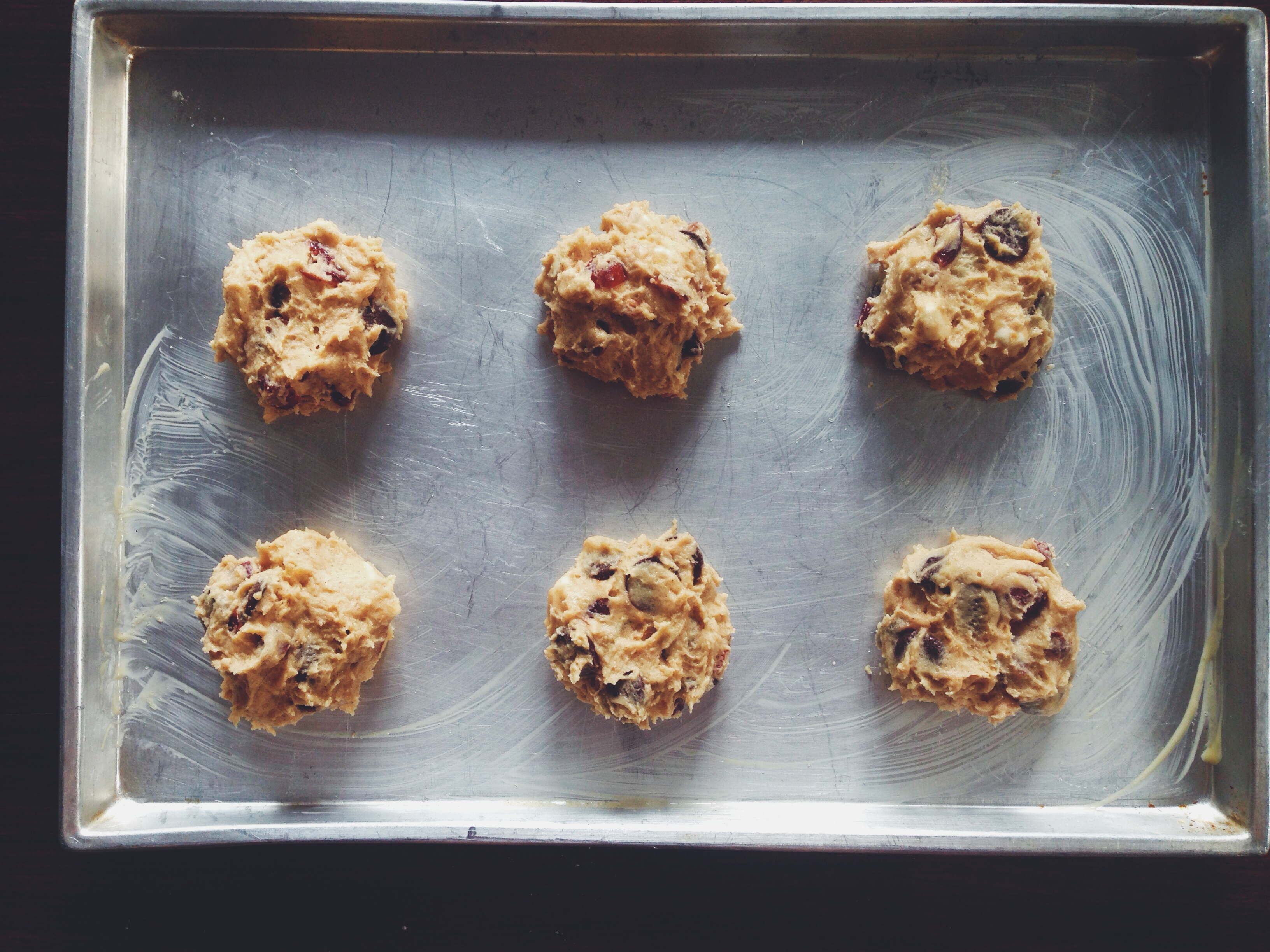
I never was a fan of fluffy, cakey cookies. I am a hard advocate of pin-thin, dense, chewy cookies, all nicely ridged round the edges and squidgy, half-baked in the middle. You could press the middle and your finger mark will stay. That chewy and squidgy (I love the word squidgy). I felt like doing something over the Easter weekend, but the entire of Saturday and Sunday was a blur, a hectic mess. A jumble of egg hunts, a scramble to feed my sisters and her friends breakfast (pancakes, if you’re wondering), a desperate longing for time cooped up reading in my room. Monday morning called for something dedicated to this holy occasion, but nothing too orthodox. Without much time on my hands, I resorted to cookies, a category I haven’t played with in what feels like forever. I had a gorgeous slice of sponge cake from (goodness knows) somewhere over the Easter weekend, and I guess that theme of airy lightness fed into this experiment. But I’m grateful for the mistake– I think the fluffy nature of this cookie (hence the ‘cake’ before the ‘cookie’ in the title) allows the more stuff to be, well, stuffed into each little cookie. Ah, the stuff. Good stuff. I’ll talk about the stuff.

Processed with VSCOcam with f2 preset Processed with VSCOcam with f2 preset Processed with VSCOcam with f2 preset

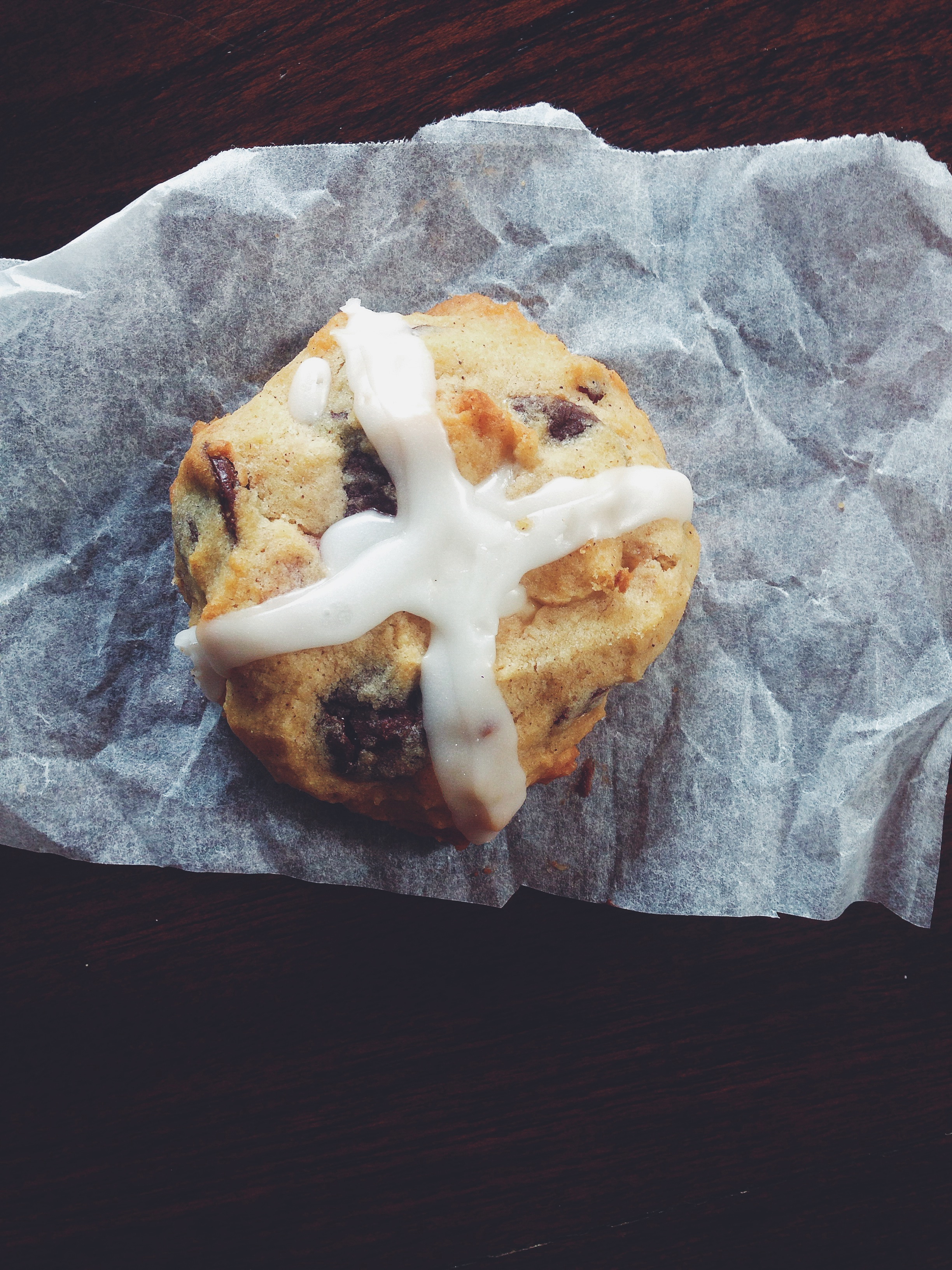
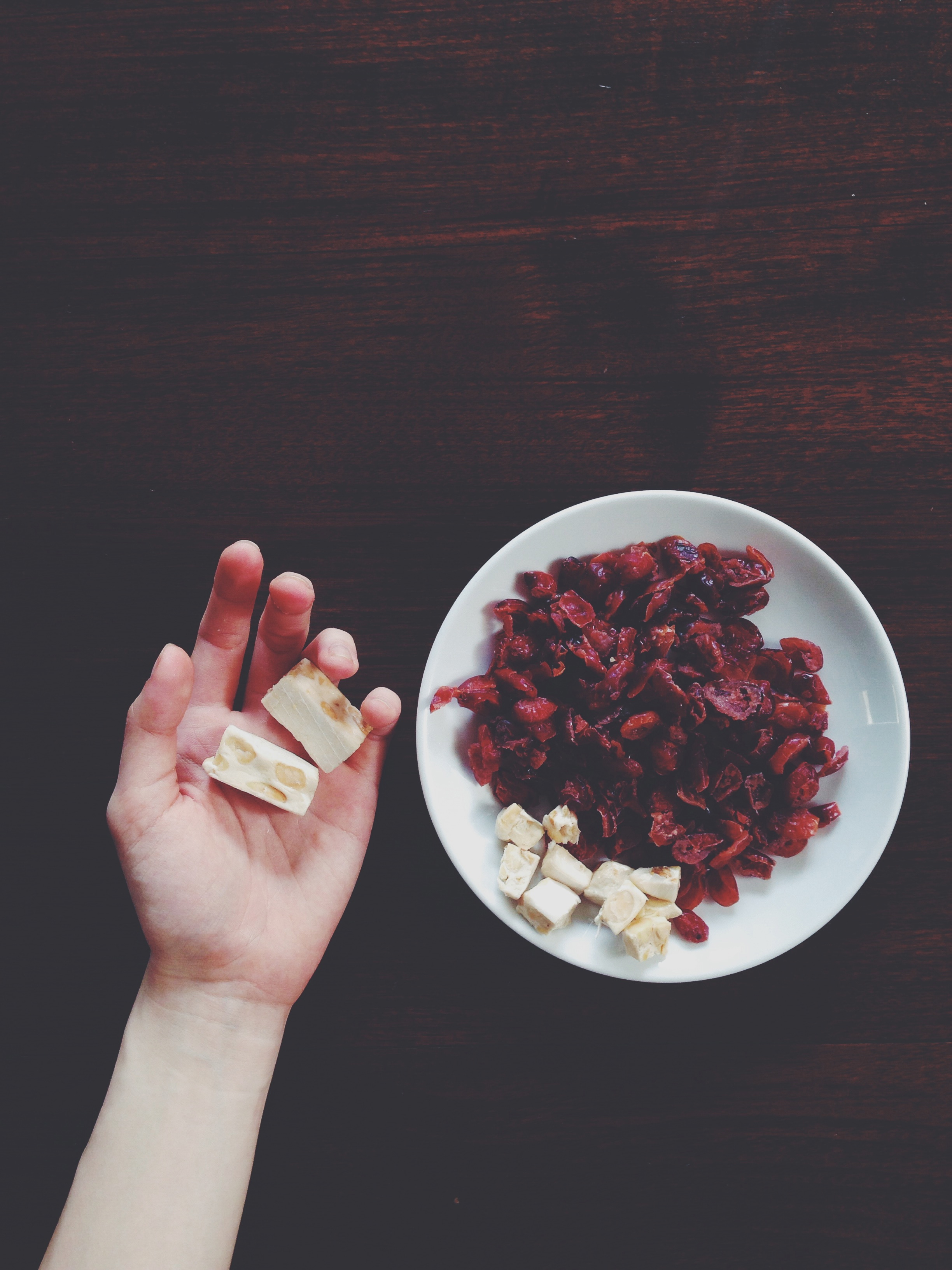
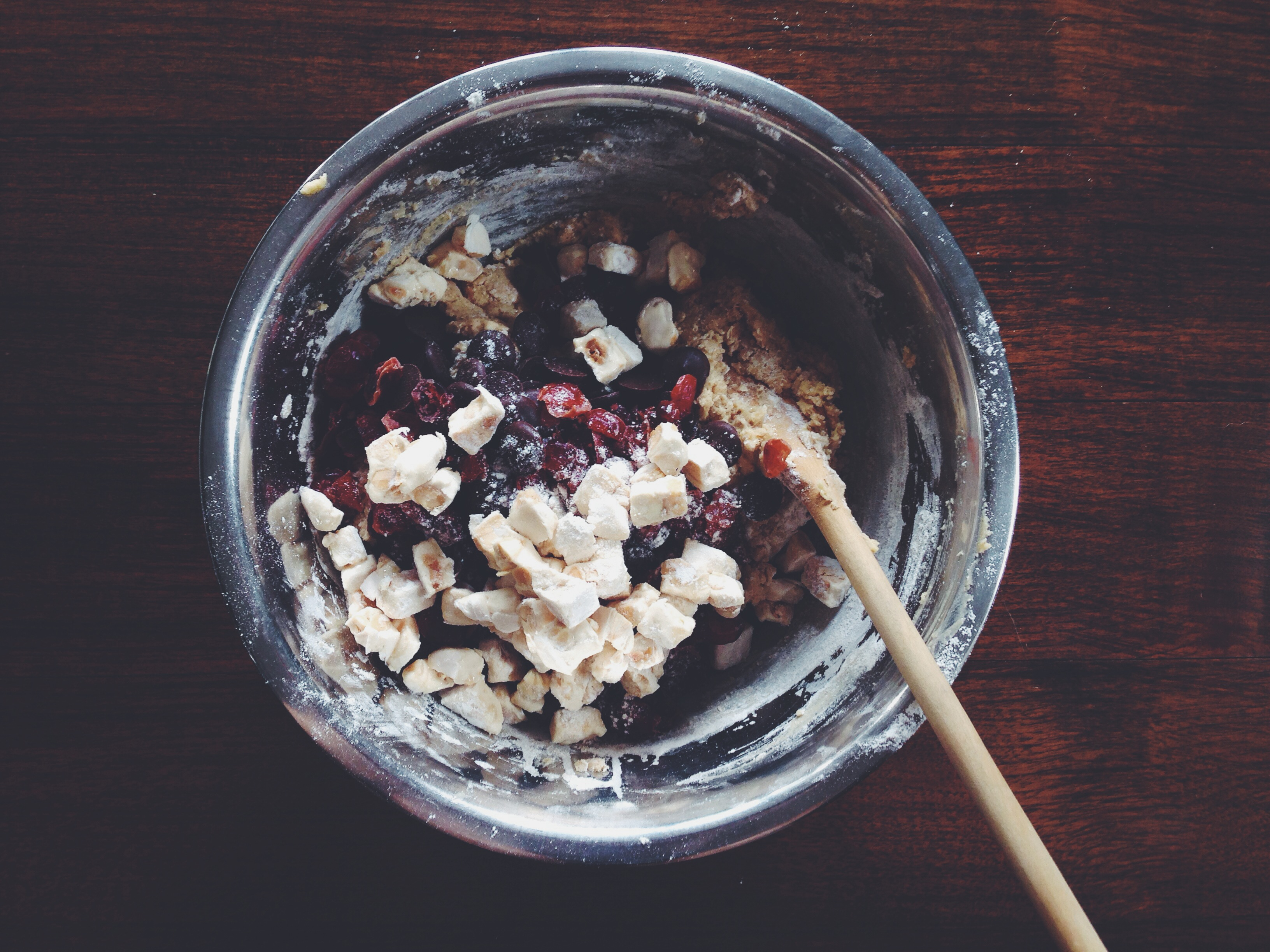
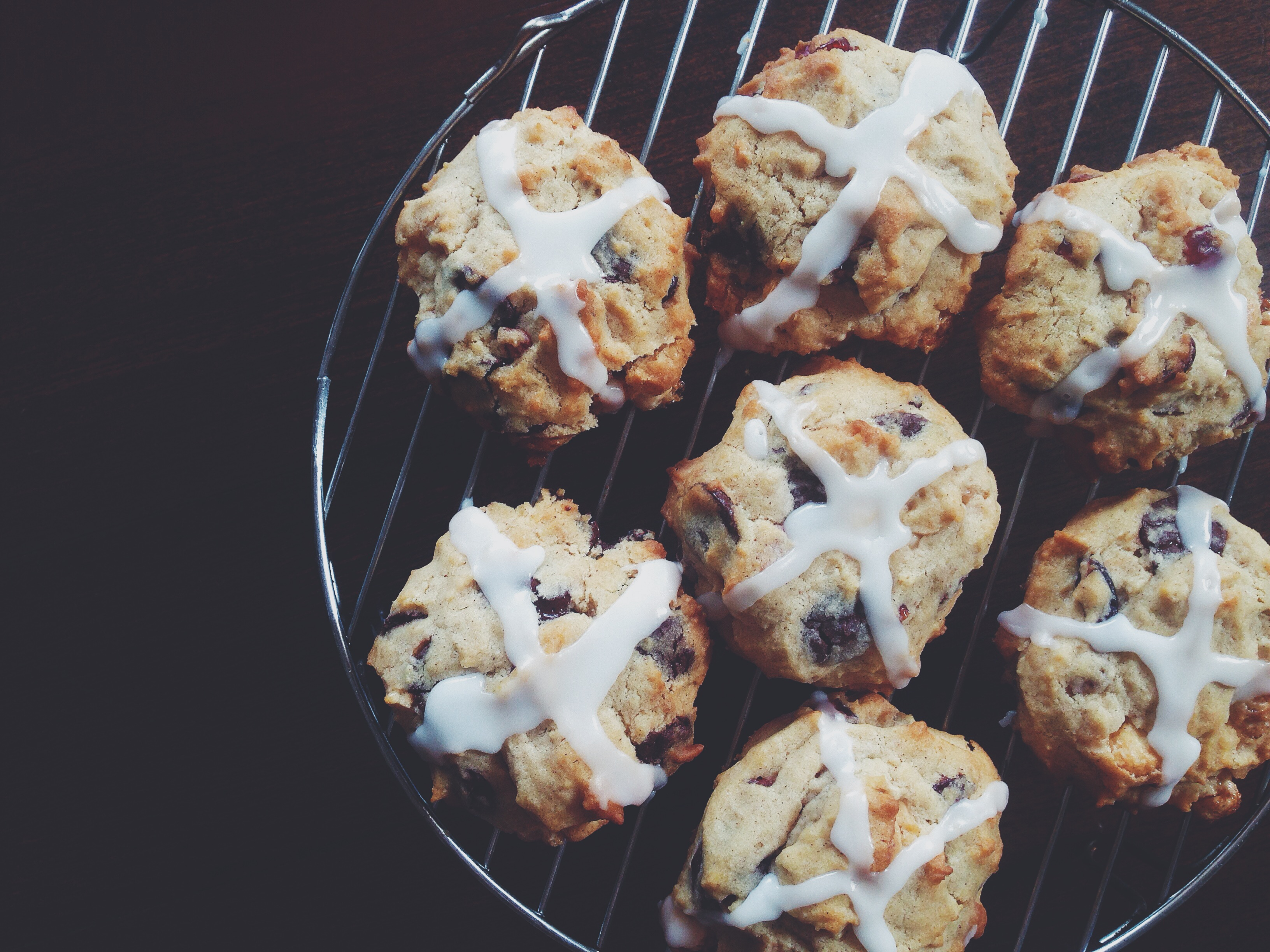
Specifically, soft nougat+dried fruit+chocolate. I personally prefer hard nougat, the sort which you’re afraid might make your teeth crack, but it’s the soft ones which work best in this buttery, cinnamony batter, for after the oven action, what you get are gorgeous, chewy, caramelised nougat residue, gooey and melted, with little bits of crushed almond and peanut strewn throughout (depends on the sort of nougat you’re using of course, I think pistachio would be lovely here). The lemon icing on top of the cooled cookies are quite literally the icing on the cake (cookie). The ‘hot cross’ theme limits just how much icing you can smother on these guys, but go ahead and dip one side of the cookie into the icing if you wish, for better indulgence. Processed with VSCOcam with f2 preset

Stuffed Hot Cross Cake Cookies (makes 15-18, adapted from here)

For the cookies:

240g all-purpose flour

100g light brown sugar (or white, if you don’t have any brown on hand)

1 egg

1 teaspoon vanilla extract

200g unsalted butter at room temperature

1 teaspoon each of baking powder and cinnamon

quarter teaspoon nutmeg

100g dried fruit/sultanas/raisins

50g each of soft nougat (chopped into small pieces), and dark chocolate chunks or chips

large pinch salt (half a teaspoon)

For the icing:

120g icing sugar and the juice from half a lemon

Preheat your oven to 180C and grease a couple of baking pans. In a large bowl and with an electrical or normal whisk and bicep action, beat together the softened butter and brown sugar until light and fluffy. Add the egg and vanilla extract, and whisk to incorporate. In a separate smaller bowl, whisk together the flour, baking powder, cinnamon, nutmeg and salt.

Chop your nougat into small pieces and coat them with a teaspoon of the flour mix, so the edges stop sticking to each other. Add the rest of the flour mix to the butter and sugar mix, then stir with a wooden spoon to form a soft dough. Add the chocolate, dried fruit/sultanas/raisins, then the nougat. Mix everything to combine.

Dollop batter onto the pans using two tablespoons or with your hands. Each cookie should be the size of a ping pong ball. Bake for 10 minutes in the preheated oven. You may have to do this in batches. While the cookies are baking, make the icing by mixing together (I use a mini whisk or a little fork) the powdered sugar and freshly squeezed lemon juice. You might not need all the juice from half a lemon. Put the icing into a small ziploc bag and set aside. Once the cookies are done, leave to rest in the pan on cooling racks for at least 15 minutes. Snip off the end of the ziploc bag and ice the cookies, drawing a cross on each one. Reinforce the ‘stripes’ by piping over the crosses again.