Banana cardamom rolls

Processed with VSCOcam with f2 preset

I almost detonated when I saw the news headlines 2 days ago concerning the murder of freelance journalist Kenji Goto.

So many grotesque or inhumane things occur nowadays that most of us have been rendered practically immune to their effects. This murder in particular, despite its obvious malice, was probably expected. Abe went from stoic to emotional in no time, but the inevitable couldn’t be prevented. Beheadings and carnal torture methods are still being used around the globe. Violence is fought by violence, two fires igniting and ultimately, doing nothing. One side may be susceptible, perhaps a little forgiving, but sometimes that only stirs the impatience of the other party. There is no win-win situation, is there? Such malice is beyond comprehension. ISIS, in contrast to the USA’s initial certainty of its containment, is still evolving, affecting, blighting freedom of speech. Killing. Us humans, ultimately, have regressed. It’s back to the French Revolution again. Where are the guilliotines on the streets? If we aren’t the bad guys, we’re the onlookers who can’t do anything but sit back and squirm. I wonder when a balance will prevail.

Alright now. I made banana chocolate cinnamon rolls two months ago using a blog link I thought I trusted. The dough itself turned out ok, however it just didn’t possess the most desirably degree of fluffiness of brioche-like tenderness of crumb. The tops were a little too hard, and a knock sounded hollow. Something had to change, right?

Processed with VSCOcam with f2 preset

First thing’s first. This recipe involves overnight proofing, which makes it easy for you if you want to chuck this in the oven first thing in the morning and have something sweet and comforting for breakfast. On the weekend, probably, when you won’t feel too guilty. You whip up the dough the day before, let it proof a while, roll and fix your little buns in a nice little tray, then throw it in the fridge. All that time taken is so worth it.

I’m lucky to have a stash of spices around the house. When I saw the box of cardamom, unground, waiting, I knew I had to do something with the stuff. Anyways, I had never experimented with cardamom before. I wanted to keep the main idea of banana and cinnamon, but in order to keep the purity of flavour of cardamom in tact, I decided to forgo the chocolate. That being said, after the process of rolling and spreading the filling, please do feel free to add chocolate chips or chunks. Not a lot of cardamom is ground and used to produce a subtle yet effective aroma, so the addition of chocolate would be complementary, not distracting.

Processed with VSCOcam with f2 preset Processed with VSCOcam with f2 preset Processed with VSCOcam with f2 preset

The key to the soft, tender crumb, light and springy, is in the length of time taken to both knead and proof. When I first tried making cinnamon rolls (the traditional sort choked in cream cheese icing), I couldn’t get my head around the slogging away with my poor hands at the counter, and baked them just a little too soon, when the dough wasn’t robust. Sticky, but not worked at enough. Thankfully, I know much better now. This recipe, which I adapted from the lovely Smitten Kitchen, yields rolls which are fluffy, yet have sufficient body and weight to grant themselves the proper title of ‘roll’. For what is a roll without the keen addition of air (and a ton of butter)? In her original dough recipe, she first stirs the batter in a bowl, before turning it out to properly knead by hand (or you can use a kneading machine). Here, I decided to do it all in the bowl, to prevent precious batter getting stuck between my fingers and washed away. I knew I was taking a risk to prevent an episode of sad farewell, but it all paid off. I used a simple vanilla icing, though these may also be made with your favourite cream cheese icing recipe. The banana, which is mashed together with butter as the base filling, addresses the cardamom amicably, not letting it overpower, providing comforting flavour and a nice gooey touch alongside the strong spice. Some of the banana will touch the bottom and melt in the heat of the oven, so bits of the bottom will get all caramelised and crackly. Isn’t that the best thing in the world? I think so.

Actually, if you like crusty tops and sides in general, then I implore you to read on.

Processed with VSCOcam with f2 preset

Banana cardamom rolls (makes 6-7, adapted from here. Recipe can be doubled for 12 buns)

Dough:

1 egg and 1 egg yolk

25g white caster sugar

45g melted butter

4g instant yeast

235g all-purpose flour

half teaspoon salt

85ml whole milk, or almond/rice/soy/skim

Filling, from previous improvisations:

half tablespoon ground cinnamon

75g brown sugar

30g room temperature butter

1tsp ground cardamom (I used a mini mortar and pestle to do this)

1 small, ripe banana, or half a large one, mashed

Icing

100g powdered sugar

2-3 tbsp whole milk

1 tbsp vanilla extract

pinch salt

In a large bowl, whisk the egg, egg yolk, sugar, butter and milk together. Mix the yeast, flour and salt (make sure yeast and salt are on separate sides of the bowl) in another smaller bowl.

Add the dry mix to the wet mix and stir with a wooden spoon. Stir just to combine at first, then with a little more vigour once the dough comes together. Stir and beat the mix for around 5 minutes. The dough will be extremely sticky! But do not fret. That is what you want. Take a short break here, then continue ‘kneading’ for a couple more minutes, in the bowl with your spoon. I kneaded for a total of 8 minutes, no more and no less. After kneading, the dough should be pale yellow, and very resistant to further fiddling. Stretchy, glutinous, strong, and still very sticky.

Take dough out of the bowl and put into a clean bowl, oiled or sprayed lightly with cooking spray. Cover with plastic wrap or a damp tea towel. Let this rise for 2 hours.

In the meantime, make the filling. Mix the mashed banana and butter together in a small bowl, then mix the cinnamon, ground cardamom and brown sugar in another. Butter/spray a 9×9-inch baking pan or 9-inch circular pan (for cheesecakes/normal cakes etc).

After 2 hours, take the proofed dough from the bowl and press into a 9×6-inch rectangle on a lightly flour-dusted counter. If you’re doubling the recipe, press it into an 18×12-inch rectangle. Take the mashed banana and butter mix and spread on the dough, making sure not to layer it on too thick, and leaving a centimetre untouched frame along the sides. Sprinkle on the cinnamon, brown sugar and cardamom. At the point, you may wish to add chocolate chips or chopped nuts. Gently roll the dough from the long edge to form a 9-inch cylinder. Using a serrated knife, saw the log into 1-1.5-inch sections. I managed to squeeze 7 from this batch. Put the sections into your baking pan. Cover with cling film or a towel and pop into the fridge overnight, or up to 16 hours.

20 minutes before baking the next morning, remove the pan from the fridge to let them warm up a little. Heat oven to 177C (350F), and position the middle rack. Bake the buns for 27-30 minutes. Mine took 28 minutes. Halfway into the baking time, cover the buns with a piece of aluminium foil to prevent them over-browning or burning. During this time, mix all the icing ingredients together, then go ahead and make yourself a cup of tea whilst browsing the papers. Once the buns emerge, let cool on a cooling rack. The absolute best thing about these buns is that they actually take a very short time to cool down, so you can have one straight out the oven (like me). Drizzle the icing over one to enjoy first, then drizzle the remaining icing over the other buns half an hour later, once they’re fully cool, so the icing won’t melt all over the place.

Processed with VSCOcam with f2 preset

Ah, mornings.

Maple syrup baked doughnuts with two glazes

IMG_7779

I used to have a thing for baked doughnuts. You see, previously, I never knew doughnuts are typically fried, so the whole idea of baking them seemed quite the revelation. Bursting to life with the kiss of heat.. actually rising! I know, she never knew? Alright, simmer down. I tested this recipe 3 times and each time yielded a perfectly risen, fluffy, sweet set of 6 little doughnuts. They’re almost bite-sized, yet nothing overly indulgent (but I guess if you pile on the glaze…).

Some of you are probably thinking: Oops, I don’t have a doughnut pan. Therefore, I cannot make baked doughnuts, no matter how good they look. I’ll pass, thanks. I mean, who would want to buy a doughnut pan just to make these, right? I already have a 9×9-inch baking pan, so isn’t that good enough for practically any occasion?

Goodness, I know exactly how you feel. You’re practically echoing my years-long mindset, that is, before I decided to set out and buy a doughnut pan. It’s no big deal, my dear friend, just pop into the nearest baking supply store in your neighbourhood, grab a doughnut pan (I got a simple 6-doughnut baby), come home, make this recipe, and you’ll be as happy as a clueless gob in no time. It won’t take you long, I promise, be it driving to the supply store or making doughnuts. No really, they take no time at all to make, for it’s really just a matter of having a bowl for your dry ingredients, one for the wet ingredients, a whisk and a spoon. You could go ahead and embark on the real deal, with litres of oil and a deep pan for frying, but if you’re pressed for time, these guys will do just the trick. Out in less than 20 minutes. The flavour combinations are exciting, diverse, ever-expanding. After standardising a recipe, I decided the addition of maple syrup to the wet ingredients would make for something a little more seductive– not sickly sweet, but with an overtone of toffee. I improvised 2 glazes– one is a cream cheese maple glaze, the other is cream cheese and salted caramel. The one you see below is the salted caramel version, and the version above is smothered in cream cheese divinity. I love improvs. I really do.

Processed with VSCOcam with f2 preset

Processed with VSCOcam with f2 preset
salted caramel glaze

Maple Syrup Baked Doughnuts (makes 6)

125g all-purpose flour, or you can use half whole-wheat

1 tsp baking powder

1/4 tsp baking soda

1/2 tsp salt

1 egg

30g melted unsalted butter

120g caster sugar

50g plain yoghurt

60ml (quarter cup) milk of your choice; I used whole

2 tbsp (30ml) maple syrup

Preheat your oven to 177C (350F) and position the rack in the middle. Spray your doughnut pan lightly with cooking spray, and then wipe each well with a paper towel so nothing is too greasy. In a large bowl, whisk the dry ingredients (flour, sugar, baking powder, baking soda and salt) together well, for around half a minute. In a smaller bowl, whisk together the wet ingredients (egg, melted butter, yoghurt, milk, maple syrup). Pour the wet mixture into the dry one, and using a big spoon, mix until everything just comes together. The mix should not be too thick or too wet. A flick of the hand using medium pressure will allow the mix to drop easily from the spoon. Using two large spoons or a piping bag, pipe/dispense the mix into each doughnut mold. Fill each mold until it’s just about full.

Bake for 15-16 minutes (mine took 16 minutes), until they’ve risen and turned a lovely golden on top. In the meantime, try out one of these glazes:

Cream cheese maple glaze

80g softened cream cheese (you can use the spreadable sort, or microwave a block in bursts of half a minute until it is spreadable)

50g icing sugar

1 tbsp maple syrup

if needed, a splash of milk

Whisk all the ingredients together in a small bowl, and place in the fridge to cool whilst the doughnuts bake.

Salted caramel cream cheese glaze

25g softened cream cheese

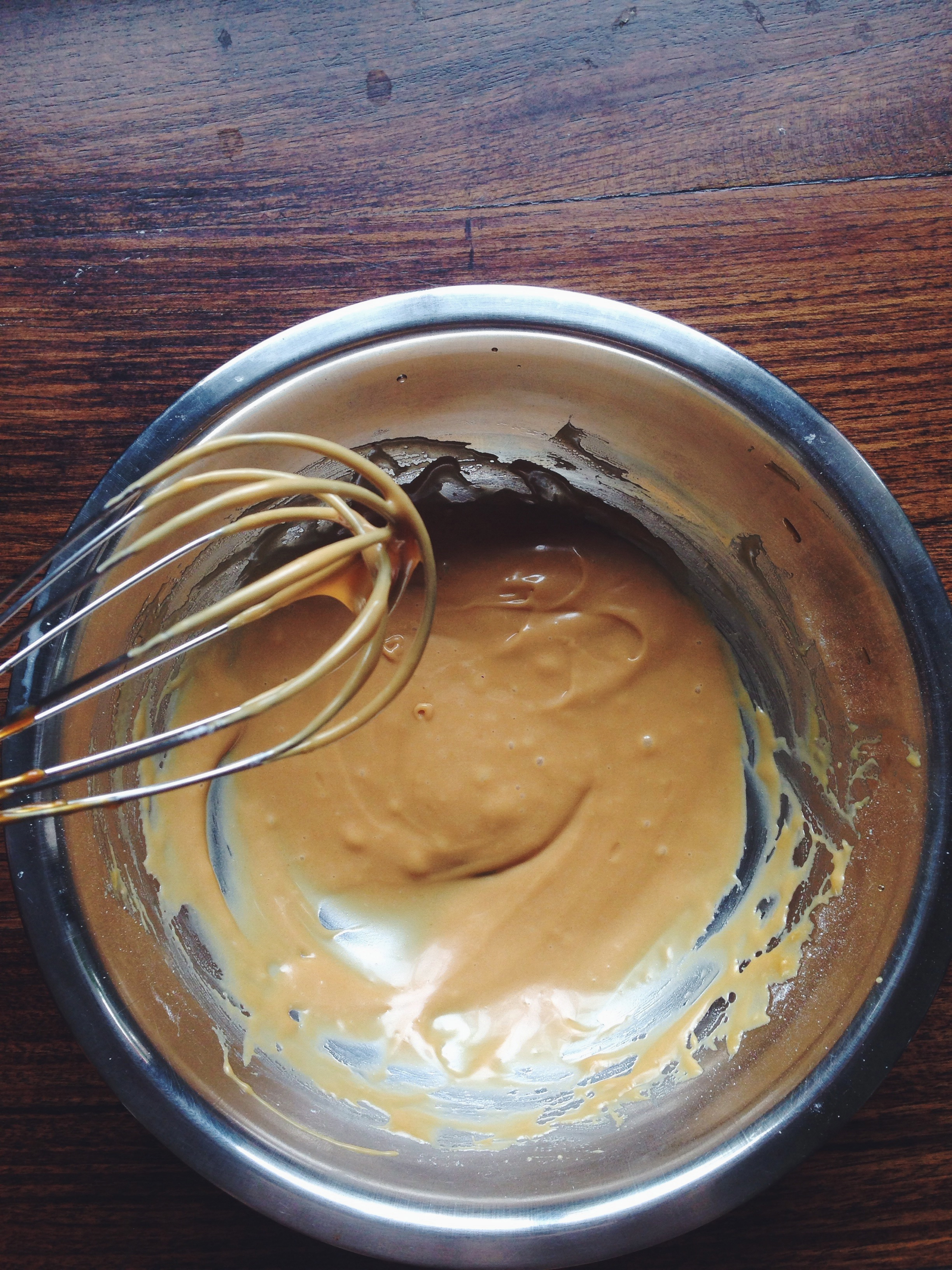
3 heaped tablespoons of salted caramel (I used store-bought, but you can make your own. I made a lovely one last year and should put up a recipe for it soon)

50g icing sugar

large pinch of fine salt

half tablespoon milk

Whisk all the ingredients together thoroughly in a small bowl. Add or subtract the icing sugar, salt and salted caramel according to taste.

So quick, so do-able, so good.

Fig, cinnamon and apricot whole grain loaf

Processed with VSCOcam with f2 preset

“There is no science without fancy, and no art without facts.”

I’ve lately been fascinated by the whole idea of intellectual promiscuity. I came across it on this Brainpickings article the other day and was intrigued by the term, which basically means not to limit oneself to one academic field, and instead embrace both science and the arts, something I fully agree with after my own educational experience. Two fields which complement and enhance each’s developmental stages, instead of diminishing the importance of one or the other in any way. I’m still young and have much to learn about the world, but the paradox of finding creative genius outside of these constructed stereotypes (just think of Da Vinci– horses and formulas and planes galore!) is something to appreciate.

It’s been rather a long time since I made a loaf. It’s usually something simple and easy to put together like banana bread or a moist orange cake I made at the end of last year. All bing bam boom and poof!, it’s done in the oven within the same hour. However, a few days ago, I thought it would be lovely to indulge in the old-fashioned labour of kneading, of being a little more physical with the ingredients, bestowing them with more TLC if you know what I mean, instead of taking embarrassing shortcuts. I just wanted it to be me, some flour, these hands, and the oven. I came across a gorgeous recipe for cinnamon swirl bread on the Smitten Kitchen blog, run by the most hilarious and passionate lady ever. It was the original inspiration for this recipe, so check it out if you can. After fiddling about with the ingredients and measurements, I came up with my own version. What I love about her method is the kneading-then-wait-then-knead-again method, which sounds horribly tiresome and unnecessary now, but it really helps in developing the gluten, chew and resulting flavour of a good, well-risen loaf.

Processed with VSCOcam with f2 preset Processed with VSCOcam with f2 preset

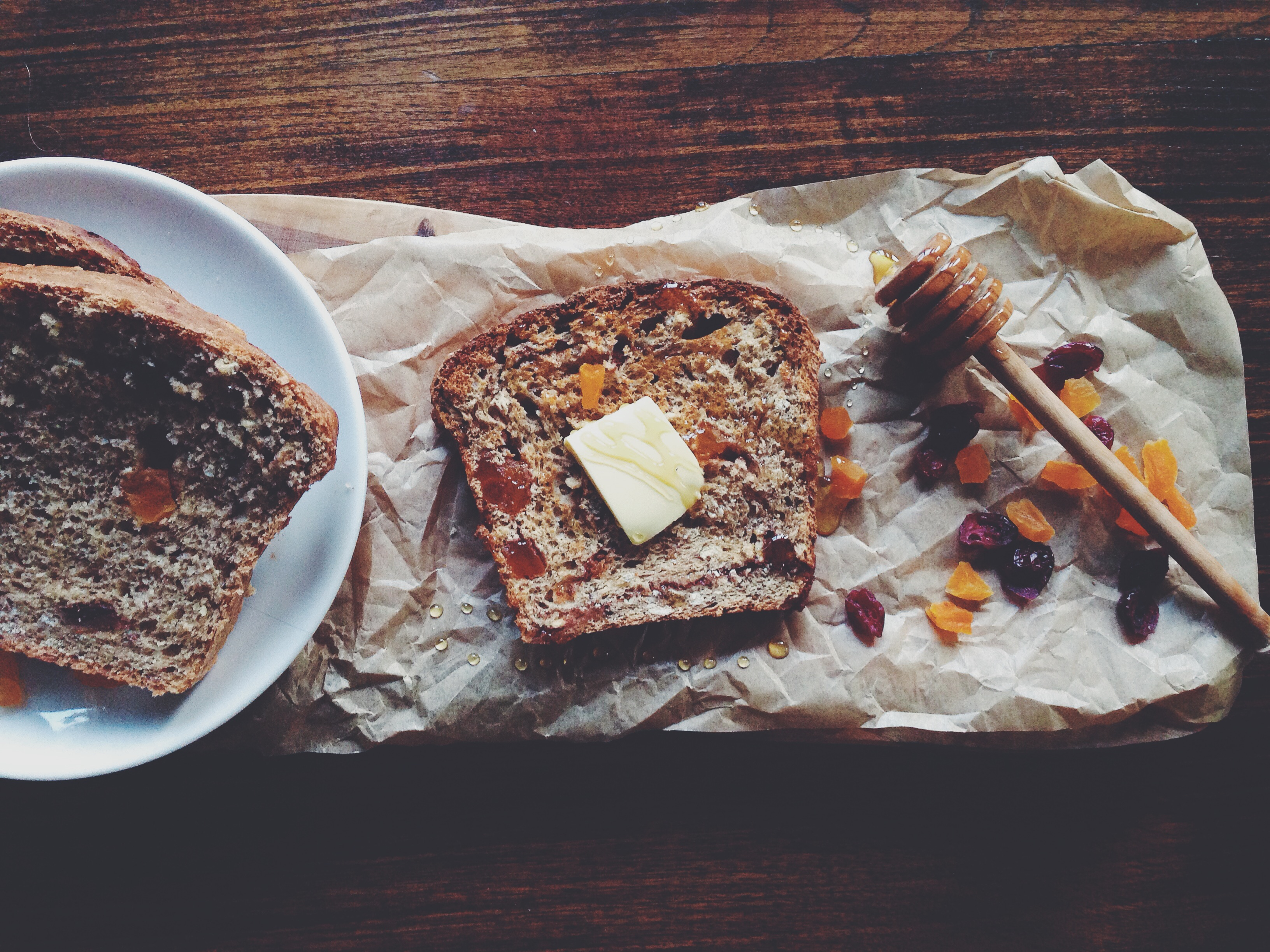
I was a little hesitant to add figs, but no regrets existed when they turned into the sweetest pockets of thick goo strewn throughout the cooked loaf. The bread itself is sweet and hearty with the benevolent addition of whole grains, cinnamon and figs, so it’s wonderful toasted on its own, or topped with good salty butter and a selfish drizzle of honey. It’s my favourite way to have it. It tastes almost nutty, since I use ground flax and whole wheat flour (which, by the way, can be exchanged for your classic all-purpose, promise!). The best part without a doubt is the outrageously crackly, hard crust, best relished with even more butter and honey on the side. Thinner and slightly drier than what you would get from a banana bread loaf. It’s what I’ve been looking forward to every morning the past few mornings, if I’m being completely honest. I mean my mind is always filled with thoughts other than food (believe me), but some things are annoyingly irresistible, cutting off sense and sensibility, and this is one of them.

Processed with VSCOcam with f2 preset

Fig, cinnamon and apricot whole grain loaf (makes 1 standard 9×5-inch loaf)

For the loaf:

320g whole wheat flour (or a mix of whole wheat and all-purpose)

80g whole grains– I used 15g of ground flaxseed and 65g rolled oats. If you wish, use 80g of either, or try experimenting with oats ground in your food processor.

7g instant yeast

1tsp (7g) fine salt

25g brown sugar

1 egg, beaten

40g unsalted butter, melted in the microwave (use 20-second bursts)

150ml tepid water

150ml milk, microwaved for a while so it’s not fridge-cold

extra flour for dusting work surface

For the filling:

50g white caster sugar

1 tbsp ground cinnamon

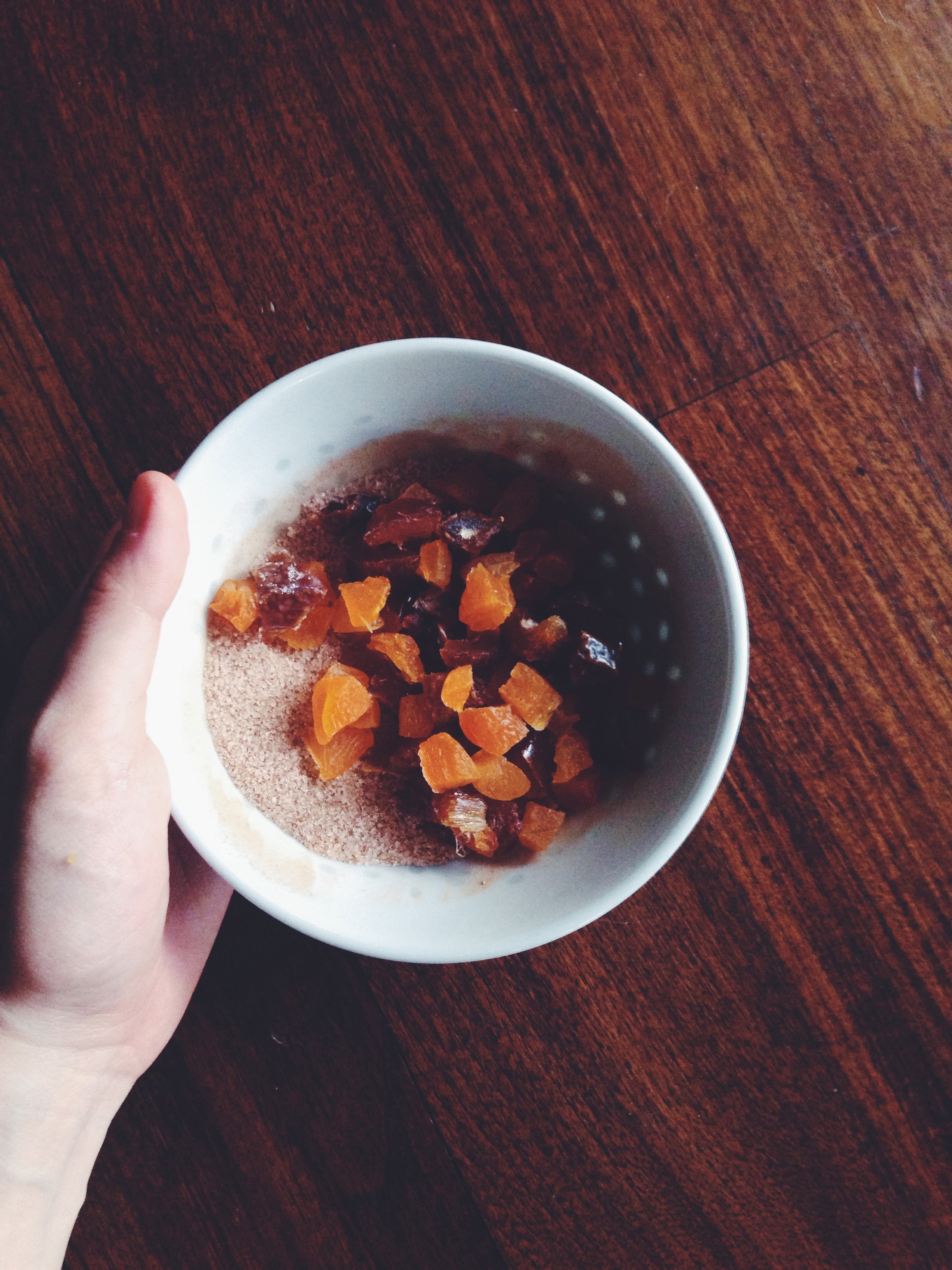
half a cup of chopped figs and dried apricots (you can use anything really. If you have nuts/ dried cranberries/ raisins/ currants, then go for it). It should all amount to around 65g.

one large egg, beaten with a splash of water

In a large mixing bowl, combine the water, milk and sugar, then whisk in yeast. Add the egg and butter, and whisk again. In a separate bowl, whisk together the flours, oats, flax and salt. Using a large wooden spoon, stir for around a minute. The mix will immediately turn darker but will retain a coarse texture. Let the mix rest for 10 minutes.

After 10 minutes, mix a little more with the spoon. Just briefly. The dough should look supple, and less ragged. If it’s still obviously wet, add a tablespoon more of flour. Mix more for 3-4 minutes.. and this is where it gets tricky. The gluten really starts to develop here, making the mix more robust and less malleable. 3-4 minutes doesn’t sound long, but the time does get to you when you’re constantly trying to churn power from your two poor biceps. Power through!

Scrape the dough out onto a lightly floured surface. Knead a few more times, just twice or thrice, before forming into a ball and placing into your mix bowl. Place a damp towel on top and let rest for 10 minutes. After 10 minutes, remove the towel, dough and use your wooden spoon to work the dough again briefly, and leave to rest and cover again for 10 minutes. ‘Kneading’ this way avoids some between-the-fingers mess, and keeps the dough in the bowl. Is that lazy? Ha. Repeat the knead-and-cover process just one more time.

To proof, transfer the dough into a clean and lightly oiled bowl. Cover with a damp towel again and let this proof for an hour. If you’re pressed for time, you can leave the dough in the fridge overnight! If you do it this way, make sure to remove the dough 2 hours before you start working with it again. During the hour or after taking out your chilled dough, mix your filling ingredients– cinnamon, sugar, figs and apricots. After an hour, check to see if it has doubled. If it does not look quite as voluminous, leave in the bowl for another 10 minutes.

Dust your work surface and turn out the bread. Press the dough into 10×5-inch rectangle, then brush the dough with the egg and water mixture. Sprinkle on the filling, then roll from the shorter edge. Nothing careful or meticulous here. I didn’t create a swirl like Smitten Kitchen’s version, however the rolling does make sure that the filling is nicely distributed throughout the body. Press the edges closed, then gently place the loaf (I needed spatulas to help me!) in a lightly greased loaf pan.

Now for the second proof: Cover the loaf pan with a damp towel and let rise for 30-45 minutes. Whilst waiting, preheat your oven to 177C/ 350F. Bake the loaf for 40-45 minutes. Mine took 40 minutes and came out a lovely golden colour.

Moist Banana Bread

Because I can’t have this blog without sharing my favourite banana bread recipe. On Earth. Ever. Bread? Cake? Is there a difference between banana versions of either? I personally just call it banana bread, you dashing BB, because I’ve always associated the teatime stuff with a traditional bread-like texture. More robust, hearty, almost wholesome. Less airy-fairy, but call it a cake if you wish. I think I’ll stick to the former. My favourite sweet and dense bread. There are those who like sticky fruit cakes, the sort you can stick your hand into and it feels like muddy air, and this is no different, except perhaps the bits and bobs of banana will stick lovingly to your fingers, and when you pull them out your hands smell like the best bloody thing in the universe.

The smell of banana bread baking and emerging from the oven, then resting for a while, a solid, plump and golden thing, is my favourite ‘oven smell’ ever. One of the purest joys in life.

Processed with VSCOcam with f2 preset

I think there are 3 things which make it brilliant.

1. There’s thick and lush Greek yoghurt in it, for superb moisture and flavour.

2. The whole cup of mashed banana and perhaps more, in some cases where 3 mashed bananas nicely exceed that capacity. If I had to re-label this recipe, it would definitely be ‘double banana bread’.

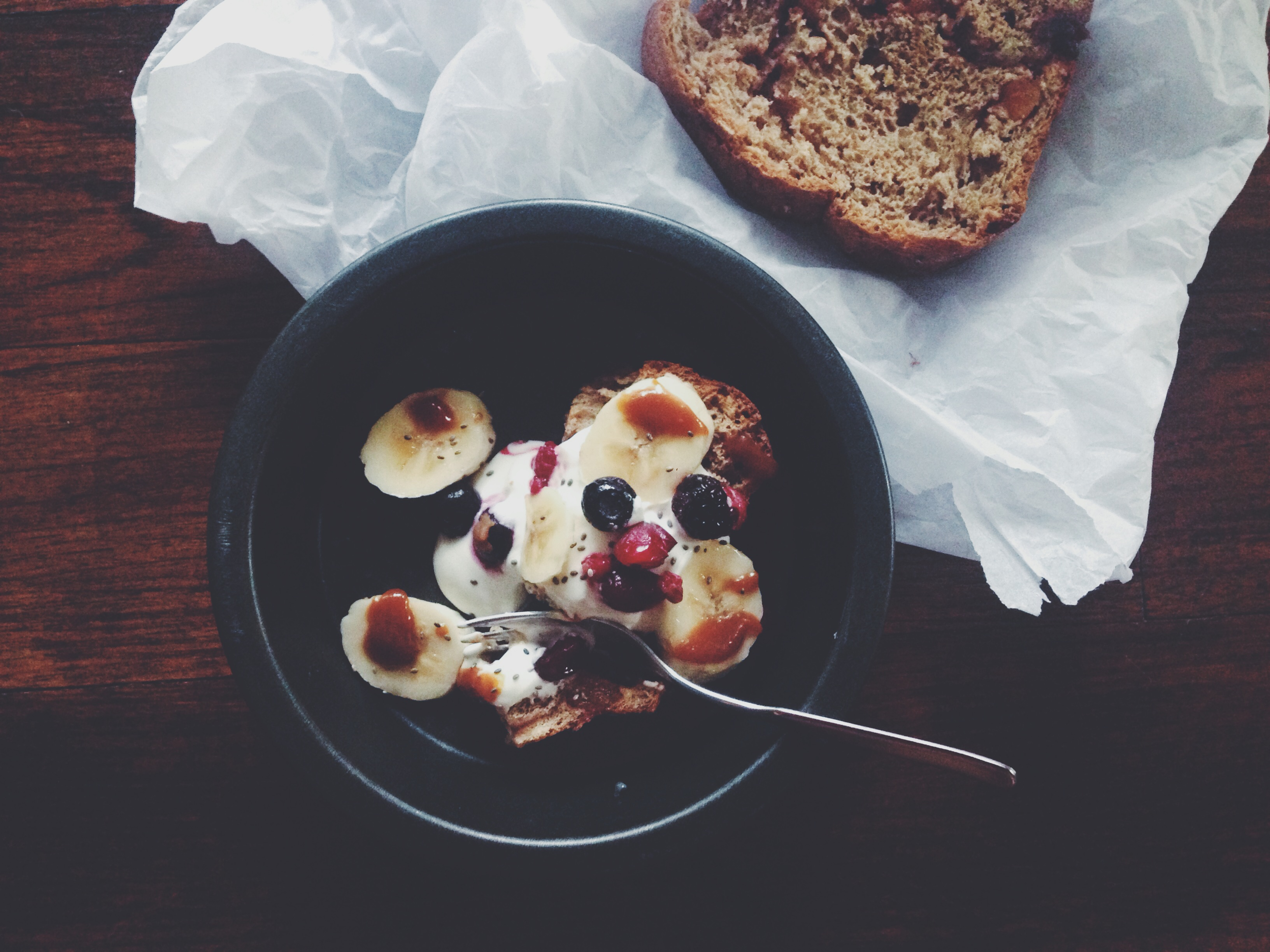
3. The use of flavourless vegetable oil instead of melted butter, which I think aids in producing a lighter, more tender crumb, and doesn’t mask the natural sweetness or flavour of ripe banana.

Processed with VSCOcam with f2 preset

Processed with VSCOcam with f2 preset

Divine, and so easy that there’s really no other way I make it now. I have serious history with this recipe, and it’s funny how I’m only posting it now. Ridiculous. I’ve tried out so many variations– with and without yoghurt, made with just milk, no oil/no butter… Anyways, here I am and boy am I glad I’m finally spilling the beans.

Classic Banana Bread (makes one 9×5-inch loaf)

Ingredients

3 medium bananas, ripe and mashed (usually amounts to about one cup, and lumps of banana make for better texture)

90g (0.5 cup) light brown sugar

100g (0.5 cup) white caster sugar

2 eggs (vegan sub: 2 flax eggs made from 2 tbsp ground flaxseed mixed with 4 tbsp water)

45g (3 tbsp) melted salted butter/vegetable oil

125g yoghurt, or use almond/soy/coconut yoghurt if you’re vegan

240g (1.5-2 cups) all-purpose flour

*note: I’ve made this using half whole-wheat flour and half all-purpose flour, and the end result was just as brilliant. A little less devious, but equally moist and decadent.

1 tsp each of baking powder and baking soda

Optional add-ins: 150g dark chocolate/nuts/a mix of both

Directions

Grease a standard 9×5-inch loaf pan, line with parchment paper and preheat your oven to 162 C (325F).

In a large bowl, whisk together the mashed banana, sugars, eggs, melted butter and yoghurt with a whisk or a fork. If your butter is not salted then add 0.5 tsp of fine salt now. In another smaller bowl, briefly mix together the flour, baking powder, baking soda and salt with a spoon. Add the chocolate and/or nuts at this point and mix these in well. Add the dry mix to wet mix, and fold briefly until just combined. Lumps are welcome. Pour into the pan and bake for 60-75 minutes. With my oven, I found that the perfect baking time is 70 minutes (1hr and 10 mins). Bask in that smell.

Rustic Grape Tart

Processed with VSCOcam with f2 preset

It feels as if I’m caught in a storm right now, papers flying everywhere, head quite the mess. I told myself I’d buckle down 110% (those same words!) today, and yet, I feel a strong sense of guilt as I look over all my past recipe posts, the embodiment of one of my main passions in life. It’s funny because I actually read an excellent article on procrastination in the papers today; and yet, I don’t see this as a form of such a term, but more so a physical and mental extension of what I love wholeheartedly. It’s small things like the juxtaposition of fruit and custard cream which to be are akin to that of life and love, or books and work, or friends and family.

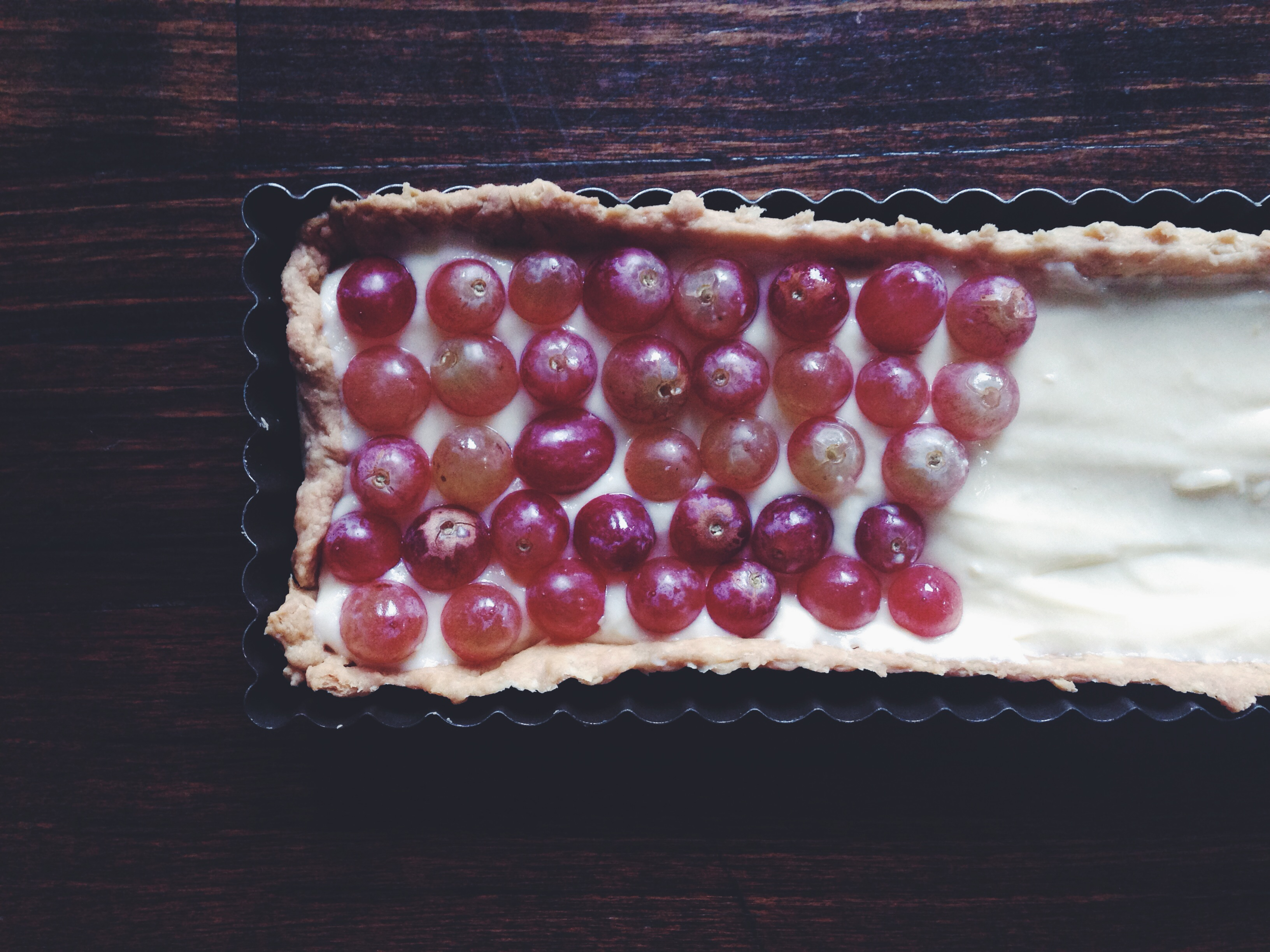
This grape tart, as you can see above, is not perfect. The shell has shrunk, the grapes aren’t all luscious and plump, but it is through these imperfections that I am willing to share what I’ve learnt to bolster your own attempt in the kitchen. The shrunken shell is my fault really, because I failed to spread the baking beans evenly during the blind baking process. That, together with the fact that I sort of wanted the whole rustic appeal of pseudo-slipshod work. Hey, it’s a tart!

Processed with VSCOcam with f2 preset Processed with VSCOcam with f2 preset Processed with VSCOcam with f2 preset

The pastry is abominably crisp, the sort which shatters and melts in your mouth real quick. And I have only recently discovered just how darn easy pastry cream is to make, and I used a simple recipe which yields a smooth and decadent texture and flavour. I attempted to keep cooking the cream until it was thick, and thus hold itself better in the fridge, or when cut through with a knife during serving. If possible, use fresh, thick grapes, which I unfortunately didn’t have on hand at that point in time (hence the tiny little blobs you see pictured!) Since I was trying out my new fluted rectangular tart tin, I was forced to leave out a significant amount of crust, but it would also be perfect in a round 9-inch pie tin.

Rustic Grape Tart

Ingredients

For shortcrust pastry:

157g all-purpose flour

125g cold, unsalted butter, cut into cubes

1/2 teaspoon salt

1/2 teaspoon sugar

2-3 tablespoons water

For pastry cream:

355ml whole milk (around 1.5 U.S. cups)

2 egg yolks

68g white castor sugar

1 tablespoon cornstarch

1/2 tablespoon all-purpose flour

1 teaspoon vanilla extract

optional: zest of half a lemon and a splash or brandy/cognac

For the topping:

around 100g of grapes, cut in half (or you can cut as you fill the top, after pouring in the pastry cream)

2-3 tablespoons grape/apricot jam, warmed in the microwave for a minute or so

Make the pastry. It’s extremely versatile and can be used for things like quiches and other sweet or savoury tarts as well. My mum uses it all the time for her savoury wild mushroom and blue cheese quiche. Anyways. Freeze the cubed butter for at least a half hour. If you’re using a food processor, combine flour, salt and sugar, and pulse to mix. Add the butter and pulse around 6-8 times until the mixture resembles a course meal with pea-sized pieces of butter. Add the iced water, 1 tablespoon at a time, pulsing until the mixture just begins to clump together. The dough should hold together when pinched lightly. If you’re just using your good old hands and a bowl, rub the cold butter into the flour mix, rubbing across the knuckles, and quickly, so the heat doesn’t melt the butter at a faster rate. Continue until you get the aforementioned result. Remove dough from machine/bowl and place on a clean work surface. Shape into a disk and wrap with cling film. Refrigerate for at least an hour, and up to 2 days (so you can make this way ahead of time, hoorah).

When ready to use, remove the disc and leave on the counter for around 10 minutes, just to soften a little. Roll out on a lightly floured surface with a rolling pin, according to the size of the tart tin you are using. For my own rectangular one, I rolled it out to around 9×11 inches, around 1/8-inches thick, so there could be sufficient dough hanging over the edges. Press the dough into your tin (no need to grease) and press down so it reaches all the corners and sides. Trim the edge, leaving about 1/2 an inch excess from the edges. Put the crust in the fridge for around 10 minutes and preheat the oven to 177C (350F). Line the chilled crust with parchment/wax paper and fill with pie weights. Bake for 20 minutes in the oven. Remove to cool for a few minutes. Remove the weights, poke the bottom with little holes and return to oven for another 10 minutes. Cool completely before adding any filling.

During the baking time, make the custard. In other words, the most fun part! In a saucepan, medium or large, over medium heat, warm the whole milk until it comes to a simmer. Whilst waiting for that, whisk the eggs, sugar, cornstarch, optional alcohol and lemon zest, flour and vanilla in a bowl. Whisk a little of the hot milk into the egg mixture, and then slowly, very slowly, whisk the slightly tempered egg mixture into the rest of the milk, constantly stirring. Continue to stir for around 3-5 minutes, until the mixture thickens and you have what rightly resembled a luscious, thick custard. It will be a fine, pale yellow, which leaves a slightly slimy trace when you sneak a lick off the back of your wooden spoon. Remove from the heat and let it cool for around half an hour.

Once cool, spread the custard onto the pie shell. Cut up your grapes and assemble them, cut-side down, onto the cream. It will take a while, yes, but it’s absolutely worth it in the end. Place your gorgeous little tart in the fridge, and cover with plastic wrap. Just before serving, warm some jam in a saucepan over light heat or in the microwave for a few minutes. Brush over little butts of grapes, remove from the tin and prepare yourself for a light and slightly unorthodox dessert.

Who doesn’t love grapes.