Semolina Pear Pudding Cake

In all honesty, I’m not quite sure how to kick this one off.

Because look at it.

Do you like pudding? Or cake? Maybe both? If you’re into something soft yet firm-crusted and perhaps a little gooey on the inside, then fill yourself with hope. I had this for breakfast this morning and haven’t looked back. Why did it take me so long to get to this stage of sunlit ecstasy (what does that even mean)? Embarrassingly, I have too many questions to ask myself.

It’s the 3rd day of June and I feel like having a third cup of coffee. I like looking at the stains up and along the sides of the cup, a few viscous drops never really making it halfway down the porcelain breadth. Although some things in my personal schedule have shifted a little, constants remain, like almost-selfish spaces of time to myself, spent with a good book, science literature… and, yes, absolutely random ovenputtogethers baking bonanzas. I’ll be truthful and say that I still prefer the taste and texture of traditional baked cake, but semolina, or coarse, purified durum wheat, indeed lends a more interesting albeit unorthodox flavour.
IMG_2014

Let’s go through the motions.

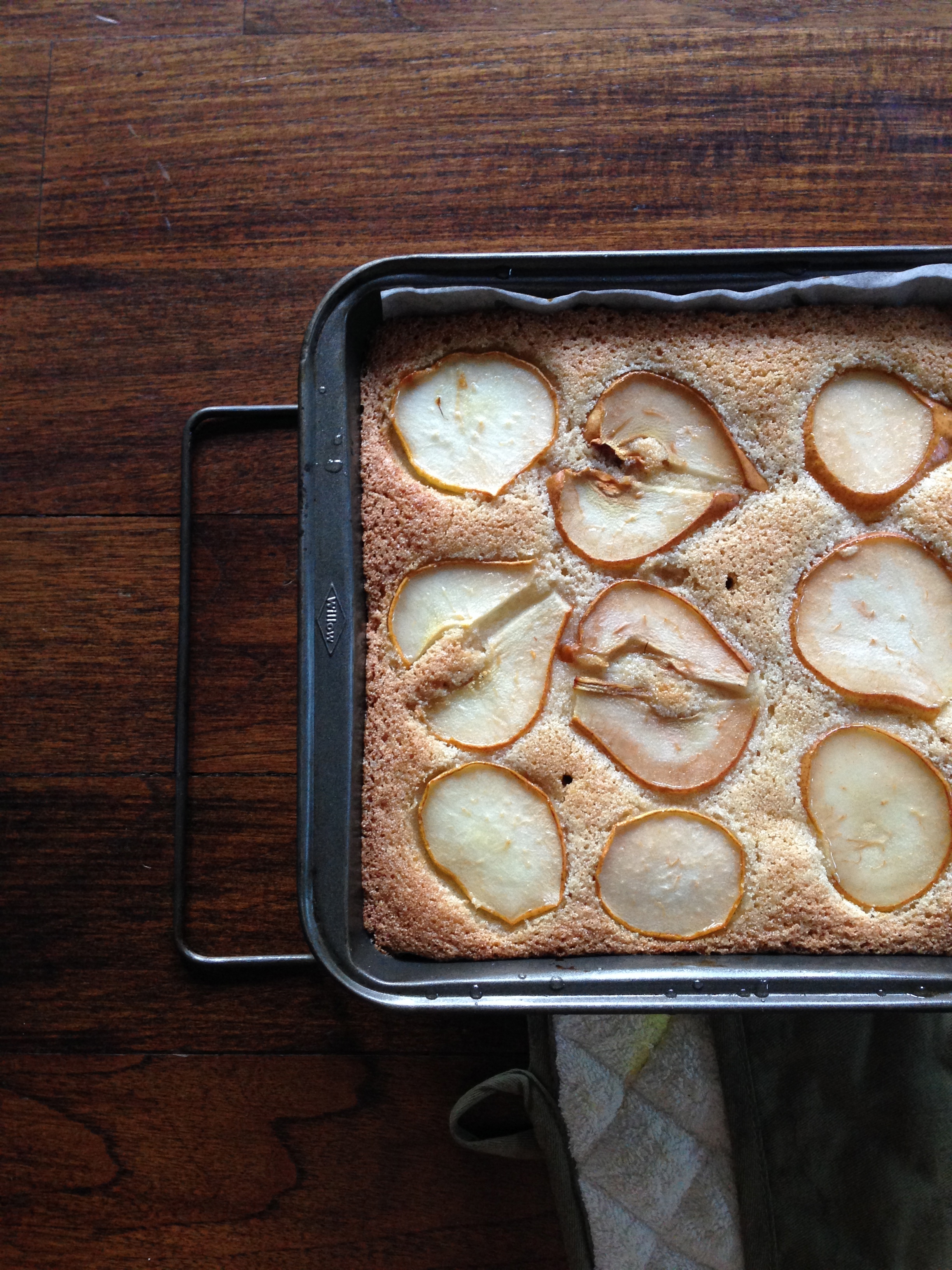
What we have here is a layer of pears on the bottom, then a semolina cake enriched with plenty of vanilla and a little elderflower cordial, then another layer of pear. Everything is brushed with what would seem like too much elderflower syrup after baking.

With regard to the pears, I used the soft and sweet Comice, but any sort will work perfectly here, be it the firmer variations like Bosc or Concorde, or even Green or Red Anjou. Whatever’s lurking in the closet. I was initially afraid of using the sort which is perfect eaten raw, for fear of everything disintegrating into fruity mush, but the recipe yielded a surprisingly pleasing result; the moisture of the soft pear paired wonderfully with the drier cake (pre-drizzle of course).
A few notes:

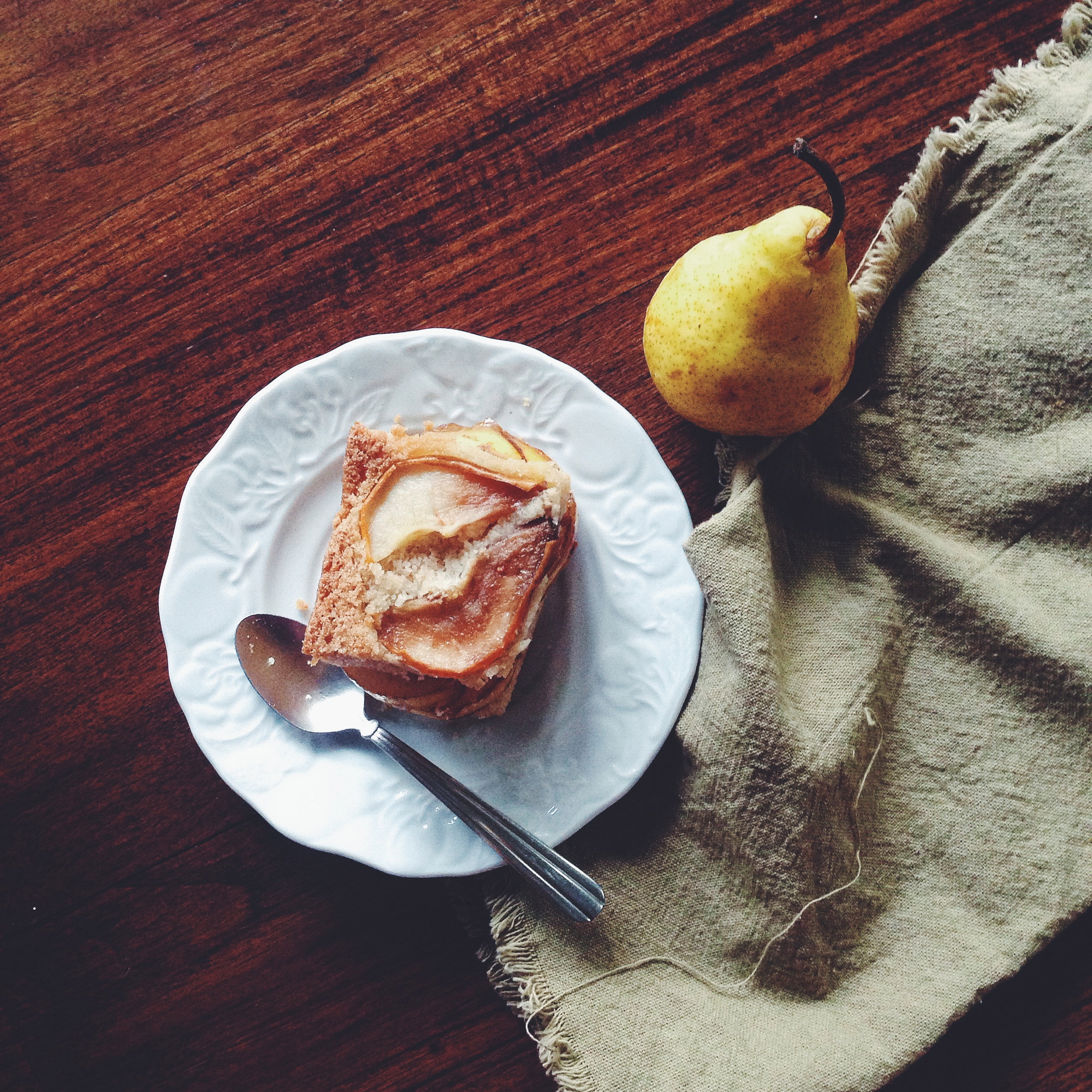
– I term this a ‘pudding cake’ only because such a label is a near-perfect representation of the final texture– that is, coarser and of a much less refined texture thanks to the semolina, yet slightly squidgy, especially around the parts of the cake near the cooked pear. The ‘pudding’ part is only achieved with the liberal drizzle of elderflower syrup, as well as the no-holds-barred addition of heavy cream later on. Which brings me to my second point:

Please do yourself a favour and have this drenched in heavy cream!

– Whilst drizzling the syrup, you will notice that you will only be able to do so on the parts of the cake not covered by the pear (obviously). That’s alright, because the moisture from the pear seeps into the surface it covers, so everything is nicely balanced.

I’m not quite sure what exactly compelled me to pair semolina with pear, but I’m glad keen instinct drove me to do so.

Semolina Pear Pudding Cake with an Elderflower Syrup Drizzle (serves 9-12)

Ingredients

113g (1 stick) unsalted butter, at room temperature or just slightly softened in the microwave

235g (1 cup) white sugar

2 eggs

120ml (half cup) milk of choice (I used a mix of whole and almond milk)

1 tsp vanilla extract

365g (around 2 cups) semolina

1tsp baking powder

1/2 tsp baking soda

pinch salt

3-4 pears of your choice (as mentioned above, I used Comice, but any sort is fine, and the amount you need will depend on the size of your pears)

For the elderflower syrup: 1/2 cup elderflower cordial mixed with 1/2 cup filtered water, mixed and warmed in the microwave for a while.

Directions

Preheat your oven to 177C (350F), and grease and line an 8×8 or 9×9-inch baking pan. In a medium bowl, whisk together the dry ingredients (semolina, salt and leavening agents) and set aside. With an electrical beater, or using a whisk and good old bicep strength, cream together the butter, sugar and vanilla extract, until pale and very fluffy. Beat in the eggs, then the milk. Pour in the dry mix you set aside and fold in using a spatula until everything is just combined. The mix will look pale, coarse and rather thick.

Core and cut your pears into slices around a 1/2-inch thick, and place a layer of slices on the bottom of the pan. Scrape the cake batter into the pan and use the spatula to make the top smooth, spreading the batter into the corners. Layer more slices on top, but make sure there’s some space between the slices for the syrup later on. Bake in the preheated oven for 25-28 minutes, or when a wooden skewer inserted comes out clean. This took me around 26 minutes. While the cake is baking, mix together the syrup ingredients.

Remove the cake from the oven and drizzle on all of the syrup. Yes, all of it! This is what will ensure the pudding-like result. To serve, scoop some of the cake onto a plate and cut in half horizontally. Sandwich 2 or 3 slices of pear in between the slices, then drench everything in heavy whipping cream. Enjoy whenever.
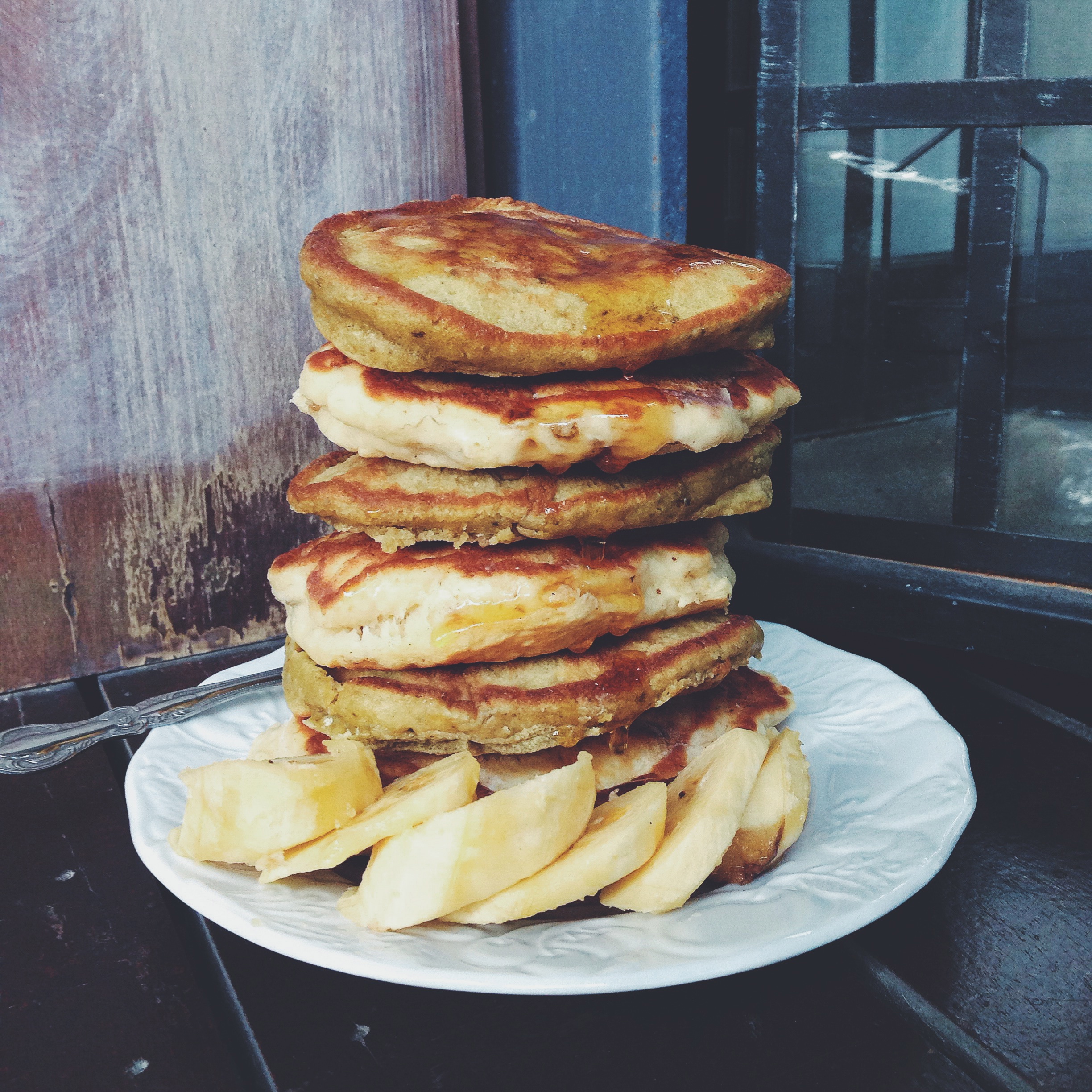
Matcha and Vanilla Banana Pancakes

It just demanded variation. Make it shine in a different light. I’m talking about my favourite ever recipe for supremely thick and fluffy pancakes. When I wrote that post, I found it hard to deliver the goods without feeling as if nothing I typed could truly justify how impressed I was with the outcome. The same may be said for these.

I modified the base batter a little, added matcha powder to half of it, and incorporated mashed banana into the wet ingredients. Result: Fantabulous, and that’s saying something, because I hate that word but somehow its gaudy talkshow-esque nature fits the bill here.

I talked enough about how wonderfully soft and fluffy and phenomenal these pancakes are (click the link above!!), so enough talk, more action now.

Matcha and Vanilla Banana Pancakes (makes 10-11 medium-sized pancakes)

Ingredients

188g (1 1/2 cups) all-purpose flour

1 tbsp white sugar

1 banana, mashed

2 heaping tsp green tea (matcha) powder

generous pinch of salt

1 tsp baking powder

1 tsp baking soda

1 egg

50g unsalted butter (slightly less than 4 tbsp)

1 tsp vanilla extract

2 tbsp honey

240ml (1 cup) milk of choice

Directions

In a large bowl, whisk together the dry ingredients (flour, sugar, salt and leavening agents). In a small microwave-safe bowl, melt the butter in a microwave and set it aside, letting it cool for a couple of minutes. In another medium bowl, whisk together the egg, milk, vanilla, honey, mashed banana and melted butter.

For this recipe which makes both vanilla and matcha pancakes, both the dry and wet mixes must be halved. My dry mix totalled to 210g, so I put half of that (105g) into a separate empty bowl. To one of the dry mix bowls, whisk in the matcha powder. Do the same for the wet mix (I weighed that too and found that half of the wet mix totalled to 200g, however only 180g of the liquid mixture needed to be added to the dry in order to achieve the perfect consistency). You should have 4 bowls– 2 dry and 2 wet, with one of the dry mix bowls containing the matcha powder. Pour the wet mixes into the respective dry mix bowls, and stir slowly with a metal or wooden spoon until justt combined, which means there will still be a few lumps, but no more streaks of flour. The batter will be thick and somewhat lumpy.

Preheat your pan on medium heat and ready some butter. You know the pan is hot enough when you flick a little water onto its surface and there’s a clear sizzle. At that point, generously butter the pan and ladle around a quarter cup (you might not need all of it) of batter. Shape if needed to form a nice circle. Wait for just a few little craters to form on the surface before flipping, which will take a couple of minutes. I didn’t have to wait for bubbles to pop before flipping; the batter is thicker than usual and there’s no need to wait. Flip the pancakes when you notice the edges stiffening a little, or when you can slide your spatula whole underneath the bottom of the pancake. It will rise a little upon flipping, as if that action gives it life, and hence, breath. The surface should have that familiar brown mosaic. Once the second side is done (will take no more than half a minute, usually), let cool on a paper towel or in a warm oven. As mentioned above, these freeze wonderfully, so you can make a whole batch, have one or a couple and stash the rest in a ziploc bag in the freezer. Et voila.

Review: Tolido’s Espresso Nook

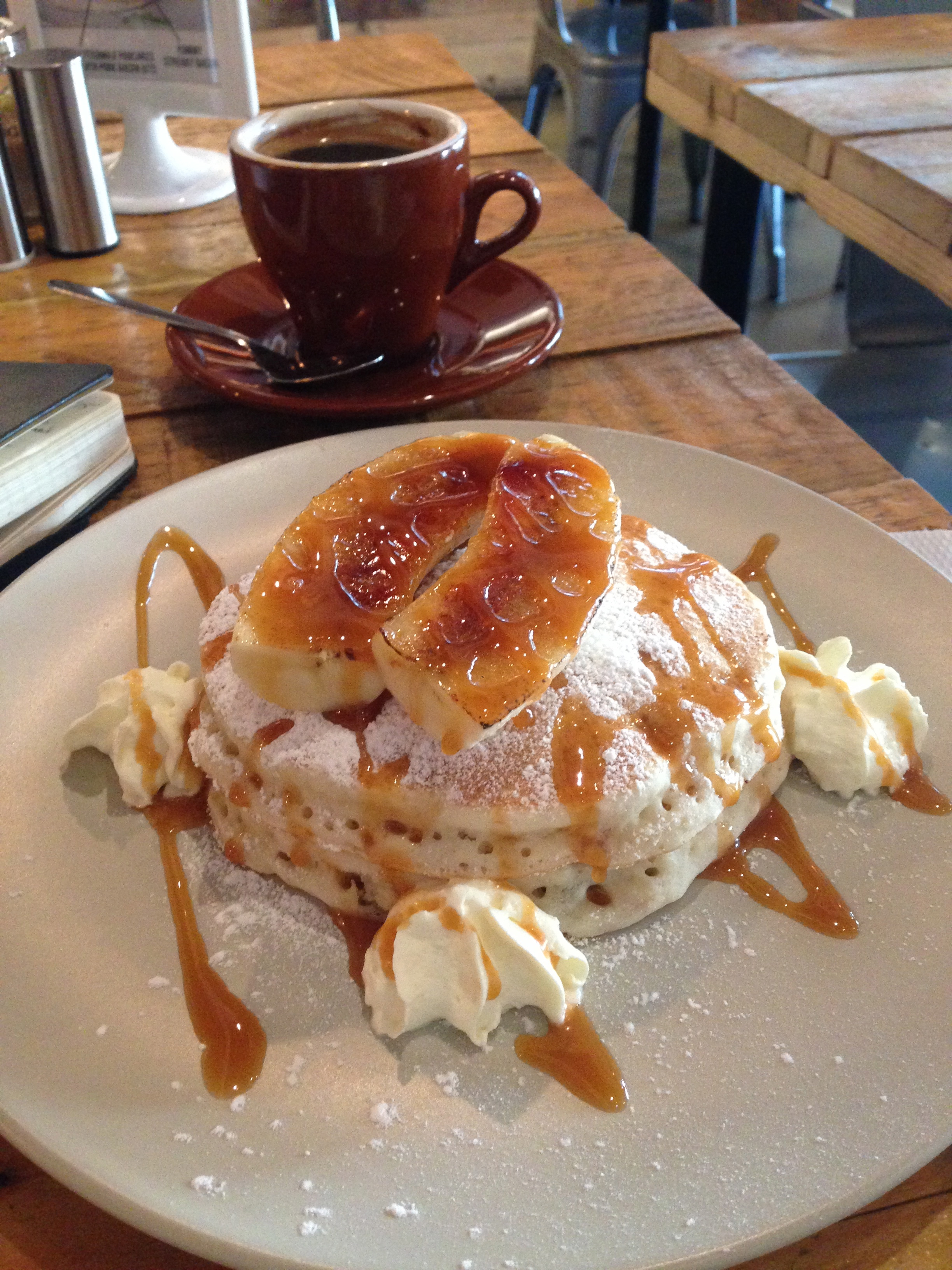
A long black please ($5.50), oh and that stack of devilish banana buttermilk pancakes. $9, you say? Aw, that’s not too bad at all. I mean, I can make my own buttermilk pancakes, but sometimes I need a step out of the humble abode, a new perspective, fresh insight into a worn classic. I forgot how good it feels to be at a café, alone with my thoughts, senses honed in on words, aromas, textures, flavour.

My penchant for anything sweet with nourishing kicks (think oatmeal with almond butter and honey, or this divine cheesecake) is let down a little once a week, when I hop around in search for something, anything, impressive on this tiny island, be it a sinful plate of crisp, endearing waffles or crazy lush French toast. Yolks oozing, crusts squealing at the first prick of my fork. Letting go can feel good. Almost necessary.

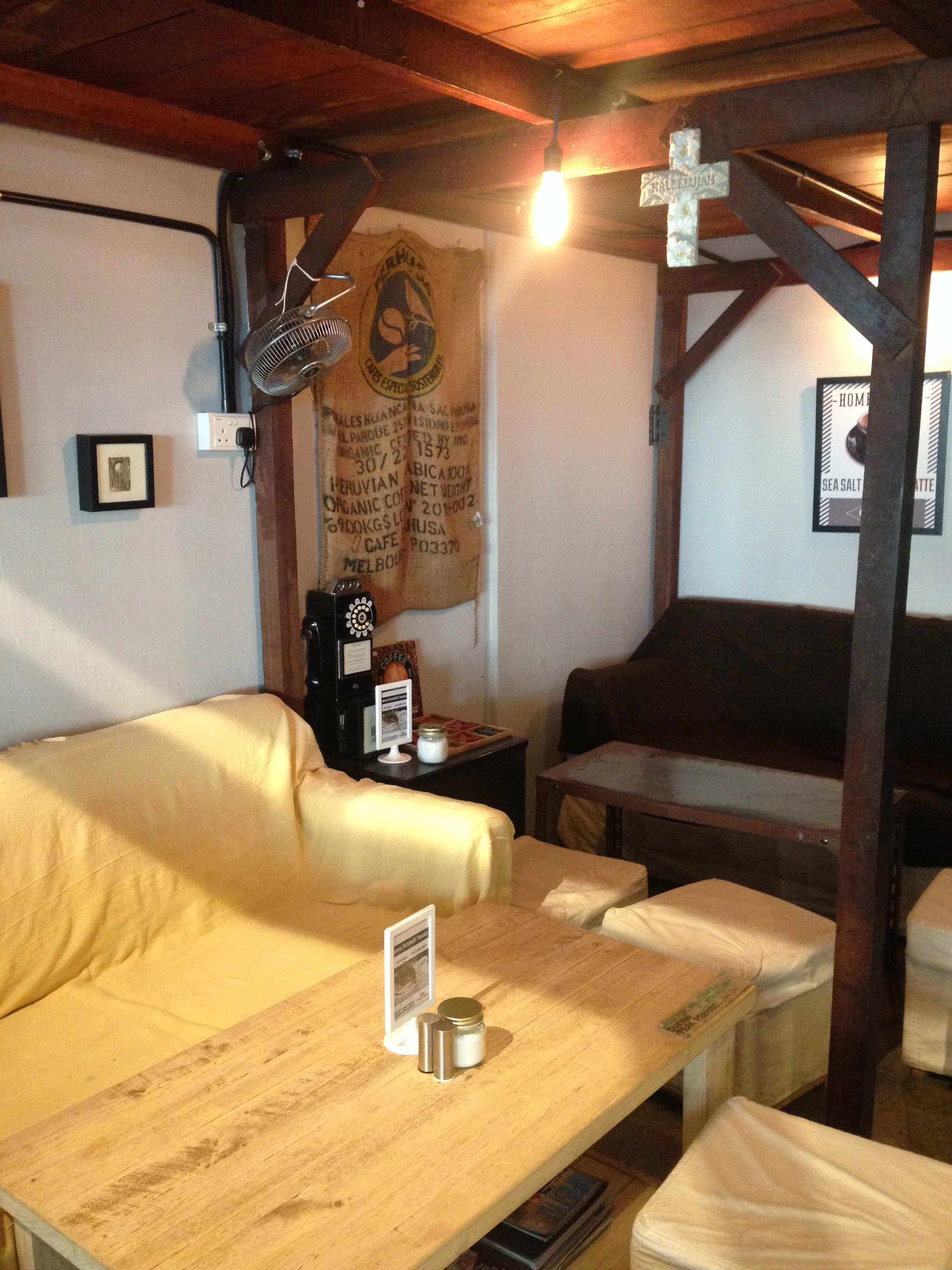
Tuesday’s situation. Ploughing through science writings, a double (upon request; they typically do three but I personally can’t stomach that) stack of RIDICULOUSLY thick and soft buttermilk pancakes topped with torched caramelised bananas, whipped cream and caramel, at the one café I’ve been meaning to visit for the longest while yet. I would’ve come sooner if it weren’t for my mistaken impression of this ‘nook’, something about the mounds of whipped cream I saw on Instagram and chimerical flavour titles on gaudy menus put me on edge; although it all sounded so whimsical and somewhat enticing, an air of off-the-beaten-and-maybe-slightly-greasy-track offset the appeal. I repeat: mistaken impression. One enters the wooden cove and is immediately bathed in a warm glow, some unuttered warmth. Smiling, tall baristas. The large sofa on my left had ‘come hither’ written all over, draped with a tassled beige cloth, resting against a wall filled with mini framed portraits. All the tables were elongated, wooden hexagons. The whole scene was akin to a teen clique’s secret hip hideout, complete with rough indie hits and large, flat spaces for ‘studying’. The nook lives up to its name. IMG_1056 IMG_1059

Delight.

Of course, the de rigueur sips of harsh black coffee. It’s always this or a capp for me whenever I’m in that pretentious assessing mood; the iced blacks typically mask bean quality, not that I’m anywhere near professional, and the smoothest latte (milk in Italian) still may not reveal much. Opted for the stuff straight-up, piping hot in a full 5-ouncer. They have a ‘sea salt caramel latte’ here too, and although I have an unrelenting sweet tooth, I dare not be lured into the lurid albeit enticing half-gimmicks. That being said, I shall allow my penchant for that classic sweet-salty combo to take the driver’s seat if ever I come back, and will be sure to give it a shot (maybe with an extra shot for good measure).

IMG_1060

Pillows. I loathe these for the carnal pleasure they bestowed.

A full centimetre high, impeccably well-risen, so much so that if I were to cut into one horizontally I would get 2 thin carpets of hole-studded pale batter, cooked to perfect doneness. Kid-soft. Ridged, air-punctured edges, just a tad firmer than the middles. At least 4 inches wide in diameter, good God. So perfectly reminiscent of typical American-diner-style pancakes. It’s a standard now, the desired standard for the experienced New Yorker. There were even little bits of banana in the batter. Crack into the elegant banana boats on top and you get a heart-stopping crème brûlée effect. Deep crackle, the break of glass, then the soft grunt of caramelised, almost burnt sugar top giving way to the creamy, ripe banana body. Pause– relish that detail.

Every chew got a little gummier as I went along, mouthfuls of white, sweet stodge. The stocky pancake was quickly reduced to sludge, but that’s alright. I just want everyone to try this. Is that too much to ask?

Rating: 4.5/5

Tolido’s Espresso Nook

462 Crawford Lane

6648 0178

Closed on Mondays

Tues-Thurs: 0930-1900

Friday-Sat: 0930-2200

Sun: 0900-1830

The Thickest, Fluffiest Pancakes You Will Make

‘A happy man has no past, whilst an unhappy man has nothing else.”

This is but one of the few memorable quotes I came across in my latest favourite read– The Narrow Road To the Deep North by Richard Flanagan, which won the Man Booker Prize last year. You know those books which leave you craving for more and more after each chapter, and the flipping action is speedy and excited? Yeah, this is one of them. War and Love are classic, usually overlapping literary themes, and Flanagan expertly weaves the two with arousing and intimate prose. Sometimes, I forget how mind-altering and rejuvenating fiction can be. It awakens, stirs something much deeper in the human soul.

Something else pretty mind-altering are…. These pancakes.

These, dear reader! By far the thickest, fluffiest ones I have ever made, and I sure as hell have made a lot of pancakes. Alright, before I proceed, I do wish to address the fact that I missed last week’s second post. Truth was that an unexpected outing stole the day’s limelight, and I hadn’t the time to do a write-up since then. Hopefully, this lazy-sunday-morning-recipe will make up for that. Goodness I’m excited, because trust me, they’re worth it. Definitely worth skipping a café line for.

Processed with VSCOcam with f2 preset

Now it’s your turn.

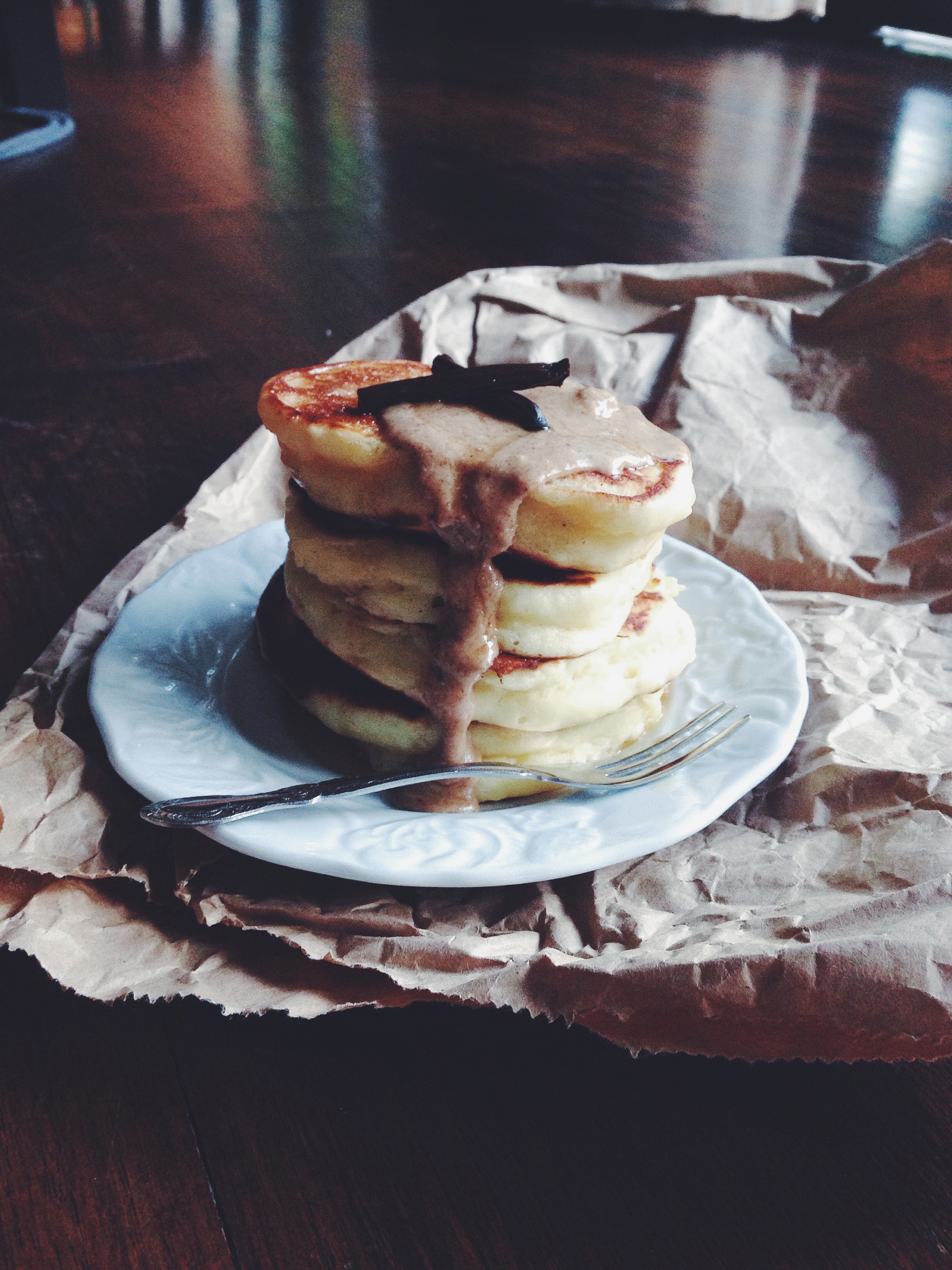
Thick, ridiculous, sweet and slightly spongy. I feel as if a drab ‘fluffy’ will take the fun out of this adjective scrambling, but heck, they are. Unbelievably fluffy, light, soft. A slightly lighter version of the Mickey Dees stuff. You get the jam.

I’ve tried these twice– once with almond butter and maple syrup, the other time as if I were at a traditional American diner, with butter, maple syrup, and a whole lot of family.

Can I have them with anything? So fluffy I could die!! My sisters chimed and beamed and scarfed down two each in less the time it takes for me to politely do a knife-and-fork job with one.

Since these freeze so well, I kept a couple stashed away. When I went to look for them the next morning, they were gone. I don’t blame them.

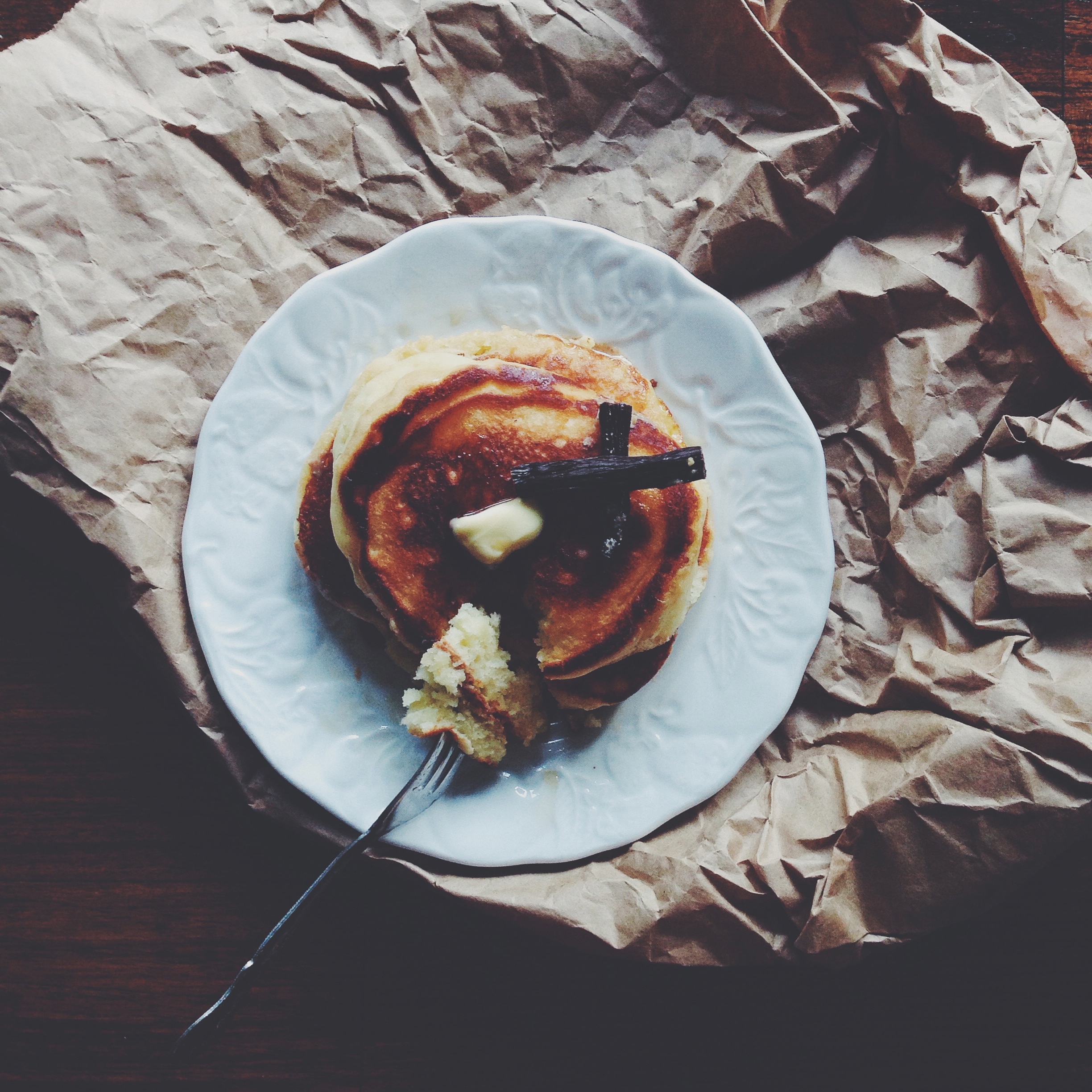
Honey and buttermilk provide an extra layer of moisture without added weight. The first two I made received a little extra char (as you can see above!!) because I was fiddling with the toppings and wasn’t paying as much attention to the stove, but the dark, crusty edges played a good texture game with the warm, melting butter and maple syrup later on. Mmmmm. Happy mistakes. And look at how thick these guys are. I kid you not, each pancake is at least an inch thick. Tender fluff. Pillow fluff. Press on a hot one and you’ll leave a finger mark that disappears almost immediately.

Vanilla Bean Buttermilk Pancakes (serves 4-5, makes around 11-12 medium pancakes)

*vegan substitution

Ingredients

188g all-purpose flour

3 tbsp white sugar

generous pinch of salt

1 tsp baking powder

1 tsp baking soda

1 egg (*one banana)

40 unsalted butter (slightly less than 4 tbsp, *vegan butter)

1 tsp vanilla extract or the insides of half a plump vanilla bean (or a skinny meek one)

240ml whole milk/ buttermilk; use store-bought or make your own by mixing 230ml whole milk with 1 tbsp white vinegar, and let the mixture sit for 5 minutes before using (*almond milk or any other plant-based milk)

Directions

In a large bowl, whisk together the dry ingredients (flour, sugar, salt and leavening agents). In a small microwave-safe bowl, melt the butter in a microwave and set it aside, letting it cool. In another medium bowl, whisk together the egg, buttermilk, vanilla (or insides of a vanilla bean) and melted butter. Pour the wet mix into the dry mix and mix briefly with a wooden spoon or a normal dinner spoon. Continue to mix until everything is justt combined, which means there will still be a few lumps, but no more streaks of flour. The batter will be thick and somewhat lumpy.

Preheat your pan on medium heat and ready some butter. You know the pan is hot enough when you flick a little water onto its surface and there’s a clear sizzle. At that point, generously butter the pan and ladle tablespoonfuls of batter. I didn’t have to wait for bubbles to pop before flipping; the batter is thicker than usual and there’s no need to wait. Flip the pancakes when you notice the edges stiffening a little, or when you can slide your spatula whole underneath the bottom of the pancake. It will rise a little upon flipping, as if that action gives it life, and hence, breath. The surface should have a brown mosaic thanks to the hot butter. Once the second side is done (will take no more than 20 seconds), let cool on a paper towel. As mentioned above, these freeze wonderfully, so you can make a whole batch, have a small stack and stash the rest in a ziploc bag in the freezer. Easy!

Serve with butter and maple syrup, or whatever you want. I particularly like them with banana, its moist sweetness adjoining arms with the maple. What a Sunday.

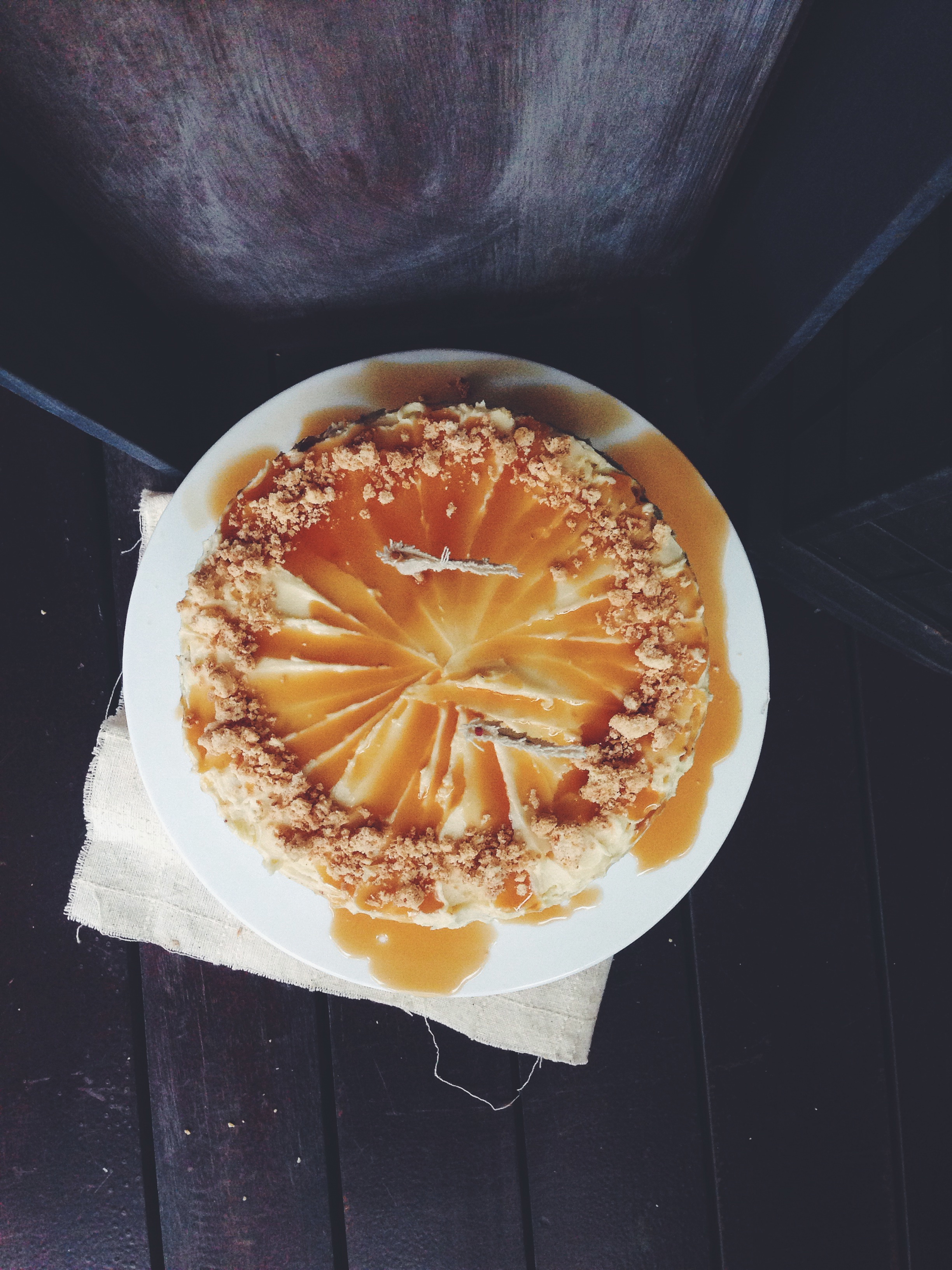
Naked Moist Chocolate Cake with Salted Caramel Creme Fraiche Frosting

Thunder now. I’m loving the endless precipitation in this otherwise stifling furnace. When trivialities seem to take hold of life, there are always certain important people to bring me back down to Earth, and there’s, well, cake. Hey, childhood fancies, it’s been a while. Processed with VSCOcam with f2 preset Processed with VSCOcam with f2 preset I think it only de rigueur to celebrate a special occasion with something a little more elaborate. ‘F’ and ‘L’ are the initials of someone pretty damn special in my life, and special people deserve something a little more elaborate, more celebratory, more.. regal if a little rustic. Chocolate and salted caramel has been done before, tried and tested, stamped with approval, signed off in girlish curlicues. But I daresay this endeavour is a bit more wild, and not quite so predictable in taste and texture with the addition of crushed meringue and lavish drizzles of homemade salted caramel. The waterfall effect of the buttercream frosting does a bit of justice to the ‘naked’ cake; I here term it as such because the ridges and painfully thin outer layer of frosting allow the bottom halves of each chocolate cake layer to be seen, for a subtle gradient effect, the salted caramel running slowly between the ridges, cutting through the purposeful flaw. Mimicking the movement of pale frosting. Godspeed. Processed with VSCOcam with f2 preset Processed with VSCOcam with f2 preset If you are wondering why the two pictures above look a mess, I’d gladly point the finger at that solo stack of plates. An unfinished crumb coat was almost completely wrecked when the stack of three layers, frosting in tact between each, toppled over and collided into the side of the stack. But this cake held its own, unflinching. Sometimes, failures or mishaps really do prove someone, or something’s worth. Despite the delicate moisture of the cake, its sweet and slightly bouncy crumb, the collision underscored a hidden robustness, making me hold this cake in the highest regard. It deserved to be treated right, after not letting me down. Processed with VSCOcam with f2 preset Processed with VSCOcam with f2 preset Processed with VSCOcam with f2 preset This amalgamation of flavours imparts subtle, simple decadence. The chocolate cake of our childhoods is wrapped with the familiar indulgence of sweet and salty caramel, with a bit of zip thanks to a squeeze of lemon and fresh Maldon. The first time I tried the cake with all its components, I did think the salted caramel crème fraîche frosting lacked oopmph, my tongue betraying the anticipation of a more sophisticated flavour profile. Hence, I did a mini batch of frosting after this cake was made, altering the salt and creme fraiche content to taste. In all honesty, a slice of this stuff is good warm or cold, and can be stored for at least a week in a fridge, or a couple of days at room temperature. And finally, I really don’t know what could possibly beat fresh, homemade salted caramel…? Moist Chocolate Cake With A Salted Caramel Creme Fraiche Frosting (makes a three-layer, 8-inch wide cake) For the cake: (cake recipe adapted from here) 300g (3 cups) cake flour, or all-purpose flour if you don’t have cake flour on hand 300g (3 cups) white caster sugar 150g (1 1/4 cups) cocoa powder 3 tsp baking soda half tsp of fine salt 1 1/2 teaspoons baking powder 380ml (around 1 1/2 cups) buttermilk 180ml vegetable oil 3 eggs at room temperature 2 tbsp vanilla extract 1 1/2 cups (370ml) freshly brewed coffee For the salted caramel frosting: 340g salted butter 4 tbsp créme fraiche 980g powdered sugar 180ml (slightly less than 3/4 of a cup) of salted caramel (ingredients for this down below) For the salted caramel (recipe adapted from personal trials): 1 tbsp light corn syrup 5 tbsp (75ml) water 1 tsp vanilla 125ml (around half a cup) of heavy cream 110g (1/2 cup) white sugar juice of half a lemon (approximately a teaspoon) 1 tsp fine sea salt Preheat the oven to 177C (350F) and line three 8-inch circular cake pans with parchment paper (trace around each pan with pencil on the parchment paper and then cut out neatly). Spray the bottoms of the pan before laying on each piece of parchment, and then spray lightly again. Set these pans aside. In the large bowl of an electric mixer fitted with a paddle attachment, sift in the dry ingredients– cocoa powder, flour, sugar, baking powder, baking soda and salt. Stir on low speed until combined. The same can be done with just a large bowl and a whisk if you don’t have an electric mixer. In a separate medium bowl, whisk together the buttermilk, oil, vanilla and eggs. Stir in the fresh coffee. With the mixer on low speed (or without a mixer), add the wet mixture into the dry. Use a spatula to scrape down the sides of your bowl and make sure everything is well combined. The batter should be sticky, dark, glossy and liquidy. In fact, the wetter, the better. If your bowl of batter looks too dry, or drops off the back of your spoon or paddle too slowly (it shouldn’t really ‘drop’ at all, really), add at least 2 tablespoons of milk. Drop each pan on your counter to knock out excess air bubbles. Use a weighing scale to ensure there’s an equal amount of batter in each pan. For this recipe, there was around 750g of lush chocolate batter in each pan, and each layer is rather thick. Place the pans in the oven (you can place 2 in first if your oven can’t fit three, which is usually the case, and then pop the last one in afterwards). Bake for 35-40 minutes, before removing from the oven and let cool on wire racks. Mine took 36 minutes, and a wooden skewer inserted into the centre of the pan should come out dry, with a few moist crumbs clinging to the very tip. While the cakes bake, make the salted caramel. Put the corn syrup, water and sugar in a saucepan and place over medium heat. Stir together with a wooden spoon and let the mixture come to boil. In a separate medium bowl, mix together the lemon juice (add less if you like your salted caramel less ‘lemony’), vanilla and cream. Once the mixture in the pan comes to a boil, stop stirring (to prevent crystallisation) and let boil for a while. This will take at least 5 minutes or so. If it looks like one part of the pan is turning darker faster than the other parts, then gently swirl the pan to distribute the heat and quicken the chemical reaction. Slowly, the sugars will all caramelise and the whole mixture will suddenly turn a dark amber. At this point, turn off the heat and add the cream mixture. Stir in the salt to taste. The mixture will bubble almost immediately, before lightening and turning a lighter caramel shade. If the mixture seizes, don’t fret!! Simply put the pan back on a low heat and stir until everything amalgamates nicely again, which will take 2-3 minutes. All is good, all is good. Make the buttercream. In an electrical or handheld mixer, beat the salted butter, which should be slightly cold but not too frigid, and the créme fraiche, until pale, creamy and fluffy. Sift in the icing sugar in thirds, and beat well to combine. Add half a cup of salted caramel (125ml, or slightly more, all to taste)  and beat briefly to distribute the caramel’s colour and flavour. The buttercream should be smooth and not too runny, so I suggest adding the salted caramel bit by bit to get the right consistency. Once the cakes are cool, assemble. Remove the circular pieces of parchment from the bottoms of the cooled cakes, and place one in the middle of a cake stand. Using a third-cup measurement, measure out a third of a cup of buttercream and spread onto the first layer. Place a little more on top if the layer of frosting doesn’t look thick enough. Place the second layer on the first, and do the same. Repeat with the third layer, but this time, spread more buttercream down along the breadth of the cake, creating a thin crumb coat to catch any excess crumbs. Let the whole cake set in the fridge with the crumb coat for at least a couple of hours, or overnight. After this period, use more buttercream to cover up any obvious bits of brown on the outside. Use the blunt edge of a butter knife to create the ridged, naked, waterfall effect, going from the bottom up. It’s much easier than how it might read here, I promise! In any case, the decoration is entirely up to you. Once you have run the butter knife up along the sides for the entire circumference of the cake, do the same for the top, but direct the butter knife movement towards the centre, so you get the ‘wheel’ effect, as can be seen in the third last photo above. Drizzle the top with leftover salted caramel and, if you wish, crumbled biscuits of meringue.