Red Velvet Cake Bars

IMG_5558

Truly no frills.

And way too hard to mess up, to be perfectly honest. There are a few reasons why I’m in love with this red velvet cake recipe. Why? A list seems appropriate, yes. These cake bars (or mini circular-sort cakes, if you would like, those work too) are:

  1. The most moist, fluffy and tender red velvet cake bars your lips will ever meet.
  2. Have a deeper chocolate flavour than most red velvet cake recipes
  3. Have actual melted chocolate in the batter (!!)
  4. Cream cheese frosting. That is all.
  5. Thick, creamy, vanilla bean-ified frosting.
  6. Frosting.

Red velvet has gotten quite a bit of flak recently. Most everyone has tried these dainty red cakes slathered in cream cheese frosting. However, due to its perceived nature of artificiality and lack of distinct flavour thanks to too many a sticky-topped, mass-produced factory version, people have come to believe the one true hero of the eponymous red velvet is really just that cream cheese frosting… and not much else. If I may quote someone from my favourite TV series– red velvet is a lie!

The chocolate notes have been forgotten, abandoned, and what was once known (I remember the trend hitting hard around 2-3 years ago) for unbeatable moistness and tenderness has been passed off as that unnecessary trendy thing with too much red food dye. 

With this recipe, hopes have been revived.

IMG_5573

I found it in my mother’s huge collection of cake recipes (quite literally a huge grey file labelled ‘CAKES’), and modified it to taste and texture. The red velvet batter has the perfect hint of chocolate, and the cream cheese frosting is rich, cram-jammed with real vanilla bean and the right amount of tang. I could go on about this cake and how easy it is, but I don’t think I need to bore you with the details. Let’s get to it, because life is short and there’s no point wasting time wasting time.

Ingredients (makes enough for 3 batches of cake bars in an 8×8-inch pan, or 3 6-inch cake layers)

For the cake bars:

120g soft, unsalted butter

330g castor sugar

300g all-purpose flour

2 eggs

50g cocoa powder

1 heaped tablespoon red gel food colouring

1 tbsp vanilla bean paste (or substitute with the same amount of vanilla extract)

50g bittersweet chocolate, chopped (preferably from a bar, but chips are fine here too) and melted in 30-second increments in a microwave

250ml buttermilk (or mix 240ml whole milk with one tablespoon of white vinegar, and leave to rest for a while before using– the mixture should be slightly curdled)

pinch of salt

2 tbsp white vinegar

1 1/2 tsp baking soda (bicarb soda)

For the cream cheese frosting (enough for the tops of 3 batches; make double this amount if you wish to frost the sides as well):

42g unsalted butter, at room temperature

1 tsp vanilla bean paste (or sub with vanilla extract)

180g cream cheese, at room temperature

200g icing sugar

pinch of coarse salt

Directions

Preheat your oven to 180C (350F) and grease and line your cake pans, be it 8×8-inch square baking pan(s) or 3 6-inch round cake pans. Melt your chopped plain chocolate in the microwave and set aside for the time being. Take your cream cheese out from the fridge so it has time to come to room temperature. If you’re making your buttermilk (because you’re like me and can’t be bothered to run to the grocery store just to buy that packet of buttermilk), mix together the whole milk and white vinegar in a bowl and set aside as well.

In a large bowl and with an electrical whisk or Kitchenaid if you have one, beat together the softened, unsalted butter and white castor sugar. Beat until pale and fluffy, at least 30 seconds or so. Add the eggs one at a time and beat between each addition. Add the vanilla bean paste at this point, and then sieve in the cocoa powder. When sieving, I find it handy to place your bowl on a weighing scale and then sieving in the cocoa powder until you reach the 50g mark. Beat the vanilla bean paste, cocoa powder and your melted chocolate on a low speed until it’s all combined. You should have a thick, sticky, dark batter.

At this point, add your red gel food colouring. I used a heaped tablespoon, but you may want more or less depending on colour preference. Start with a teaspoonful of food colouring and then work from there. I find that a heaped tablespoon (I used a ‘Christmas Red’ hue) does the trick, producing a rich, deep, carnation red, nothing too pink or too dark.

In a separate, smaller bowl, whisk together the flour, salt and half a teaspoon (it’s part of the amount stated in the ingredients list above) of fine salt. This is the dry mix. Add half of this to the chocolate-butter mix you just put together, then add half of the buttermilk. Beat on low speed briefly, then add the rest of the flour and the rest of the buttermilk. Using a spatula, scrape down the sides and make sure all the batter is evenly mixed, folding from the bottom  and coming up through the sides and middle.

Now for the kinda magical bit, and what gives the batter a final kick and ridiculous level of moisture! In a small saucer, mix together the remaining 1 tsp of baking (bicarb) soda and 2 tsp of white vinegar. The mixture will fizz up. Immediately tip it into the batter and mix in thoroughly with a wooden spoon.

Pour the batter into your cake pans and bake in the preheated oven for 20-22 minutes. If you’re using 6-inch cake pans, check at the 20-minute mark– insert a wooden skewer into the middle of the cakes; if they emerge with wet red batter then bake for 5 more minutes. With an 8×8-inch cake pan, these will be done by 20 minutes, but every oven is different, and they may take 2 minutes more or less.

While the cakes are baking, make the cream cheese frosting. In a large bowl and with an electrical whisk, beat together your soft, unsalted butter and cream cheese. Then, beat in the vanilla bean paste, icing sugar and salt.

Once the cakes are baked, leave to cool on cooling racks for at least half an hour before removing from the pans and cutting off the tops (the cutting off part is unnecessary if you’re baking these in an 8×8-inch cake pan). If you’re using the square baking pan, spread on the cream cheese frosting, then cut into bars. If you are using 3 6-inch cake pans, spread on a large dollop of cream cheese frosting on one layer, then stack with the second layer, and repeat. If you’re making a cake this way and you’re done with the last layer, immediately let the cake set in the fridge, for the cream cheese frosting will start to melt all over the place otherwise. With the amounts stated above, I could make a stacked 2-tier cake and one 8×8-inch square cake (with lots of leftover cake from the tops!). These cakes can be stored in the fridge in an airtight container for up to a week.

Tender is the crumb.

Pineapple Condensed Milk Loaf Cake

IMG_5376

If there’s one thing you make this week, make it this.

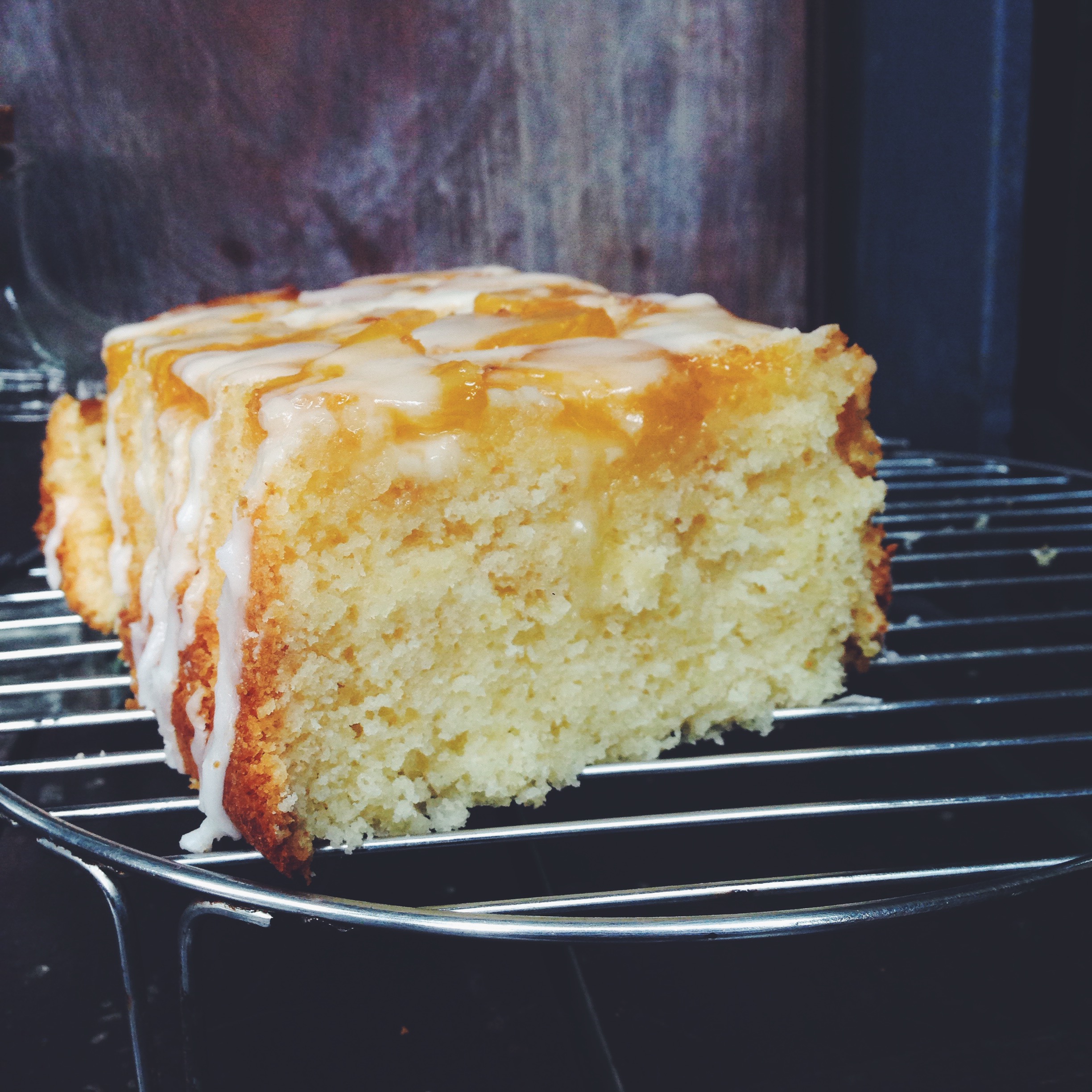
A fluffy pineapple condensed milk loaf cake, studded with fine bits of pineapple, topped with fresh pineapple slices and a lemon-pineapple glaze. 

Sometimes my ideas are like branches with dead ends and no coherence. Since this blog is all about delicious, easy bakes, I didn’t want to throw random curveballs, but I didn’t want to overestimate the charms of conformity either. Basic, but not too basic. A degree of subtle complexity, and certainly no plain jane taste.

Scavenging the kitchen left me with some leftover pineapple from last night’s dessert and, well, not much else. Pineapple loaf cake has been done before, upside-down variations galore, and my finding of condensed milk in the fridge led to this mild twist. I must say it was fun to play around with the ratios; it turned out to be the perfect balance of sweet from the condensed milk and tangy from the use of both fresh pineapple and pineapple juice. Here, there’s not much flamboyance, and hardly any finesse. Funnily enough, it’s exactly this lack of properness that provides the right amount of charm.

IMG_5363

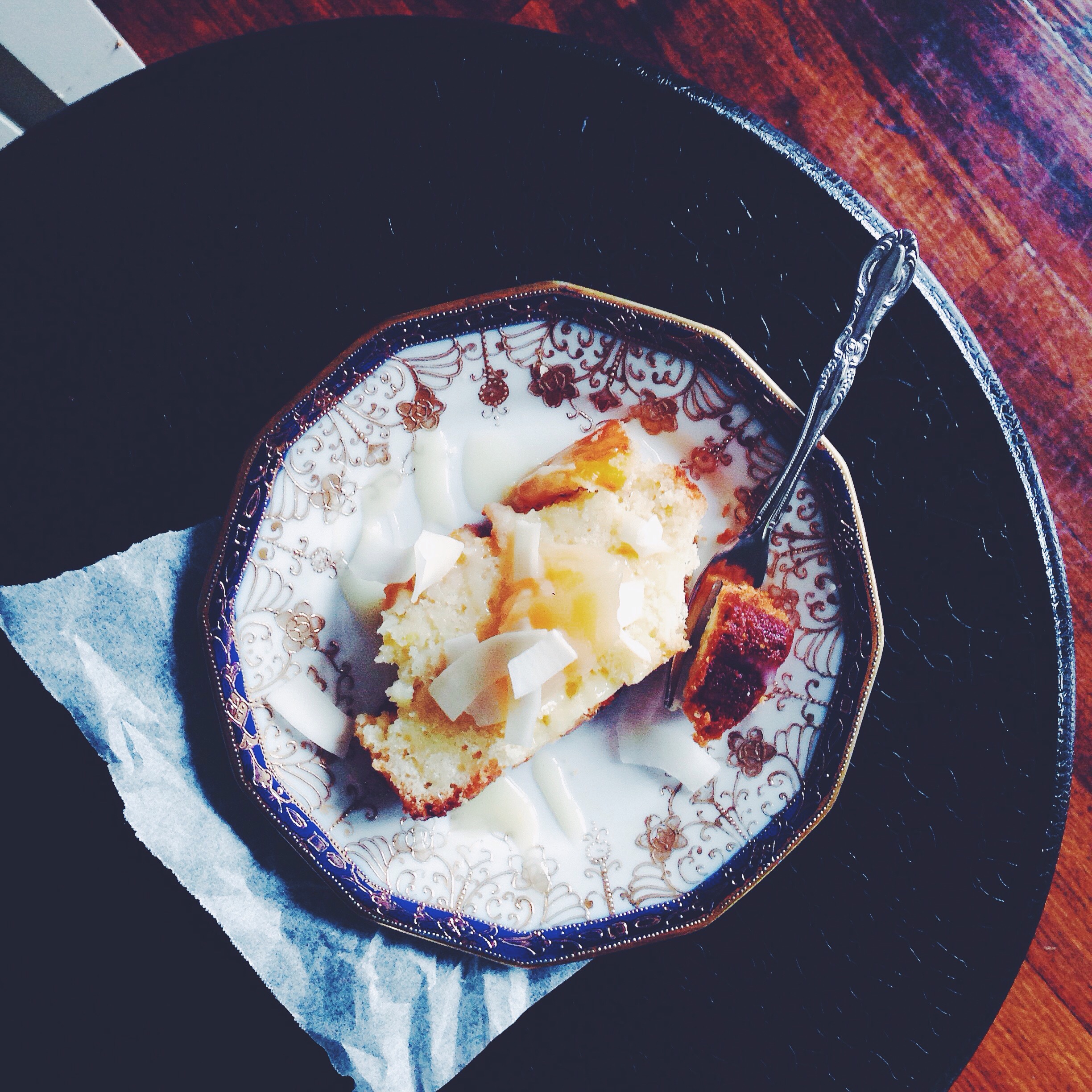
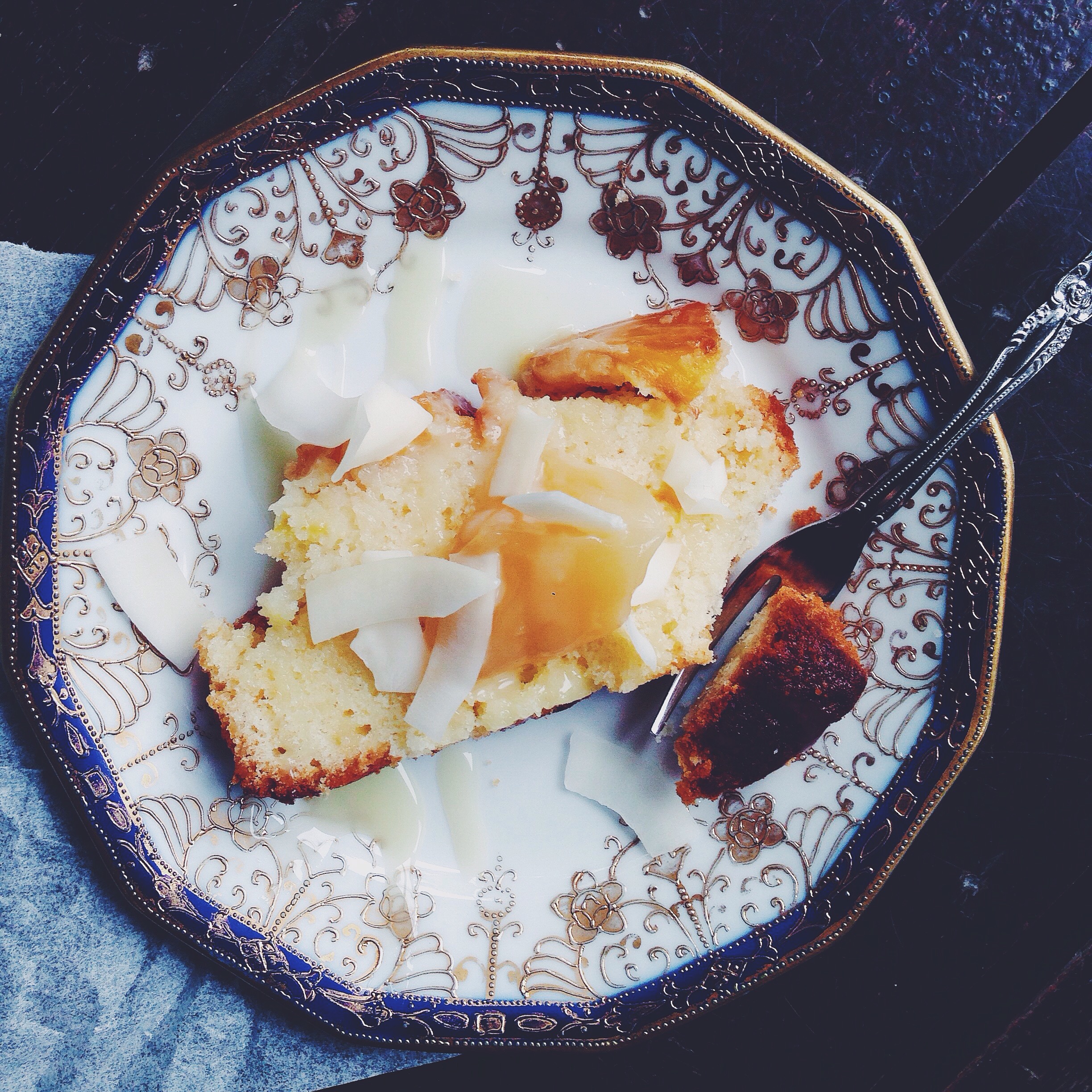
{Above: served warm with lemon curd, a drizzle of condensed milk, and coconut chips}

It’s messy, sticky, glorious. A little of the juice from the fresh pineapple layered on top mixes with the lemon-pineapple glaze, and together with the fresh pineapple both on and inside the cake, forms the perfect topping to the fluffy cake base. And goodness is this fluffy. Fork work is no work. The condensed milk, other than its more unorthodox flavour in the cake, provides a satiating density without weighing anything down. Tender is the night crumb.

Ingredients

For the cake:

175g cake flour (or substitute with the same amount of all-purpose and add 2 extra tablespoons, and be sure to whisk the dry mix all the more thoroughly later)

1 1/2 tsp baking powder

1/2 tsp baking soda

large pinch fine salt

115g white sugar

110g (around a stick) soft, unsalted butter

1 egg

1 tsp vanilla extract

150g fresh pineapple, cut into even chunks, around 1cm thick

60ml (1/4 cup) condensed milk

60ml (1/4 cup) pineapple juice (freshly squeezed, or you can buy those cans which state ‘100% pineapple juice’), or substitute with 30ml lemon juice and 30ml water

freshly squeezed juice of one lemon

For the lemon-pineapple glaze:

75g icing sugar

juice of half a lemon (the remaining lemon juice)

1 tsp pineapple juice, or substitute with more lemon juice

Directions

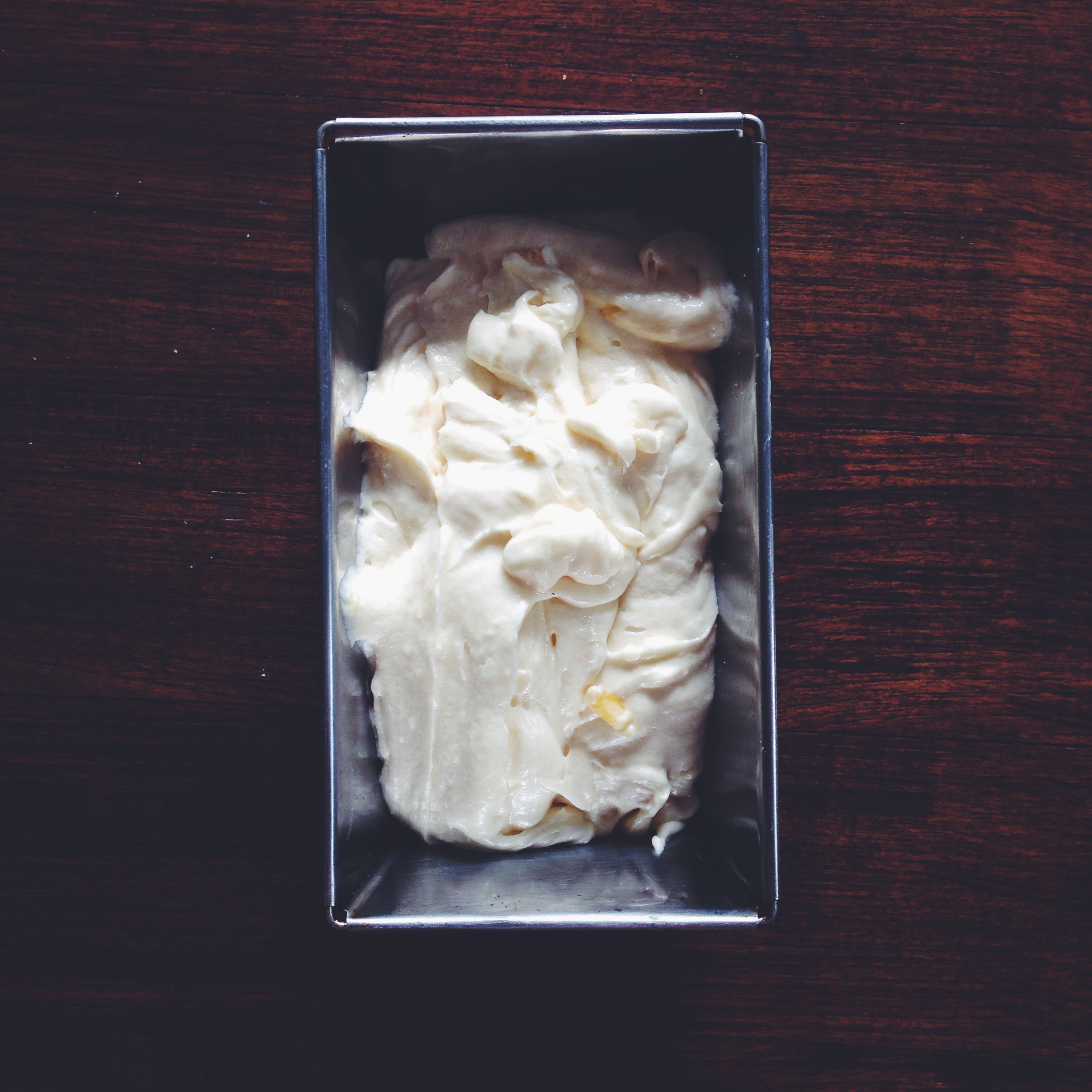
Preheat your oven to 177C (350F) and grease a 9×5-inch loaf tin. Separate your pineapple chunks into two clumps– one that’s 100g (to place at the bottom of your pan) and another that’s 50g. Finely chop this latter clump into small pieces. Sprinkle some white sugar on the bottom of your greased loaf tin, then place the chunks (100g in total; refer to picture above) of pineapple at the bottom. Set aside your loaf tin.

In a large bowl, cream together the butter and white sugar for at least 30 seconds. Beat in the egg, vanilla extract and condensed milk. In a separate smaller bowl, whisk together the flour, salt, baking powder and baking soda. To the butter-sugar mix, add half of the flour mix, then half of the pineapple juice. Use a wooden spoon to mix everything in briefly (streaks of flour are fine), then add the rest of the flour, remaining pineapple juice, half of the lemon juice, and the finely chopped pineapple. Mix everything together until just combined. The mixture should be yellow-ivory with a thick dropping consistency.

Tip batter into the loaf tin and bake for 40-45 minutes; mine took 42. Insert a wooden skewer into the middle of your loaf at the 40-minute mark– leave it for another couple of minutes if the skewer emerges wet and sticky, but take it out if it comes out dry. A few moist crumbs at the tip are fine, for the pineapple chunks at the bottom make it stickier and wetter than the other parts of the cake. While the cake bakes, make the glaze. In a bowl and with a fork or spoon, mix together the lemon juice, pineapple juice (or more lemon juice) and icing sugar. Play around here; you should have an opaque, white glaze. It should easily run when you hold the spoon at a height, but the stream would become reluctant once it starts thinning.

After removing the tin from the oven, leave the cake to cool on a cooling rack for an hour or so before removing. To remove, wear heatproof gloves and tip out your loaf cake, setting it down on your counter the way you put it in the oven (pineapple side down). Using a serrated knife, cut off the top of the cake, so both the top and bottom are flat (tip: the bits you cut off are wonderful, crusty and perfect with marmalade and tea). Flip the loaf cake so the pineapple side is on the top this time. Drizzle with the lemon-pineapple glaze.

Serve warm with lemon curd and more condensed milk. Store the rest in an airtight container and place in the fridge for up to a week.

Chocolate Truffle Maple Syrup Cake

IMG_4776

Describe the taste of maple syrup.

Research informed me that it depends on the degree of roasting flavour. Typical notes are coffee, chocolate and chicory, and for the strong roasting flavour, you get hints of burnt sugar and smoke. Whatever the degree, there’s something incredibly enticing about this ingredient in particular. I use it several times a week without fail, almost always on toast and always on the occasional Sunday pancake session, yet it only recently occurred to me how deeply embedded it is in my kitchen system. It sits there day after day, use after use, so giving, so heartwarming. I love maple syrup, and there are few things I like more than chocolate and maple syrup. The sophistication of a rich, dark truffle stuck in honey-coloured, maple-flavoured fluffy cake is a welcome picture.

With so many truffles lying around the house, I thought I might as well put them to good use. The sort I use here are 60% cocoa; your standard, powdered, melt-at-room-temperature truffles. My hands were an absolute mess working with them, but the mess only enhanced the pleasure of the whole process, even as I witnessed some smaller bits melt a little into the batter before anything even hit the heat of the oven.

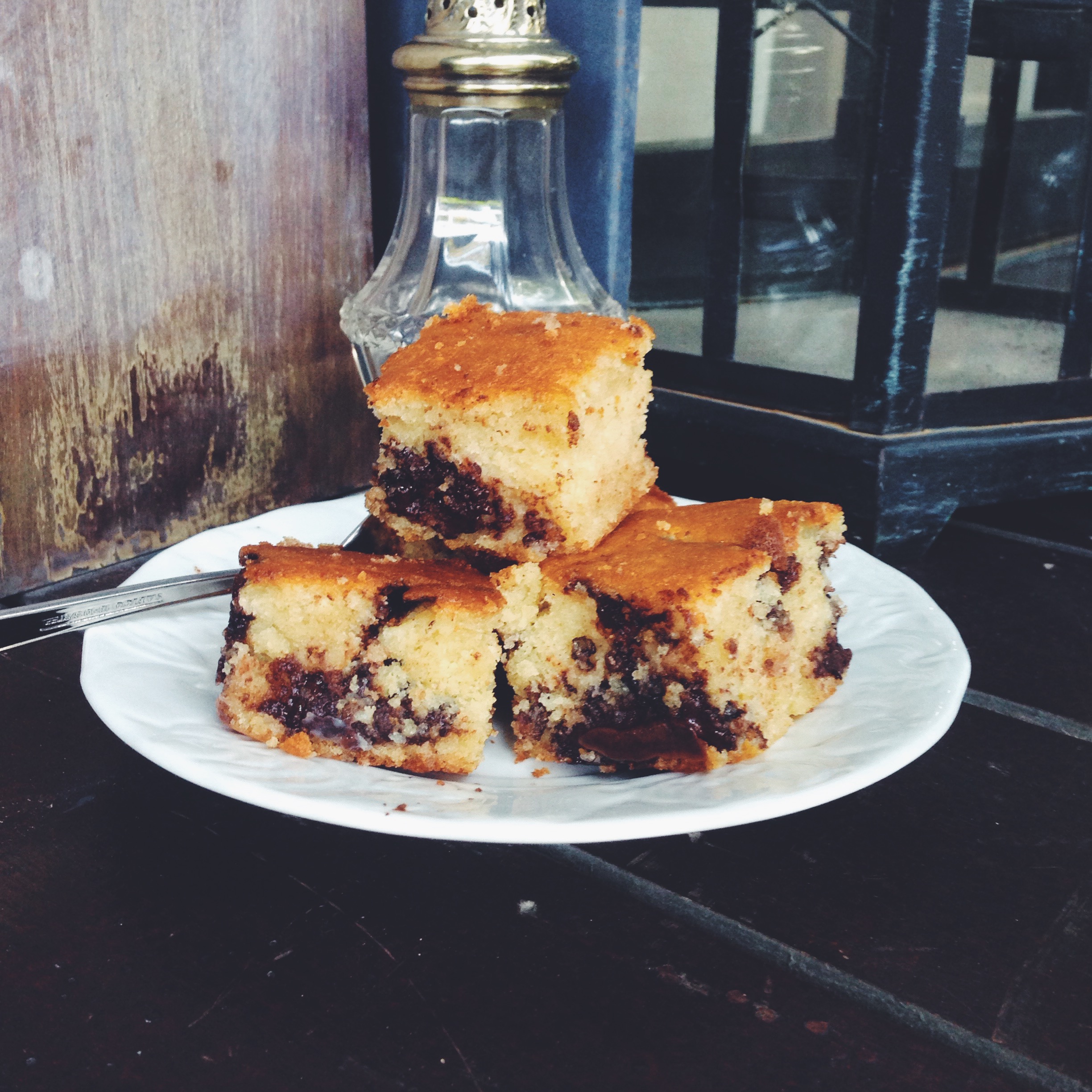
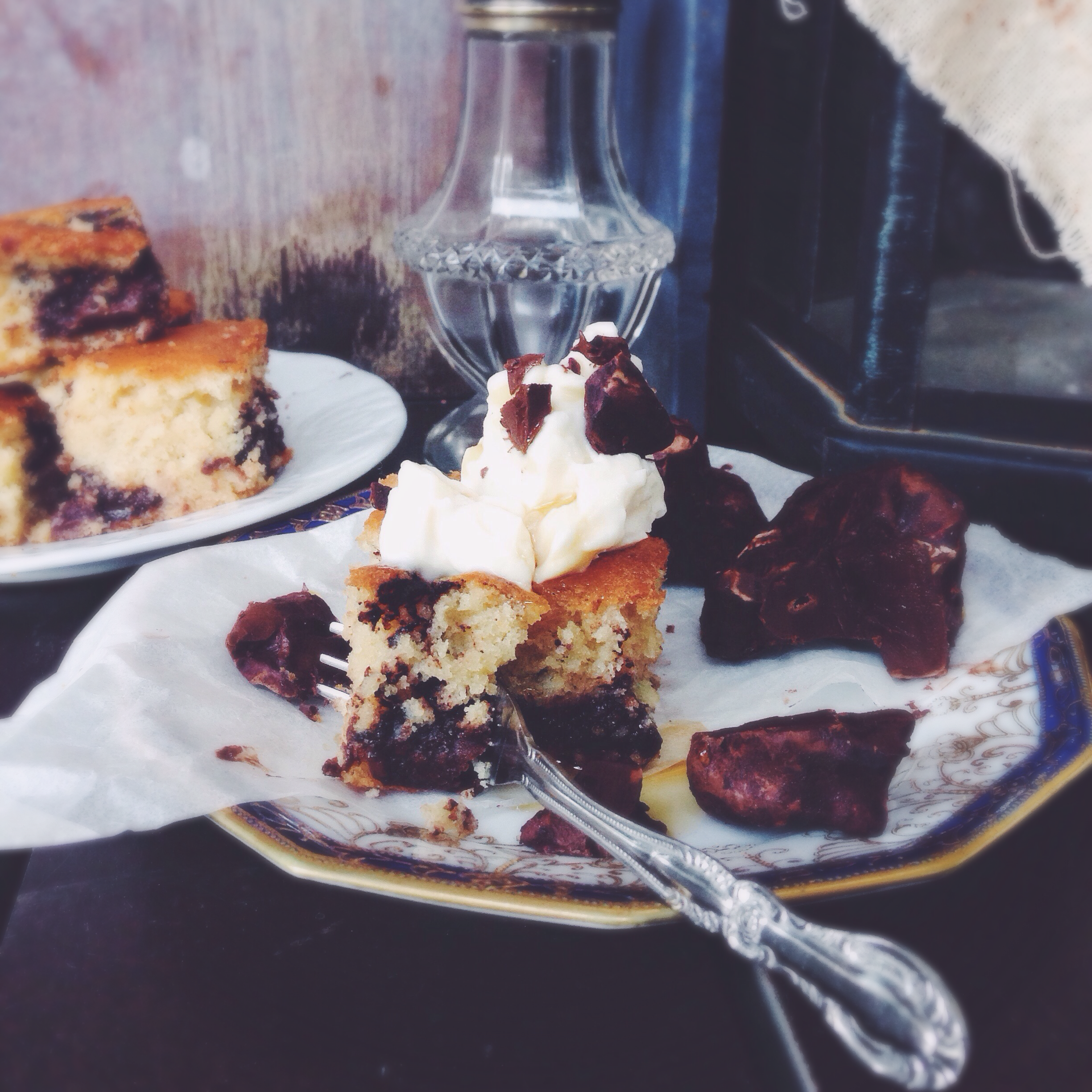
Your fork dives in. Zero resistance as it goes right through the pale, tender, moist body, and then maybe just a little once you hit a pocket of slightly stiffened chocolate goo. Break the cake apart. It’s a mess of black and white, a welcome juxtaposition of soft, fluffy crumbs and dangerous dark hotpockets. Sin trapped in something all too normal, all done before. No truffles? That’s ok, just use broken up bits of your dark chocolate bar. The effect won’t quite be the same with the whimsical shape irregularities and molten middles, but I would think it would be almost as delicious.

IMG_4782

Chocolate Truffle Maple Syrup Cake (makes 16 squares, heavily adapted from my cinnamon coffee cake)

Ingredients

165g all-purpose flour

1 tsp baking powder

1/4 tsp baking soda

1/2 tsp salt

55g (less than 1/4 cup) white sugar

115g unsalted butter at room temperature (or microwave cold butter in 15-second increments until it’s a little warmer and soft to touch)

120ml (1/2 cup) buttermilk, or make your own by putting half a tablespoon of distilled white vinegar into your measuring cup or jug and filling it up to the mark with whole milk (let this mix sit for 5 minutes at room temperature before using).

1 tsp vanilla extract

1 egg

100ml (1/4 cup and 1 tablespoon) maple syrup, and more for drizzling

9-11 medium-sized (around 2 inches wide) chocolate truffles, a few broken up into smaller pieces, or if you don’t have truffles, just broken up bits of a good quality dark chocolate bar.

Directions

Preheat your oven to 177C (350F), and butter and line an 8×8-inch square baking pan. What I like to do is butter the pan liberally, before placing down a piece of parchment that has 2 sides which are 8 inches, and the other 2 slightly longer so that it’s easy to pull out the bars once cool. Whisk together the dry ingredients (flour, baking powder, baking soda and salt) except for the sugar in a medium bowl.

Beat together the butter, maple syrup and sugar in a separate bowl. In a smaller bowl (yes there are 3 bowls here, but the washing up is not much pain, promise), whisk or beat together the egg, buttermilk and vanilla extract. Add half of the dry ingredient mix and half of the egg-buttermilk mix to the butter and maple syrup mix, and then beat to mix. Then add the rest and gently mix everything together, starting with a wooden spoon, and then switching to a rubber spatula to make the job easier.

Into your buttered and lined pan, add half of the batter, which should be smooth and slightly thick, and then dot the batter with chocolate truffles. Add the rest of the batter on top and smooth it out. Bake in the preheated oven for 33-35 minutes, or until a wooden skewer inserted into the centre emerges clean. The top should be slightly darker than when you first put it in, and brown around the edges. Enjoy this with vanilla ice cream or whipped and sweetened mascarpone (as in the pictures above) and a drizzle more of pure maple syrup.

Semolina Pear Pudding Cake

In all honesty, I’m not quite sure how to kick this one off.

Because look at it.

Do you like pudding? Or cake? Maybe both? If you’re into something soft yet firm-crusted and perhaps a little gooey on the inside, then fill yourself with hope. I had this for breakfast this morning and haven’t looked back. Why did it take me so long to get to this stage of sunlit ecstasy (what does that even mean)? Embarrassingly, I have too many questions to ask myself.

It’s the 3rd day of June and I feel like having a third cup of coffee. I like looking at the stains up and along the sides of the cup, a few viscous drops never really making it halfway down the porcelain breadth. Although some things in my personal schedule have shifted a little, constants remain, like almost-selfish spaces of time to myself, spent with a good book, science literature… and, yes, absolutely random ovenputtogethers baking bonanzas. I’ll be truthful and say that I still prefer the taste and texture of traditional baked cake, but semolina, or coarse, purified durum wheat, indeed lends a more interesting albeit unorthodox flavour.

IMG_2014

Let’s go through the motions.

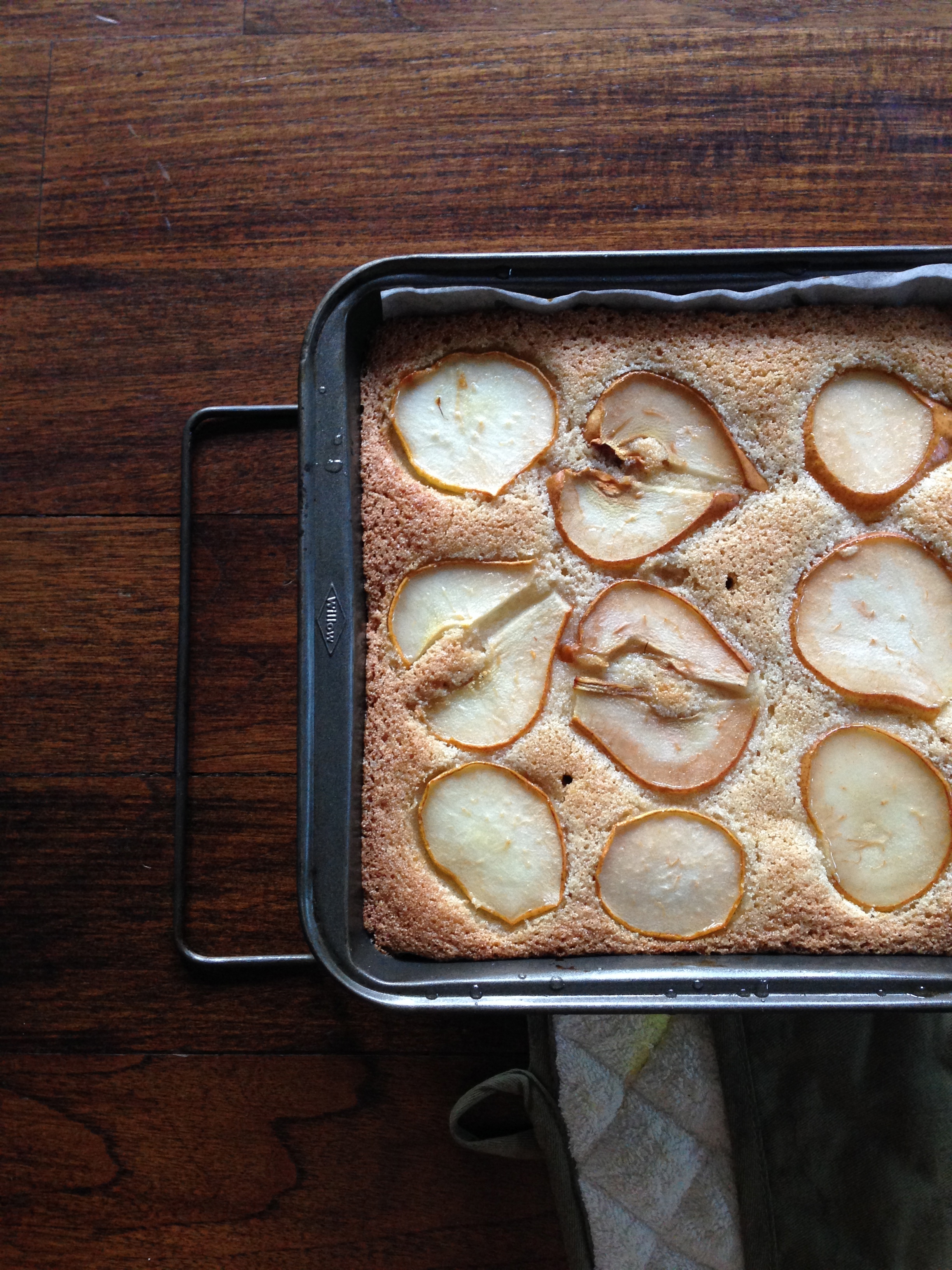
What we have here is a layer of pears on the bottom, then a semolina cake enriched with plenty of vanilla and a little elderflower cordial, then another layer of pear. Everything is brushed with what would seem like too much elderflower syrup after baking.

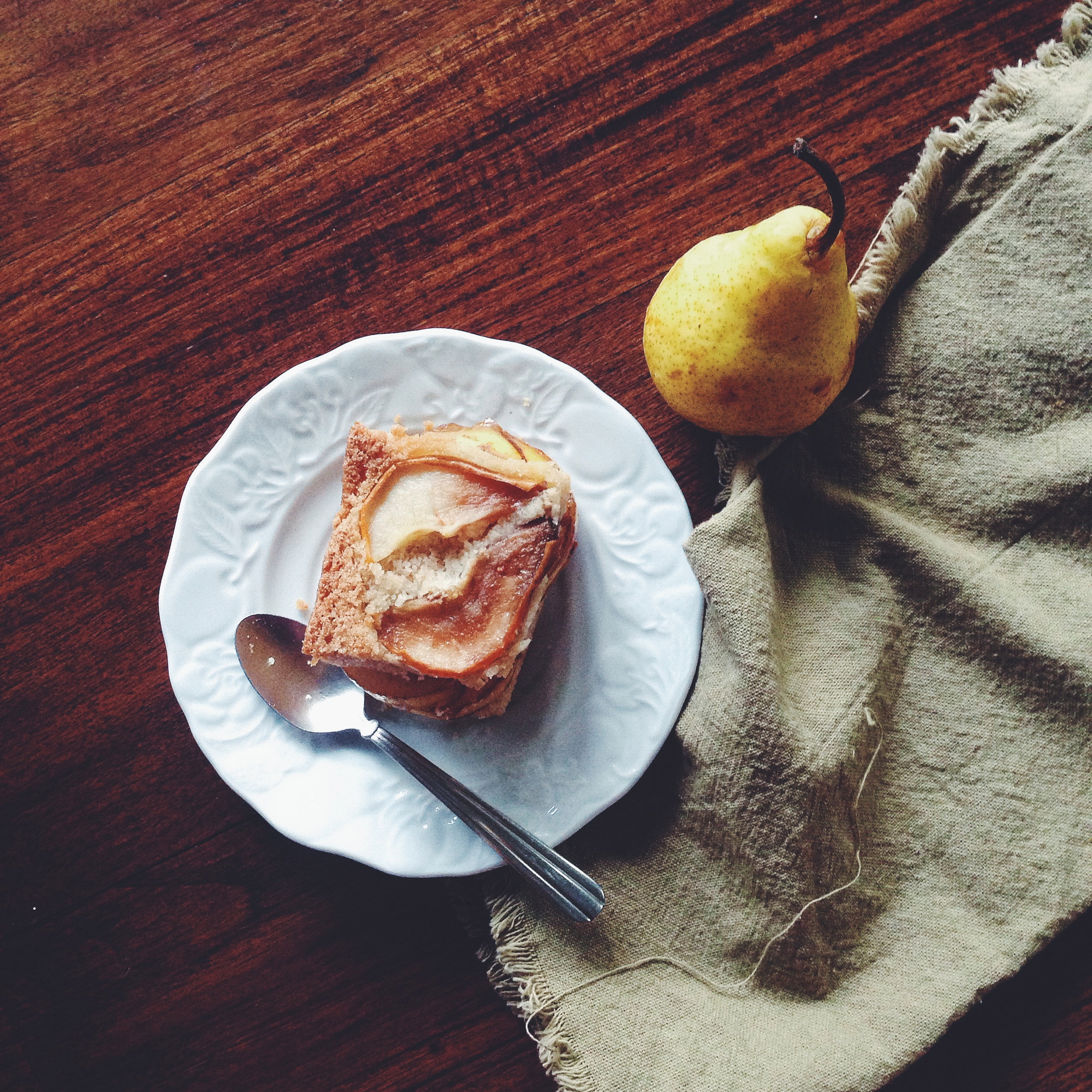
With regard to the pears, I used the soft and sweet Comice, but any sort will work perfectly here, be it the firmer variations like Bosc or Concorde, or even Green or Red Anjou. Whatever’s lurking in the closet. I was initially afraid of using the sort which is perfect eaten raw, for fear of everything disintegrating into fruity mush, but the recipe yielded a surprisingly pleasing result; the moisture of the soft pear paired wonderfully with the drier cake (pre-drizzle of course).

A few notes:

– I term this a ‘pudding cake’ only because such a label is a near-perfect representation of the final texture– that is, coarser and of a much less refined texture thanks to the semolina, yet slightly squidgy, especially around the parts of the cake near the cooked pear. The ‘pudding’ part is only achieved with the liberal drizzle of elderflower syrup, as well as the no-holds-barred addition of heavy cream later on. Which brings me to my second point:

Please do yourself a favour and have this drenched in heavy cream!

– Whilst drizzling the syrup, you will notice that you will only be able to do so on the parts of the cake not covered by the pear (obviously). That’s alright, because the moisture from the pear seeps into the surface it covers, so everything is nicely balanced.

I’m not quite sure what exactly compelled me to pair semolina with pear, but I’m glad keen instinct drove me to do so.

Semolina Pear Pudding Cake with an Elderflower Syrup Drizzle (serves 9-12)

Ingredients

113g (1 stick) unsalted butter, at room temperature or just slightly softened in the microwave

235g (1 cup) white sugar

2 eggs

120ml (half cup) milk of choice (I used a mix of whole and almond milk)

1 tsp vanilla extract

365g (around 2 cups) semolina

1tsp baking powder

1/2 tsp baking soda

pinch salt

3-4 pears of your choice (as mentioned above, I used Comice, but any sort is fine, and the amount you need will depend on the size of your pears)

For the elderflower syrup: 1/2 cup elderflower cordial mixed with 1/2 cup filtered water, mixed and warmed in the microwave for a while.

Directions

Preheat your oven to 177C (350F), and grease and line an 8×8 or 9×9-inch baking pan. In a medium bowl, whisk together the dry ingredients (semolina, salt and leavening agents) and set aside. With an electrical beater, or using a whisk and good old bicep strength, cream together the butter, sugar and vanilla extract, until pale and very fluffy. Beat in the eggs, then the milk. Pour in the dry mix you set aside and fold in using a spatula until everything is just combined. The mix will look pale, coarse and rather thick.

Core and cut your pears into slices around a 1/2-inch thick, and place a layer of slices on the bottom of the pan. Scrape the cake batter into the pan and use the spatula to make the top smooth, spreading the batter into the corners. Layer more slices on top, but make sure there’s some space between the slices for the syrup later on. Bake in the preheated oven for 25-28 minutes, or when a wooden skewer inserted comes out clean. This took me around 26 minutes. While the cake is baking, mix together the syrup ingredients.

Remove the cake from the oven and drizzle on all of the syrup. Yes, all of it! This is what will ensure the pudding-like result. To serve, scoop some of the cake onto a plate and cut in half horizontally. Sandwich 2 or 3 slices of pear in between the slices, then drench everything in heavy whipping cream. Enjoy whenever.

‘Broken-up’ Roll Cake with Strawberry-Apple Compote

Yesterday marked my mother’s birthday. That officially makes her 26 years older than me, the cumulative years brimming with untold betterness, wisdom, coolness. My solid, grounded, pretty momma, whose self-efficiency and absurd organisational skills combined with favourable wit and wackiness make her the paragon of cool. She probably cries at night over why I haven’t reached that particular degree of coolness.

Unsurprisingly, I made cake. Cake is just a little dot in the field of foodstuffs she likes, the carb fiend that she is. She’s the sort who can sit back, legs propped on the counter, cradling a baguette stuffed with salted butter and marmalade. Lunch=sorted. She’s of solid character with an even more solid appetite. Cake to her is either meh or MMPH; she knows exactly when something is good or not. Thankfully, this sufficed, and accompanied the night’s celebration perfectly. Tip#1: I imagine that this particular cake, what with all its strawberry and apple and light-heartedness, would go superbly with a tall, thin glass of champagne!

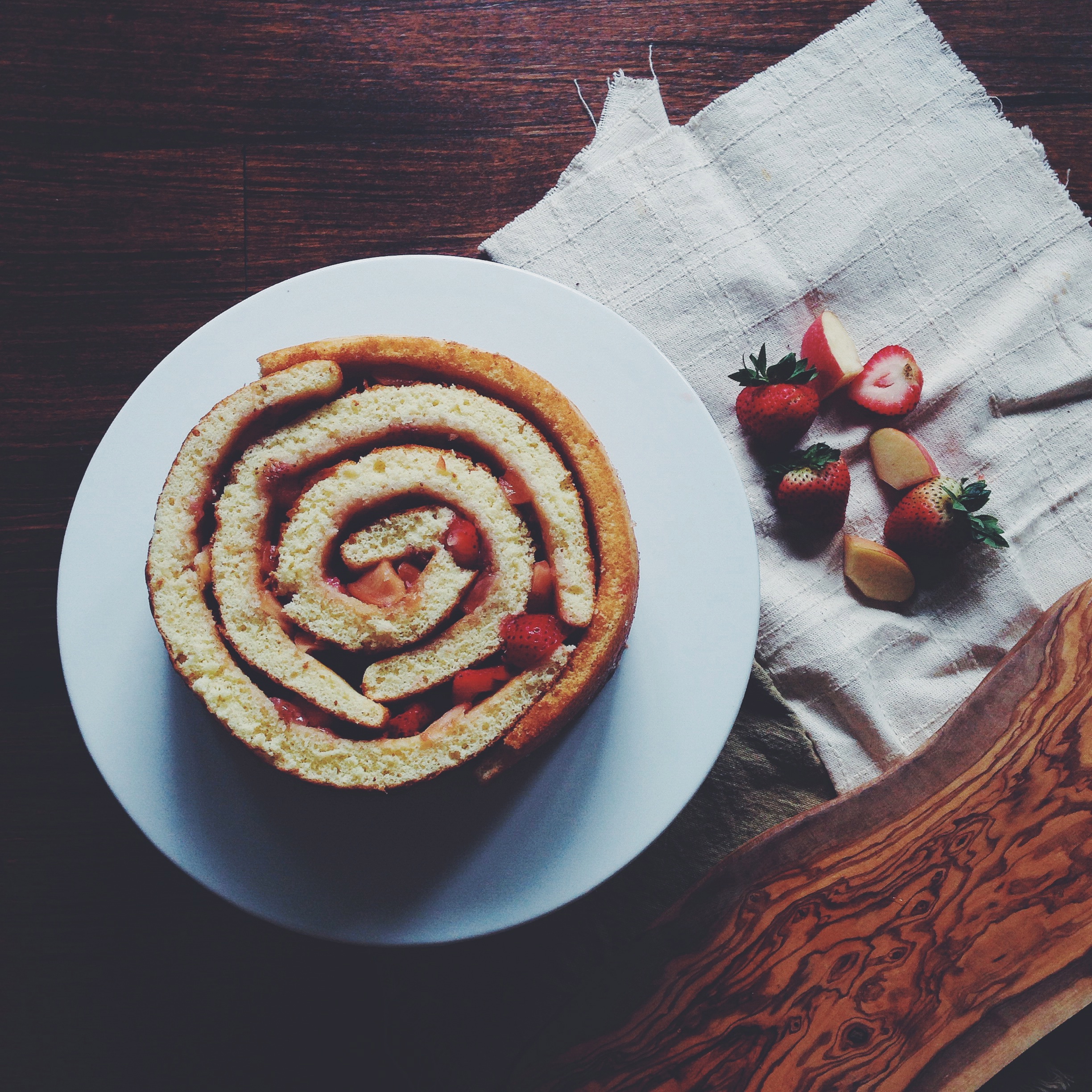
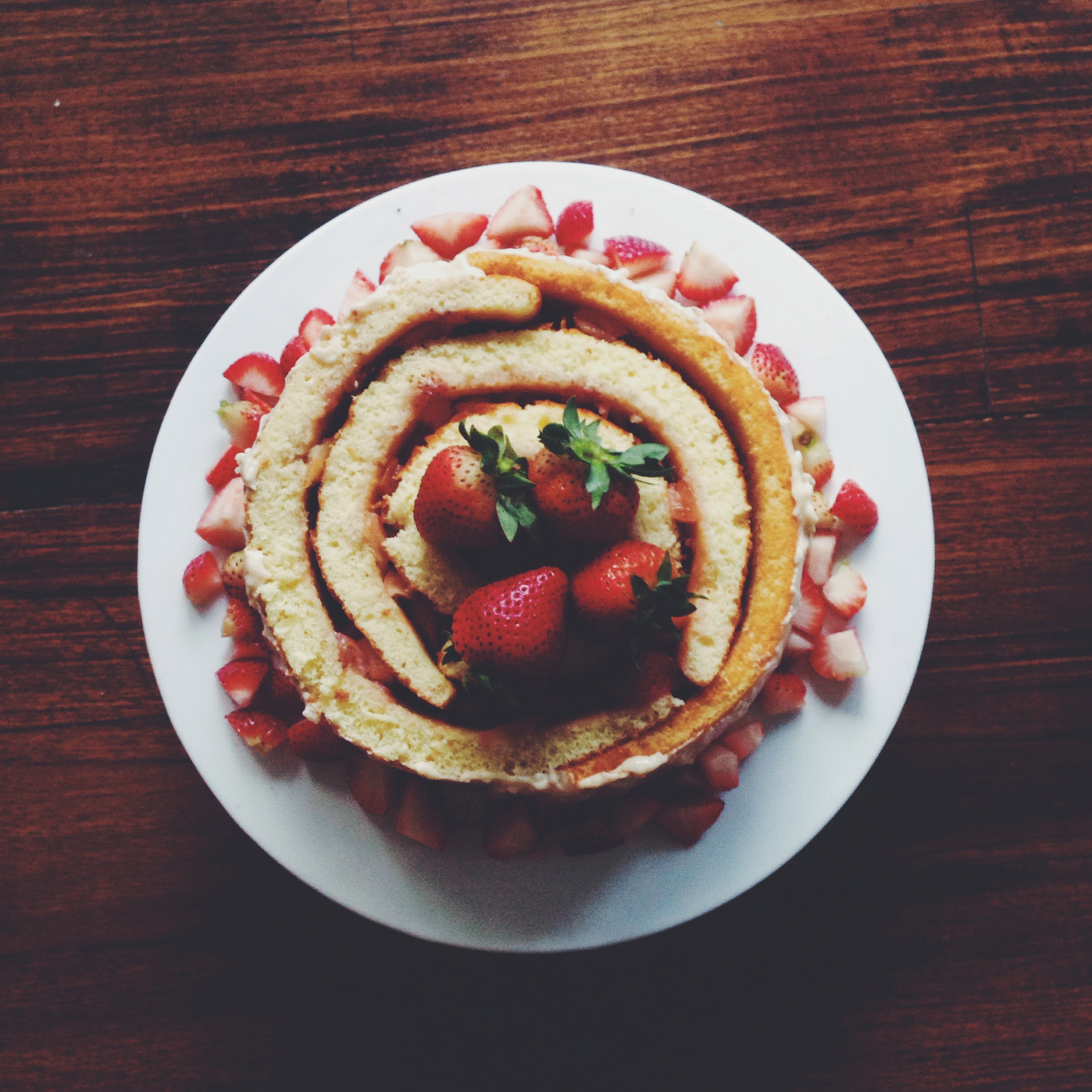
It’s funny to look at these pictures now. I didn’t intend to wax lyrical over anything, I never meant for it to work, this was supposed to be a fingers-crossed-I-hope-it’s-alright-and-thank-god-mummy-wont-give-a-damn sort of experiment. This broken-up roll cake, as I have termed it, is indeed meant to be broken up. I figured that if it resembled a monster slice of swiss roll from the top, it would be all too easy for the whole thing to unravel from a single, exposed ends. So the mind was made up; I decided to make a simple sponge, cut it into vertical strips, and roll each around one another. The best part is that if any breakage occurs (spot the slight one in the middle coil), you can slot in some cut strawberries to add to the theme, the whimsical grandeur. Rusticity doesn’t deserve any bashing.

Alone, it resembles a maze in action, but really is so easy to put together. The cake itself takes a mere 5 minutes, though the strawberry-apple compote of course takes a little while longer. Make the compote a day ahead if you wish, to ensure that it’s fully cool before using on the cake. The sponge is light, sweet, but with enough body to withstand the mild rolling, and I love how the compote moistens the tall sides, making everything ever so slightly tart.

‘Broken-up’ Roll Cake with Strawberry-Apple Compote and Strawberry Cream Cheese Buttercream (makes one 9-inch wide cake)

Ingredients for the cake:

120g (3/4 cup+ 1tbsp) all-purpose flour

1 tsp baking powder

pinch of salt

3 eggs

145g (2/3 cup) white sugar, and set aside 2 tablespoons of extra sugar in a small bowl

1/2 tbsp water

Ingredients for strawberry-apple compote:

220g apple, chopped into small pieces

120g strawberries, chopped into small pieces, and reserve a few whole strawberries for garnish.

100g (half cup) white caster sugar

1 tsp vanilla extract

2 tsp cornstarch mixed with a tablespoon of water in a small bowl.

Ingredients for strawberry cream cheese buttercream:

50g soft, unsalted butter

100g icing sugar

75g cream cheese, at room temperature (or just microwave on high for half a minute if cold from the fridge)

30g pureed strawberries (or take same mass of strawberries, microwave on high for a few minutes and then mash with a fork)

First, make the strawberry-apple compote. Put all the chopped fruit, vanilla extract and sugar in a a medium saucepan and place the pan on medium-high heat. Stir with a wooden spoon until you can see that the sugar has dissolved(no more visible crystals/lumps of the stuff). At this point, the juices from the strawberries will have started to leak. Reduce the heat to medium-low and let the mixture cook for 15-20 minutes, stirring occasionally so the heat is spread out throughout the mass of fruit and sugar. Just before taking off the heat, pour in the cornstarch-water mixture and mix in thoroughly. The mixture will thicken and lighten slightly. Take off the heat and let cool completely by placing it in the fridge. If you’re making this a day ahead, cover with cling film and let rest in the fridge overnight.

Now for the roll cake. Preheat your oven to 250C (480F) (I tried my hand at the same method used for Linda L’s vertical roll cake!). Grease and line a large baking sheet with parchment paper. In a medium bowl, whisk together the flour, baking powder and salt, and set aside. In another larger bowl and with an electrical whisk or beater, beat together the eggs and sugar until the mixture doubles in volume and is incredibly pale and fluffy. This will take around 7-10 minutes, depending on the temperature of where you live and how powerful your beaters are. The beating is done when you lift your beaters and the mixture is visibly more ‘sticky’ than how it first appeared, and leaves a ribbon-like trail before quickly dissolving into the rest of the mixture again. Once you reach this stage, tip in (or sift, if you’re anal like me) the dry mixture, add the water, and gently fold everything together using a rubber spatula. Make sure all the dry mix is evenly incorporated and you end up with a smooth, aerated, pale batter. Pour this onto your greased and lined pan and bake for 5 minutes, no more and no less, in the oven.

For the frosting, beat together the butter and half of the powdered sugar in a large bowl. then, beat in the cream cheese and pureed strawberries. The mixture will look too liquidy to handle. At this point, beat in the rest of the icing sugar, making sure to scrape down the sides with a spatula, combining everything nicely and evenly. Pop the bowl in the fridge for later usage.

Once the cake is finished, remove it from the oven and let the pan cool on a wire rack. Sprinkle the top with the 2 tablespoons of sugar you reserved at the start, and then sprinkle your counter with a little extra sugar. Once the cake is fully cool, carefully tip it onto your counter, so that the top is facing down. Remove the pan (it helps to tap the pan with a knife first) and the parchment paper. The underside of the cake should look slightly blotchy; pale and brown here and there. Spread the cooled strawberry-apple compote on the cake, using your fingers to place all the small bits of fruit evenly if you wish. Make sure all the juices soak into the cake’s entire surface. With a sharp knife, cut the cake into four strips, starting from the short side. Take one strip and start rolling normally from the top. Then, take the next strip and place one of its ends near the end of the first strip, as you can see from the picture above. Wrap it around the first strip. Repeat with the 3rd and 4th strips. Once you’re done with the last strip, wrap the sides of the cake with cling film and place in the fridge for at least an hour, or overnight if making a day ahead.

Once ready to serve, take an offset spatula and spread the strawberry cream cheese buttercream along the sides of the cake. This buttercream is softer and less malleable than your usual buttercream thanks to the puree and cream cheese, so it must be stored in the fridge (on your cake stand) right up until serving. Place a few fresh strawberries on top for extra garnish, if you wish.