Semolina Pear Pudding Cake

In all honesty, I’m not quite sure how to kick this one off.

Because look at it.

Do you like pudding? Or cake? Maybe both? If you’re into something soft yet firm-crusted and perhaps a little gooey on the inside, then fill yourself with hope. I had this for breakfast this morning and haven’t looked back. Why did it take me so long to get to this stage of sunlit ecstasy (what does that even mean)? Embarrassingly, I have too many questions to ask myself.

It’s the 3rd day of June and I feel like having a third cup of coffee. I like looking at the stains up and along the sides of the cup, a few viscous drops never really making it halfway down the porcelain breadth. Although some things in my personal schedule have shifted a little, constants remain, like almost-selfish spaces of time to myself, spent with a good book, science literature… and, yes, absolutely random ovenputtogethers baking bonanzas. I’ll be truthful and say that I still prefer the taste and texture of traditional baked cake, but semolina, or coarse, purified durum wheat, indeed lends a more interesting albeit unorthodox flavour.
IMG_2014

Let’s go through the motions.

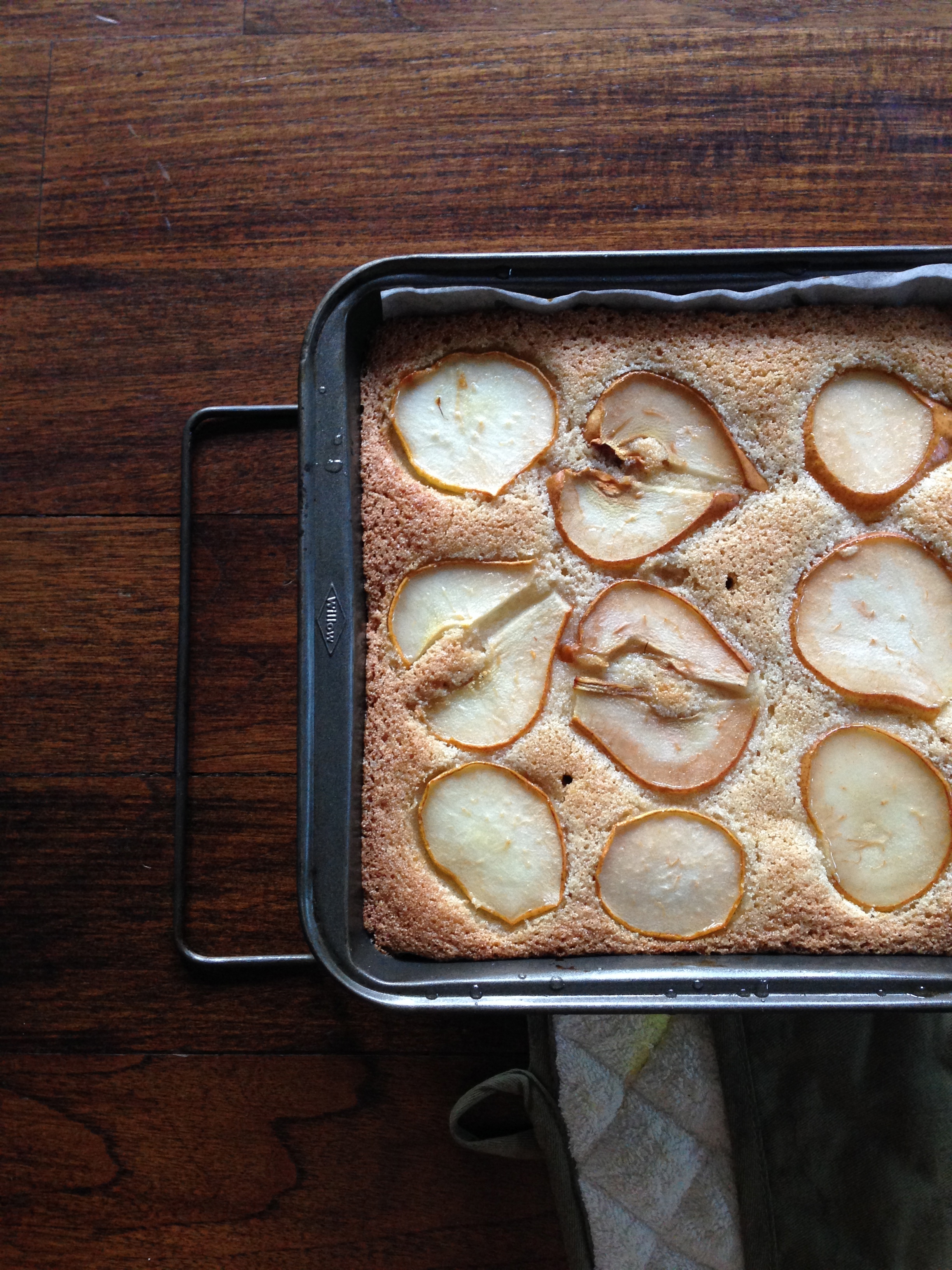
What we have here is a layer of pears on the bottom, then a semolina cake enriched with plenty of vanilla and a little elderflower cordial, then another layer of pear. Everything is brushed with what would seem like too much elderflower syrup after baking.

With regard to the pears, I used the soft and sweet Comice, but any sort will work perfectly here, be it the firmer variations like Bosc or Concorde, or even Green or Red Anjou. Whatever’s lurking in the closet. I was initially afraid of using the sort which is perfect eaten raw, for fear of everything disintegrating into fruity mush, but the recipe yielded a surprisingly pleasing result; the moisture of the soft pear paired wonderfully with the drier cake (pre-drizzle of course).
A few notes:

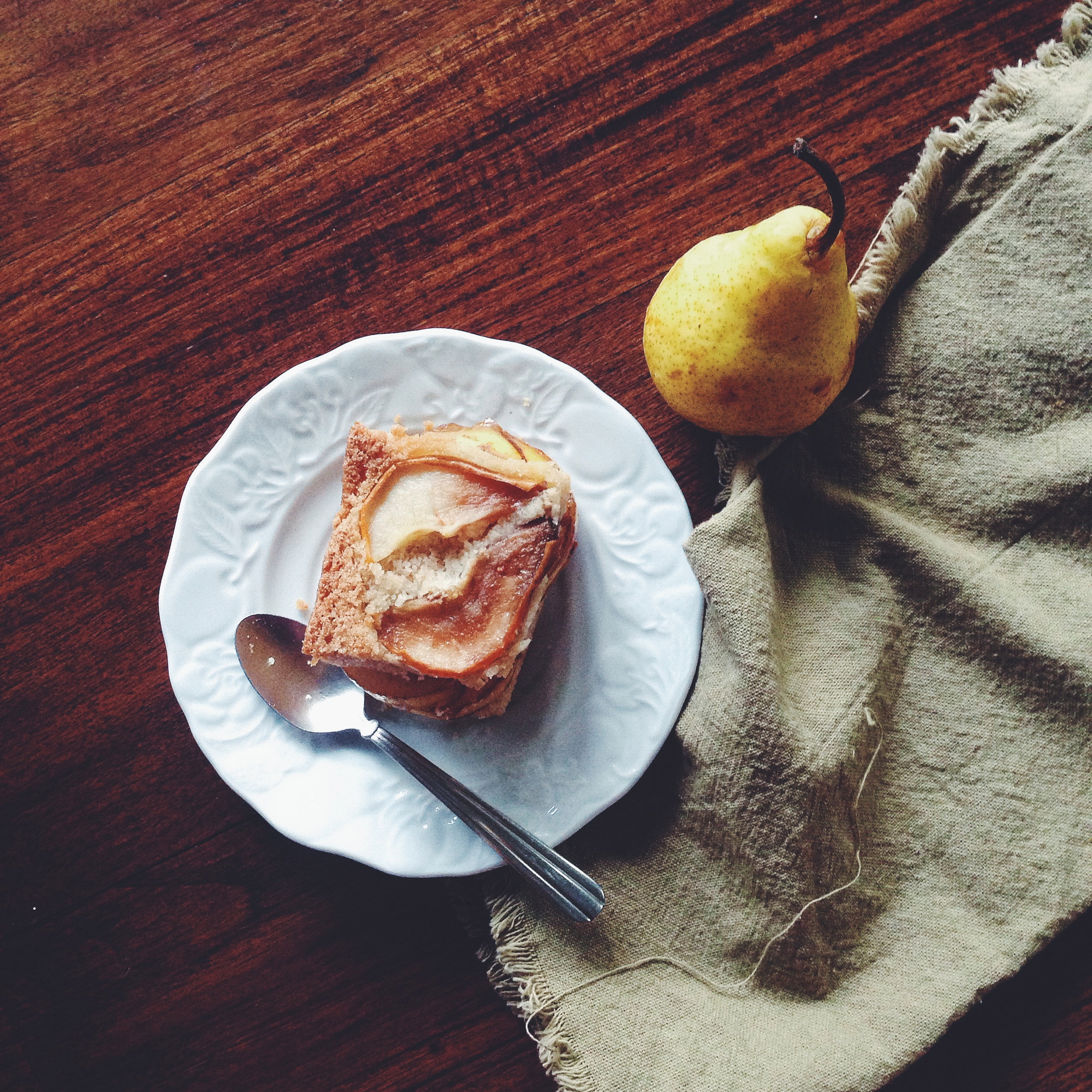
– I term this a ‘pudding cake’ only because such a label is a near-perfect representation of the final texture– that is, coarser and of a much less refined texture thanks to the semolina, yet slightly squidgy, especially around the parts of the cake near the cooked pear. The ‘pudding’ part is only achieved with the liberal drizzle of elderflower syrup, as well as the no-holds-barred addition of heavy cream later on. Which brings me to my second point:

Please do yourself a favour and have this drenched in heavy cream!

– Whilst drizzling the syrup, you will notice that you will only be able to do so on the parts of the cake not covered by the pear (obviously). That’s alright, because the moisture from the pear seeps into the surface it covers, so everything is nicely balanced.

I’m not quite sure what exactly compelled me to pair semolina with pear, but I’m glad keen instinct drove me to do so.

Semolina Pear Pudding Cake with an Elderflower Syrup Drizzle (serves 9-12)

Ingredients

113g (1 stick) unsalted butter, at room temperature or just slightly softened in the microwave

235g (1 cup) white sugar

2 eggs

120ml (half cup) milk of choice (I used a mix of whole and almond milk)

1 tsp vanilla extract

365g (around 2 cups) semolina

1tsp baking powder

1/2 tsp baking soda

pinch salt

3-4 pears of your choice (as mentioned above, I used Comice, but any sort is fine, and the amount you need will depend on the size of your pears)

For the elderflower syrup: 1/2 cup elderflower cordial mixed with 1/2 cup filtered water, mixed and warmed in the microwave for a while.

Directions

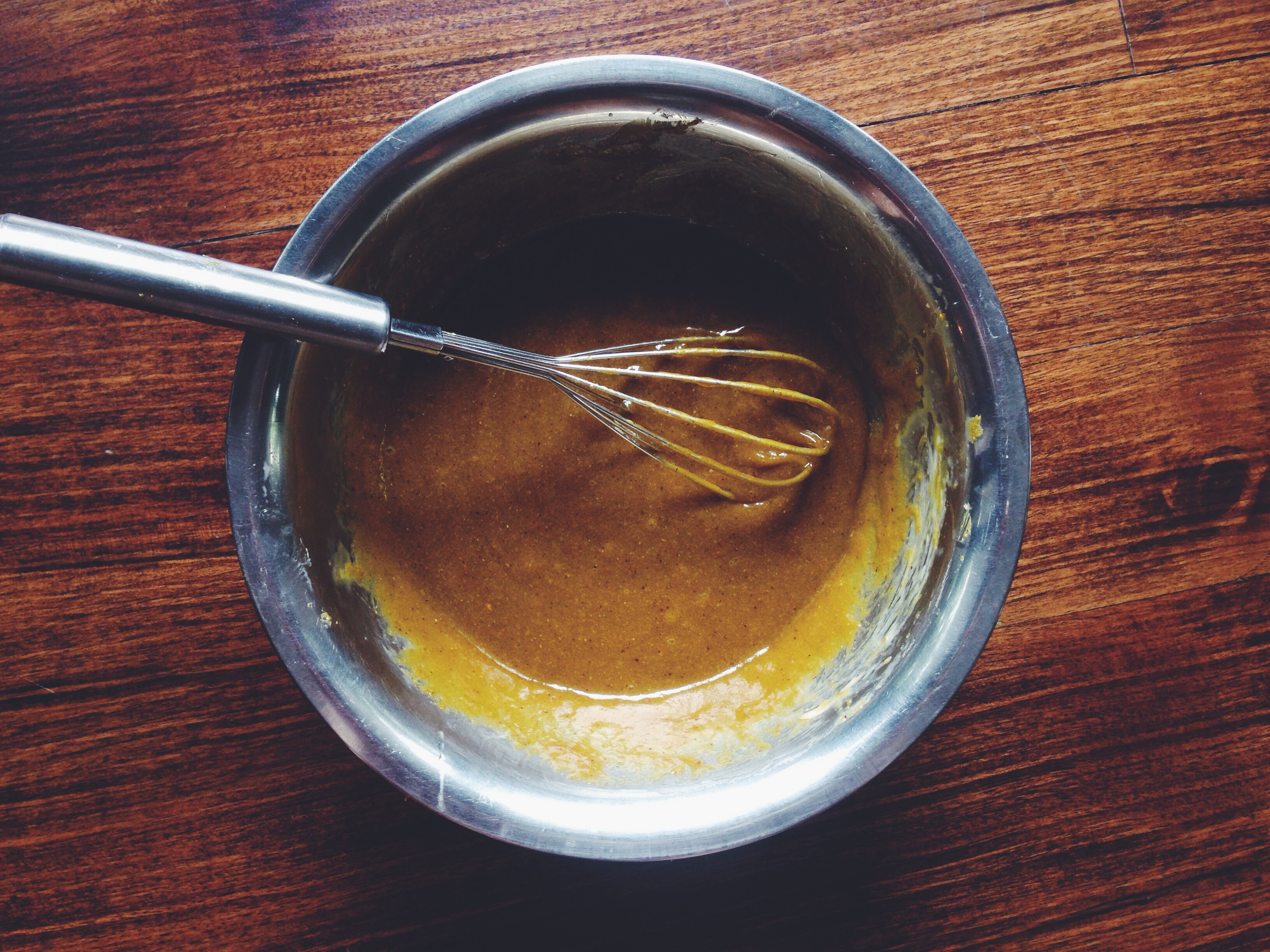
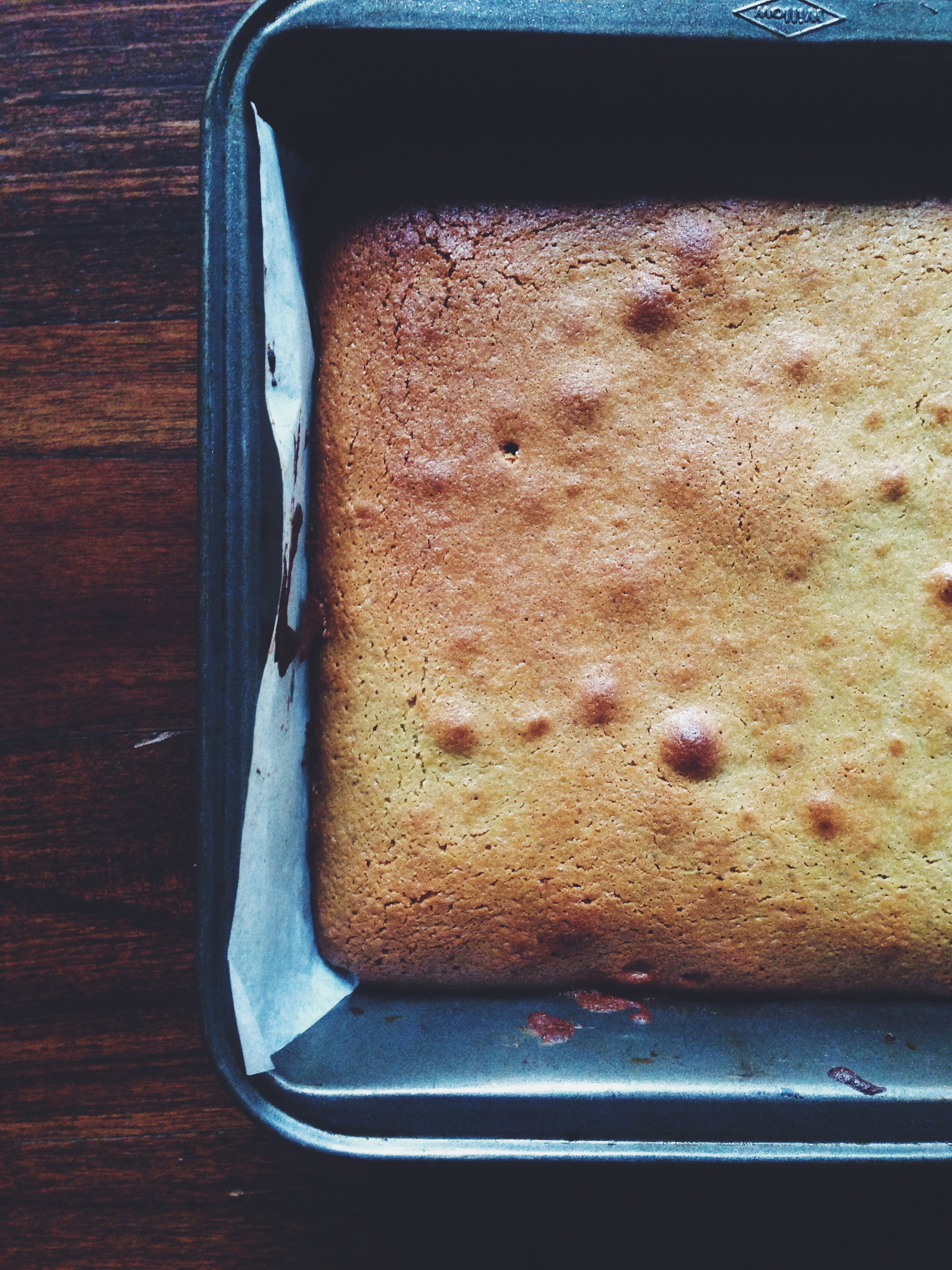
Preheat your oven to 177C (350F), and grease and line an 8×8 or 9×9-inch baking pan. In a medium bowl, whisk together the dry ingredients (semolina, salt and leavening agents) and set aside. With an electrical beater, or using a whisk and good old bicep strength, cream together the butter, sugar and vanilla extract, until pale and very fluffy. Beat in the eggs, then the milk. Pour in the dry mix you set aside and fold in using a spatula until everything is just combined. The mix will look pale, coarse and rather thick.

Core and cut your pears into slices around a 1/2-inch thick, and place a layer of slices on the bottom of the pan. Scrape the cake batter into the pan and use the spatula to make the top smooth, spreading the batter into the corners. Layer more slices on top, but make sure there’s some space between the slices for the syrup later on. Bake in the preheated oven for 25-28 minutes, or when a wooden skewer inserted comes out clean. This took me around 26 minutes. While the cake is baking, mix together the syrup ingredients.

Remove the cake from the oven and drizzle on all of the syrup. Yes, all of it! This is what will ensure the pudding-like result. To serve, scoop some of the cake onto a plate and cut in half horizontally. Sandwich 2 or 3 slices of pear in between the slices, then drench everything in heavy whipping cream. Enjoy whenever.
Black Sesame Cakelets with Cream Cheese Frosting

Processed with VSCOcam with f2 preset

A good friend once told me that if I were an ice cream flavour, it would be black sesame.

‘What’s that supposed to imply?’

I still don’t know. Nevertheless, I love attempts to associate people with things, endeavouring to understand or replicate nature, auras, psyches. The memory was jolted alive last week, when I was prancing around the supermarket aisles, sometimes stopping to peruse labels, flipping through half-hearted ideas in my head. I was ready to take on something tame for today’s post, working with ingredients I already had at home. But (there’s always a but). When I passed by the gourmet Japanese section, the urge to experiment with black sesame was so profound I felt like it would be a cardinal sin not to leave without a loot. It almost came as a shock because firstly, I’ve never done so before, and secondly, I’ve always been enamoured by its sweet, oil-rich, nutty flavour. What’s taken me so long?

Even if you decide, as part of a little intellectual exercise, that you are going to sit around and do nothing because you have concluded that you have no free will, you are eventually going to get up and make yourself a sandwich.“–Greene and Cohen, from a book I’m reading right now on the brain.

I love that. You see, sometimes, you just have to do something and stop wrestling internal needs or expectations. To sustain yourself and this life. Satisfying that urge was worth it.

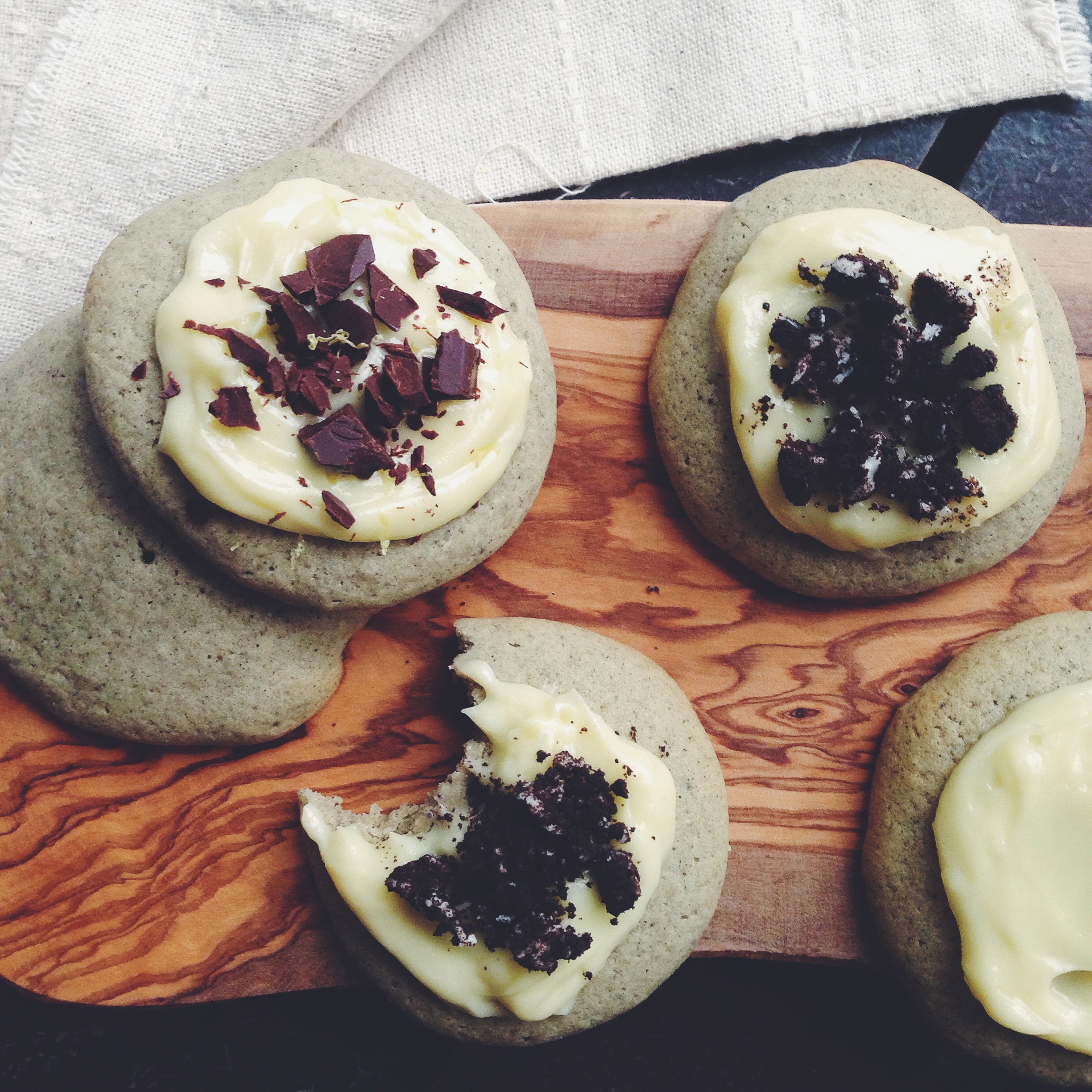
So I’ll say it: I wasn’t expecting the results of this experiment to turn out so well. Somehow, the oven works its magic the first time. All worries were alleviated when my first batch of black sesame cakelets emerged (almost) perfectly round, just slightly risen and browned along the edges, from the hot-house. Working with the black sesame powder I found along that aisle was pure joy. The powder by itself is mildly sweet, carrying all the aromas and flavours of the seed. It is imperative that you sieve the powder first into the dry mix, to yield the finest and smoothest texture possible. If you can’t find the stuff in the grocery store, try your hand at black sesame seeds, and grind them up at home, in a food processor or with a mortar and pestle. You will get a paste instead of a smoother powder, but I expect it will work just as well. Gosh, I’m excited for you! Soft, moist (I actually like this word for all the grief it gets, poor thing), slightly cakey with an incredibly tender crumb. The nuttiness and mild sweetness formed the perfect backdrop for the ever-familiar cream cheese frosting on top. The two together are sublime if sinful.

I topped these with oreo crumbs, sprinkles and chopped bits of dark chocolate. Go crazy here. It’s the perfect cross between a pikelet, an adorable mini pancake, and the top of a cupcake. Can you imagine? I hope you can. If making these means having to go to the grocery store to buy some black sesame powder (or seeds), then I guess you have no choice.

Processed with VSCOcam with f2 preset

Black Sesame Cakelets with Cream Cheese Frosting (makes around 8 3-inch wide cakelets)

Ingredients

For the cakelets:

105g plain flour

25g (around 2 1/2 tbsp) black sesame powder, or the same amount of black sesame seeds ground into a paste using a food processor or mortar and pestle

1/2 tsp baking powder

pinch of salt

57g (4 tbsp) softened, unsalted butter

1 tsp vanilla extract

110g (half a cup) white sugar

1 egg

30ml (2 tbsp) whole milk mixed with 1/2 tbsp white wine vinegar, left to rest for 5 minutes before using. Alternatively, use the same amount of buttermilk or yoghurt

For the frosting:

40g softened unsalted butter

75g cream cheese, at room temperature (take out and leave on the counter for a while before using, or microwave for half a minute if cold from the fridge)

1/2 tsp vanilla extract

75g powdered sugar

Toppings:

crushed oreos/ sprinkles/ dark chocolate/ whatever you want!

Preheat the oven to 177C (350F) and line and grease 2 cookie sheets. In a medium bowl, sieve (yes, a sieve is necessary here!) the flour, baking powder, salt and black sesame powder.  In another medium bowl and with a whisk or handheld electrical whisk, cream together the butter and sugar until pale and fluffy. Whisk in the vanilla extract, egg and milk mixture. Pour this wet mix into the dry mix and stir with a tablespoon or wooden spoon until just combined and the batter has a nice dropping consistency, and is not too wet or thick. With 2 tablespoons or an ice cream scoop, dollop the batter into little circles onto the cookie sheet, spaced at least an inch from each other. Pop into the oven and bake for 7-10 minutes. Mine took 8 minutes exactly. Whilst they bake, make the frosting. Beat together the butter and cream cheese until smooth, then add the vanilla extract and powdered sugar. Beat until all is nicely incorporated.

Once the cakelets are done, a toothpick inserted into the centre of one should come out clean. Leave to cool on a wire rack, which will take around 10 minutes. Frost the tops with cream cheese frosting using a knife, then top with whatever toppings you desire. These cakelets surprised me and gave me feels. They will do the same to you.

The Thickest, Fluffiest Pancakes You Will Make

‘A happy man has no past, whilst an unhappy man has nothing else.”

This is but one of the few memorable quotes I came across in my latest favourite read– The Narrow Road To the Deep North by Richard Flanagan, which won the Man Booker Prize last year. You know those books which leave you craving for more and more after each chapter, and the flipping action is speedy and excited? Yeah, this is one of them. War and Love are classic, usually overlapping literary themes, and Flanagan expertly weaves the two with arousing and intimate prose. Sometimes, I forget how mind-altering and rejuvenating fiction can be. It awakens, stirs something much deeper in the human soul.

Something else pretty mind-altering are…. These pancakes.

These, dear reader! By far the thickest, fluffiest ones I have ever made, and I sure as hell have made a lot of pancakes. Alright, before I proceed, I do wish to address the fact that I missed last week’s second post. Truth was that an unexpected outing stole the day’s limelight, and I hadn’t the time to do a write-up since then. Hopefully, this lazy-sunday-morning-recipe will make up for that. Goodness I’m excited, because trust me, they’re worth it. Definitely worth skipping a café line for.

Processed with VSCOcam with f2 preset

Now it’s your turn.

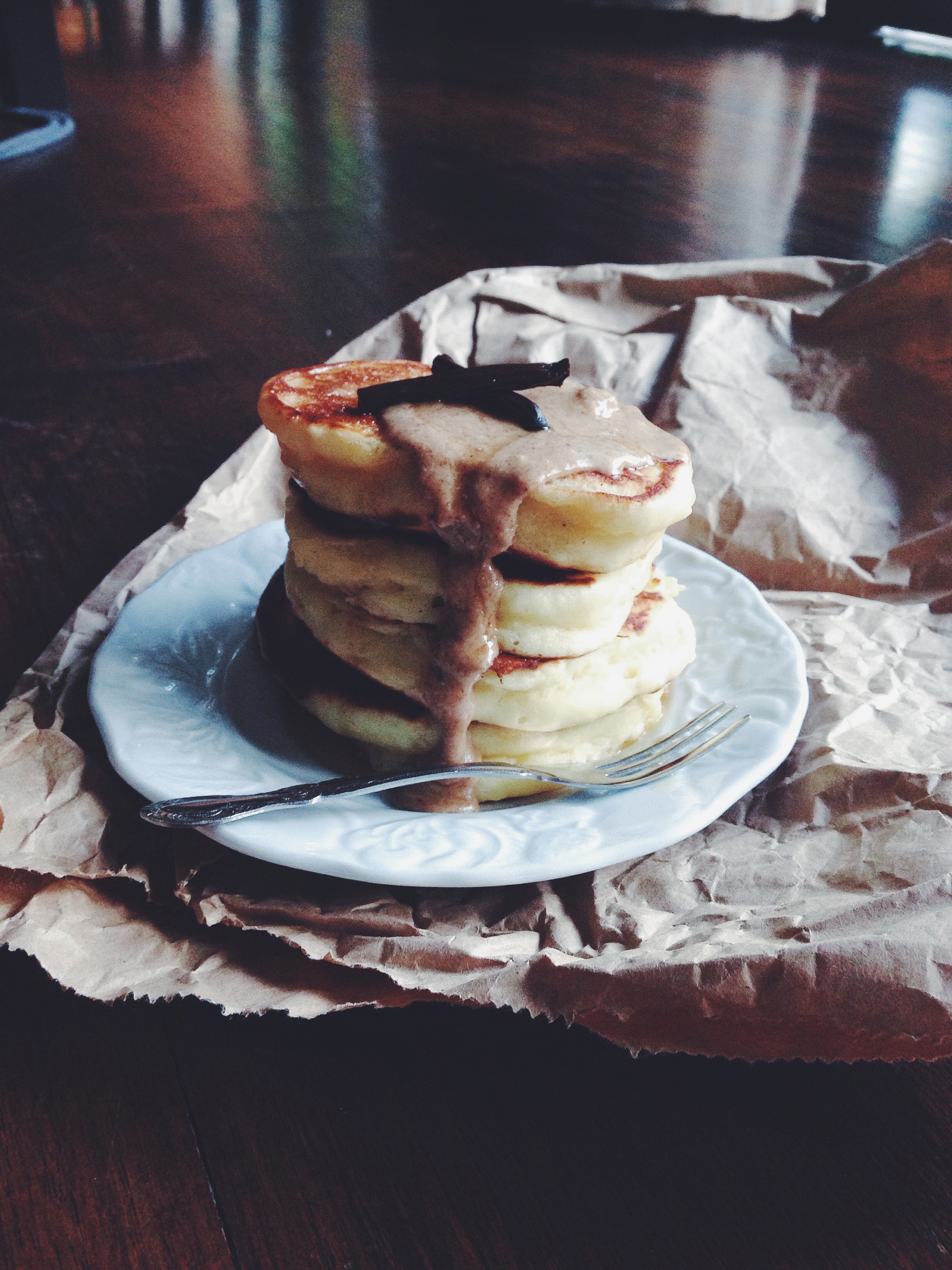
Thick, ridiculous, sweet and slightly spongy. I feel as if a drab ‘fluffy’ will take the fun out of this adjective scrambling, but heck, they are. Unbelievably fluffy, light, soft. A slightly lighter version of the Mickey Dees stuff. You get the jam.

I’ve tried these twice– once with almond butter and maple syrup, the other time as if I were at a traditional American diner, with butter, maple syrup, and a whole lot of family.

Can I have them with anything? So fluffy I could die!! My sisters chimed and beamed and scarfed down two each in less the time it takes for me to politely do a knife-and-fork job with one.

Since these freeze so well, I kept a couple stashed away. When I went to look for them the next morning, they were gone. I don’t blame them.

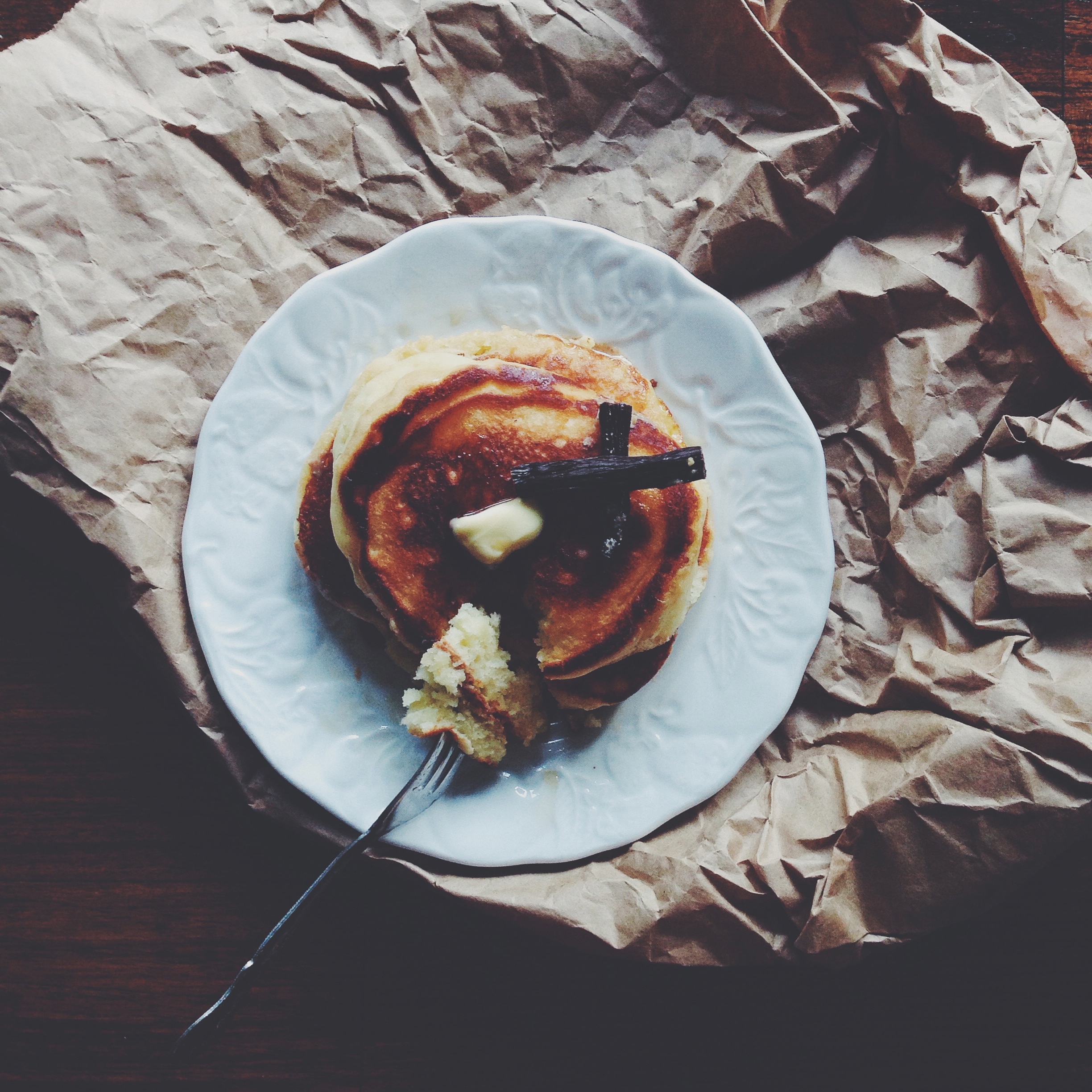
Honey and buttermilk provide an extra layer of moisture without added weight. The first two I made received a little extra char (as you can see above!!) because I was fiddling with the toppings and wasn’t paying as much attention to the stove, but the dark, crusty edges played a good texture game with the warm, melting butter and maple syrup later on. Mmmmm. Happy mistakes. And look at how thick these guys are. I kid you not, each pancake is at least an inch thick. Tender fluff. Pillow fluff. Press on a hot one and you’ll leave a finger mark that disappears almost immediately.

Vanilla Bean Buttermilk Pancakes (serves 4-5, makes around 11-12 medium pancakes)

*vegan substitution

Ingredients

188g all-purpose flour

3 tbsp white sugar

generous pinch of salt

1 tsp baking powder

1 tsp baking soda

1 egg (*one banana)

40 unsalted butter (slightly less than 4 tbsp, *vegan butter)

1 tsp vanilla extract or the insides of half a plump vanilla bean (or a skinny meek one)

240ml whole milk/ buttermilk; use store-bought or make your own by mixing 230ml whole milk with 1 tbsp white vinegar, and let the mixture sit for 5 minutes before using (*almond milk or any other plant-based milk)

Directions

In a large bowl, whisk together the dry ingredients (flour, sugar, salt and leavening agents). In a small microwave-safe bowl, melt the butter in a microwave and set it aside, letting it cool. In another medium bowl, whisk together the egg, buttermilk, vanilla (or insides of a vanilla bean) and melted butter. Pour the wet mix into the dry mix and mix briefly with a wooden spoon or a normal dinner spoon. Continue to mix until everything is justt combined, which means there will still be a few lumps, but no more streaks of flour. The batter will be thick and somewhat lumpy.

Preheat your pan on medium heat and ready some butter. You know the pan is hot enough when you flick a little water onto its surface and there’s a clear sizzle. At that point, generously butter the pan and ladle tablespoonfuls of batter. I didn’t have to wait for bubbles to pop before flipping; the batter is thicker than usual and there’s no need to wait. Flip the pancakes when you notice the edges stiffening a little, or when you can slide your spatula whole underneath the bottom of the pancake. It will rise a little upon flipping, as if that action gives it life, and hence, breath. The surface should have a brown mosaic thanks to the hot butter. Once the second side is done (will take no more than 20 seconds), let cool on a paper towel. As mentioned above, these freeze wonderfully, so you can make a whole batch, have a small stack and stash the rest in a ziploc bag in the freezer. Easy!

Serve with butter and maple syrup, or whatever you want. I particularly like them with banana, its moist sweetness adjoining arms with the maple. What a Sunday.

Blueberry Almond Cheesecake Mousse For One (no bake, raw)

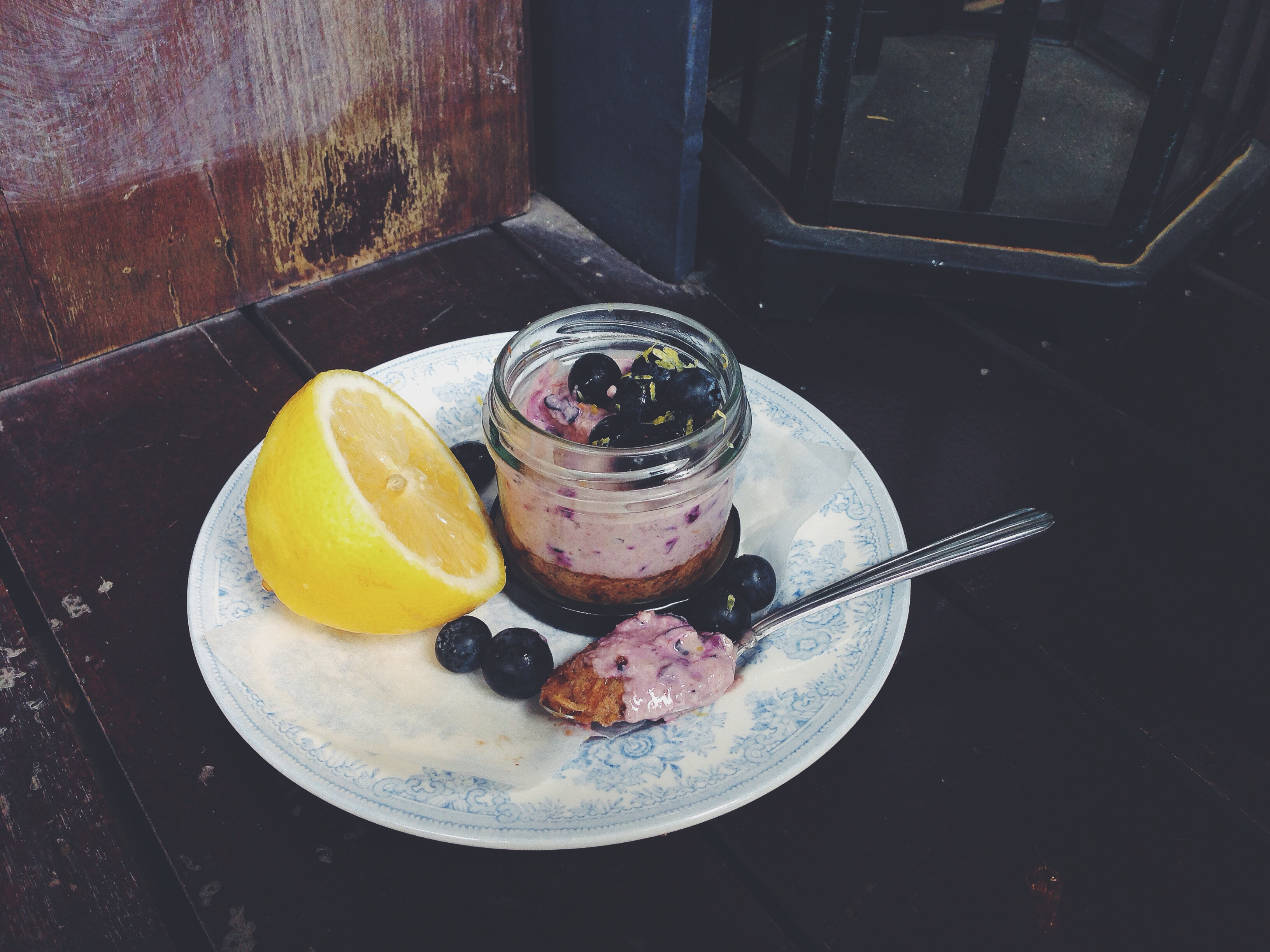
Processed with VSCOcam with f2 preset I quote again from my Instagram: clearly I was too excited to let the stuff sit properly in the fridge, hence the less-than-ideal consistency. But this yields a wonderful firm, mousse-like texture after 4 hours in the icebox! ‘Wow Alex. There’s no cheese in here but it tastes like cheese? It’s GOOD.’-Dad With a magnificent almond-date crust. Am I out of my mind? Not quite. I think you’ll be as pleased with how easy and bloody delicious this is as I. The raw phenomenon has taken the world by storm, and although I initially wished to be left out of the craze, inspiration and my own health inclinations have gotten the better of this selfish shunning. Dearest Emily is a huge raw fan, and her sweet vegan recipes always look too inviting. How could I not give something a go. What better way to get into the raw groove than by experimenting with my own stock of nourishing ingredients? It’s funny, these phenomenons, these supposed fads. You think it all insubstantial, lets-be-pseudo-health-nuts. No. I’m not saying I’m the healthiest eater out there, but I make it a point to treat my body well most of the time. I’m as partial to oatmeal, fruit and vegetables as I am to brioche and mounds of butter and jam. Eating well has become part of me; whipping up something nourishing and delicious is never, ever a chore. Simply second nature. Processed with VSCOcam with f2 presetProcessed with VSCOcam with f2 preset You take a bunch of fresh, nourishing ingredients, throw it together in a blender, and 5 minutes later (or less, actually) you’ve got a Mini Jubilee Jar. All for yourself. Share if you have to, share the joy. The lemon in this recipe works splendidly against the sweet, dense almond-date crust, which is really just a bit of almond butter and one date blended together. The good thing about this recipe is that I found it a pleasure to eat even with little bits of blueberry or almonds in the mousse, not seamlessly blended together, and streaks of date at the bottom. Perfection within imperfection.

Blueberry Almond Cheesecake Mousse for One (fits in one mini 4-inch wide mason jar)  For the cheesecake mousse:

25g fresh or frozen blueberries

10g raw almonds (optional, for crunch)

juice and zest of half a lemon

1 heaping tablespoon of almond butter

1tsp milk of choice (I used coconut)

For the crust:

one teaspoon almond butter

one date

In a blender or food processer, blend together the crust ingredients (date and almond butter) until everything is well blended (or not, it’s up to you and the world is your oyster). Scrape the contents of the blender into your mini jar and press down into an even layer. Pop the jar in the fridge to set whilst you put together the cheesecake mousse. Don’t wash the blender! There’s no need.

Throw in the ingredients for the cheesecake mousse and blend everything together well. I liked the addition of raw almonds for a bit of crunch, but you can leave those guys out. Once everything is well blended, pour the mix, which should be thick but slightly wet, into the mini jar. Let this set in the fridge for at least a couple of hours. This actually makes a rather good breakfast treat so make this the night before, and the rest is blissful history! Before eating, top with fresh blueberries and more lemon zest. I imagine some yoghurt and a bit of honey would be lovely too.

Pistachio Fudge Bars

Processed with VSCOcam with f2 preset

Not sure if any of you can tell, but I’ve been a bit down with the pistachio bug lately. It’s almost unhealthy. A few mornings ago, I was relishing one of my favourite, unbeatable toast combinations: homemade pistachio butter, honey and coarse sea salt. Curiosity arose from this delicious ritual, and I researched recipes with the dominant theme of pistachio (and other random facts, such as how these guys have a 14% saturated fat content, and a chemical named aflatoxin may be found in poorly harvested kernels. Did you know that the pistachio tree can survive in 50C weather? Anyways). I decided, the toast fiend that I am, to kick the current bar/brownie game up a notch.

Anything, my friend, can be turned into bars.

Processed with VSCOcam with f2 preset Processed with VSCOcam with f2 presetI can see how this recipe may come across as inaccessible. It’s true, the main component of these bars is pistachio butter, but I insist that you try making the stuff at home. It’s like bread. Make a loaf at home and you’ll never turn back to the packaged stuff. I’m lucky enough to have a supply of this divine concoction at home, since my mum occasionally makes a batch, and what you essentially do goes as follows: you roast a large batch of pistachios (around 200g is enough for this recipe, and you will have quite a bit leftover, which is perfect!), skin the babies, and grind for a good while in a food processor or other professional grinding device (cough a blender cough) with sugar and salt to taste. If any of you have experience making any sort of nut butter, then you know that the procedure is simple and completely worth it. This nut butter will make all your mornings golden and glimmering. It makes Skippy cower in fear.Processed with VSCOcam with f2 preset

The little air bubbles you see are thanks to a bout of carelessness; I recommend dropping the pan containing the batter before actually baking it, in order to rid your batter of excess air bubbles. Yes, mistakes are abound in this one woman kitchen.

This is a pistachio fudge bar. ‘Fudge’ because of its texture and prominent pistachio flavour. Dense, squidgy, with a slight chew around the edges, the pistachio offering an earthy, naturally sweet touch. I topped it with a simple dark chocolate drizzle to highlight these notes and add a chimerical flair to the otherwise plain pistachio base.

Pistachio Fudge Bars (makes 16 in an 8×8-inch pan)

70g all-purpose flour

2 eggs

113g (half a cup, or one stick) melted, unsalted butter

1 1/2 teaspoons vanilla extract

120g (around half a cup) pistachio butter

190g light brown sugar

half a teaspoon of salt

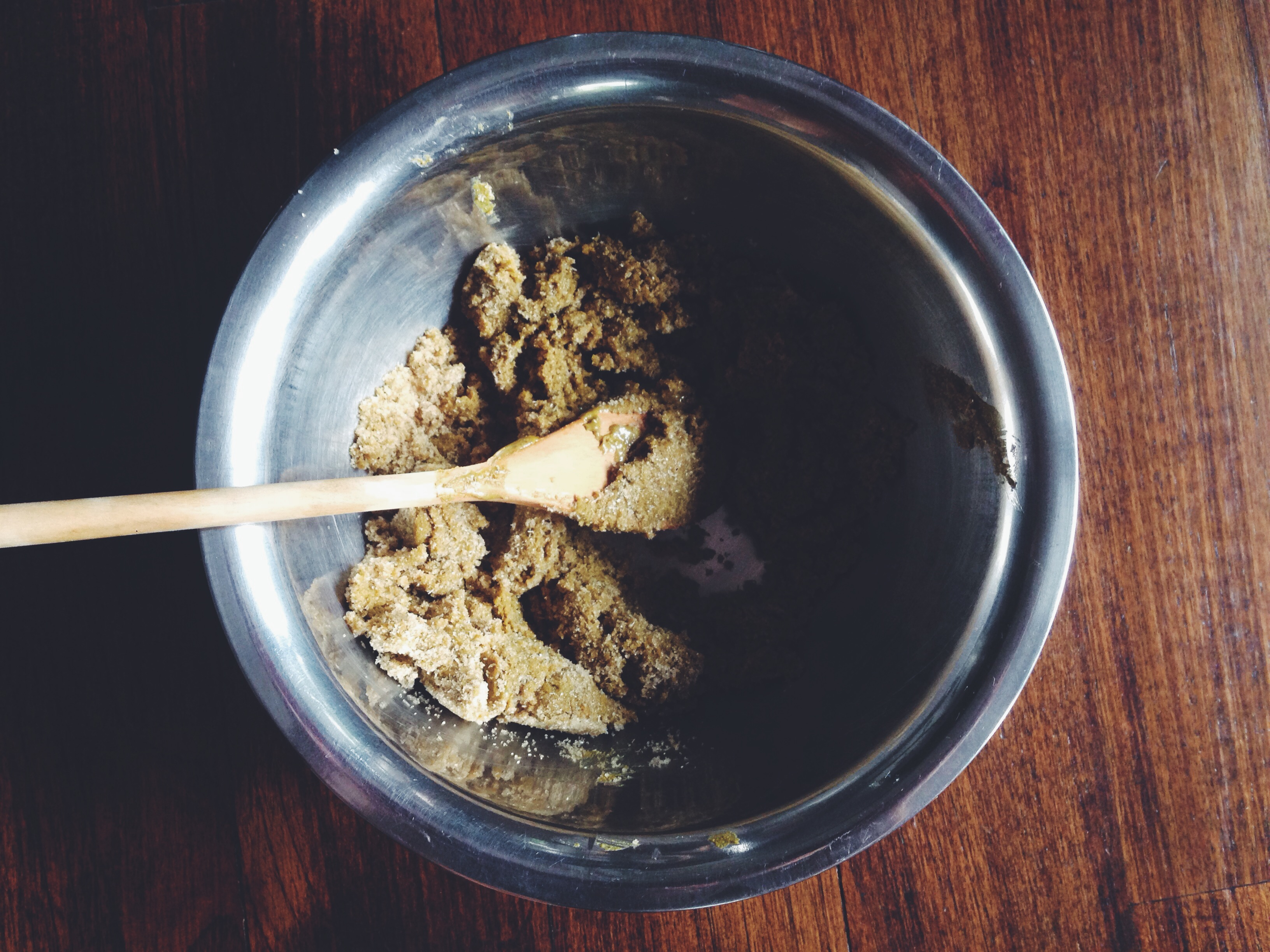
Preheat your oven to 177C (350F). Grease and line an 8×8-inch baking pan and set aside. In a large bowl and with a wooden spoon, mix together the pistachio butter and sugar. The mix should look clumpy, but will come together after a few seconds of mixing (see above). Add the melted butter, eggs and vanilla extract. Mix until smooth. The mix should be sticky and easily drop off your spoon. Add your flour and salt, and mix until combined. That’s it! That’s all there is to it. Pour the sticky gloop into your greased and lined pan, and drop the pan onto your counter a few times to get rid of any air bubbles. Pop it into the oven for 18-20 minutes. My batch was done after 18, so check it at this point. A wooden skewer inserted into the middle should come out dry, but the presence of little clingy crumbs at the tip are fine.

Let the pan cool on a cooling rack. Meanwhile, melt 70g of milk/dark chocolate in the microwave, using 20 seconds bursts and mixing in between, to prevent the chocolate burning and causing an unnecessary temper explosion in the kitchen. Put the melted chocolate into a small ziploc bag. Once the bars are cool, snip the tip off one of the two corners of the ziploc bag and drizzle the chocolate all over the cooled bars. Slice the batch into 16 equal pieces. These bars can be kept at room temperature for up to 3 days. Store remaining in the fridge and reheat whenever necessary, or store them in the fridge after the bars have cooled, if you wish.