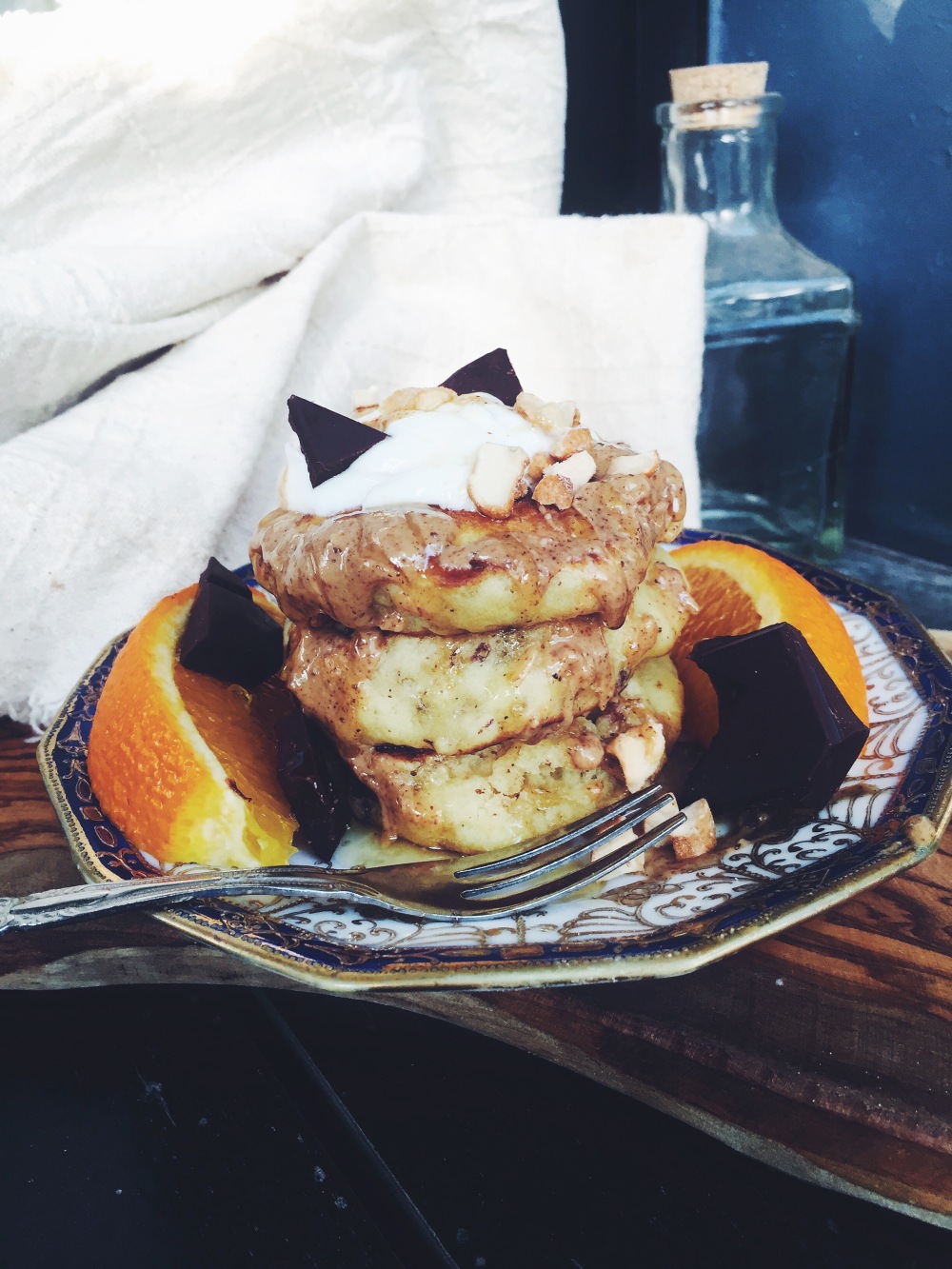
Chocolate Orange Pillow Pancakes

A little twist goes a long way in adding nuanced distinctions to established flavour profiles. I’ve always loved the classic combination of chocolate and orange, so I thought, why not try it in my all-time favourite fluffy pillow pancake recipe?

I remember finalising the recipe for this more than a year ago, and it still hits all heart strings every time I make them. No longer am I caught in the ugly morning mire of doubt and indecision. I love making new things and experimenting with different simple techniques, but what’s the use of a whole stack of badly-risen or bland pancakes when you know there’s one that’s always got your back?
Processed with VSCO with f2 preset Processed with VSCO with f2 preset

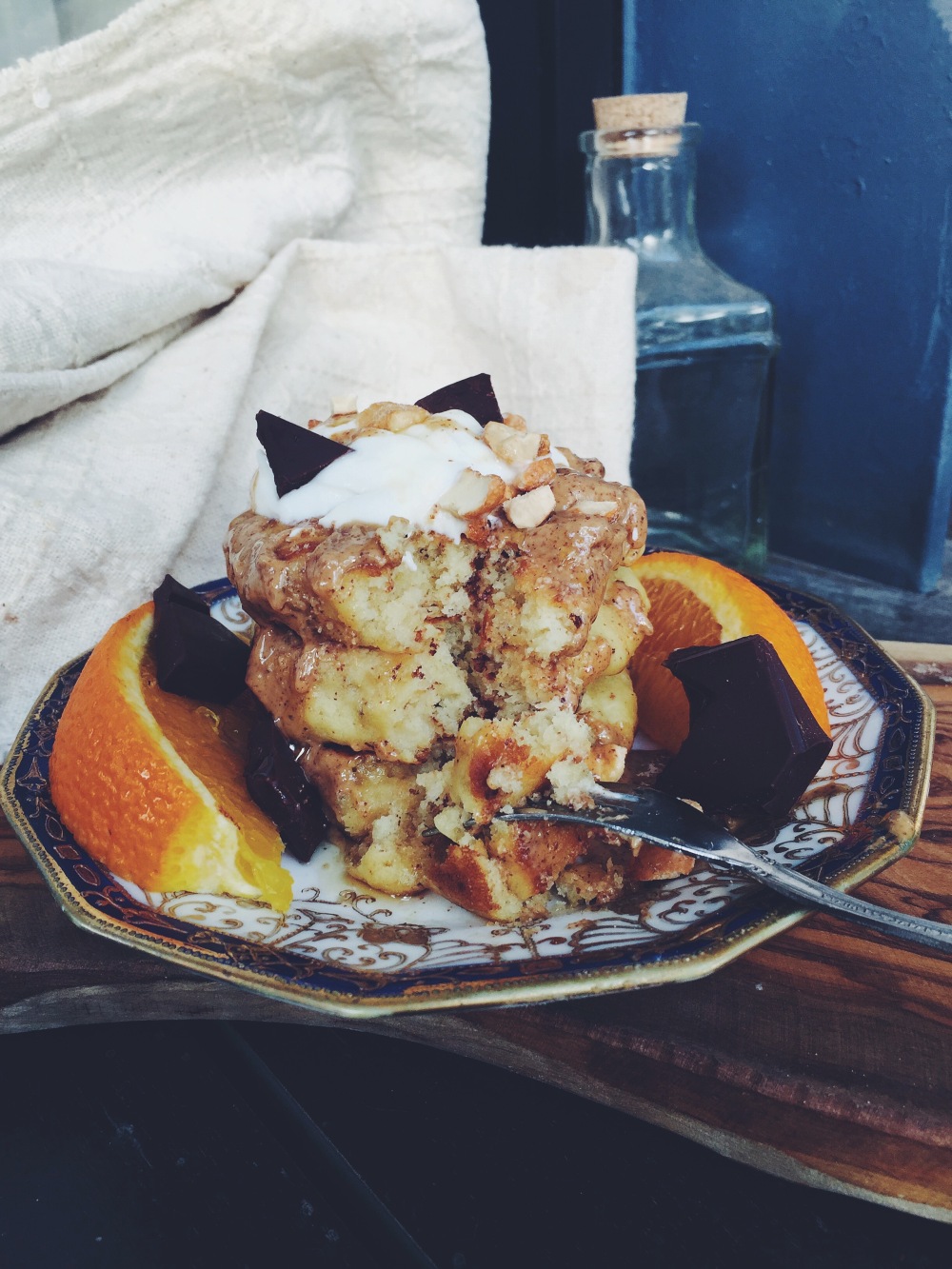
Made with real, fresh orange juice, speckled with chopped up bits of dark chocolate. Saturday respite never did look or taste so good. The tang is subtle and almost sophisticated when paired with more grown-up type chocolate.
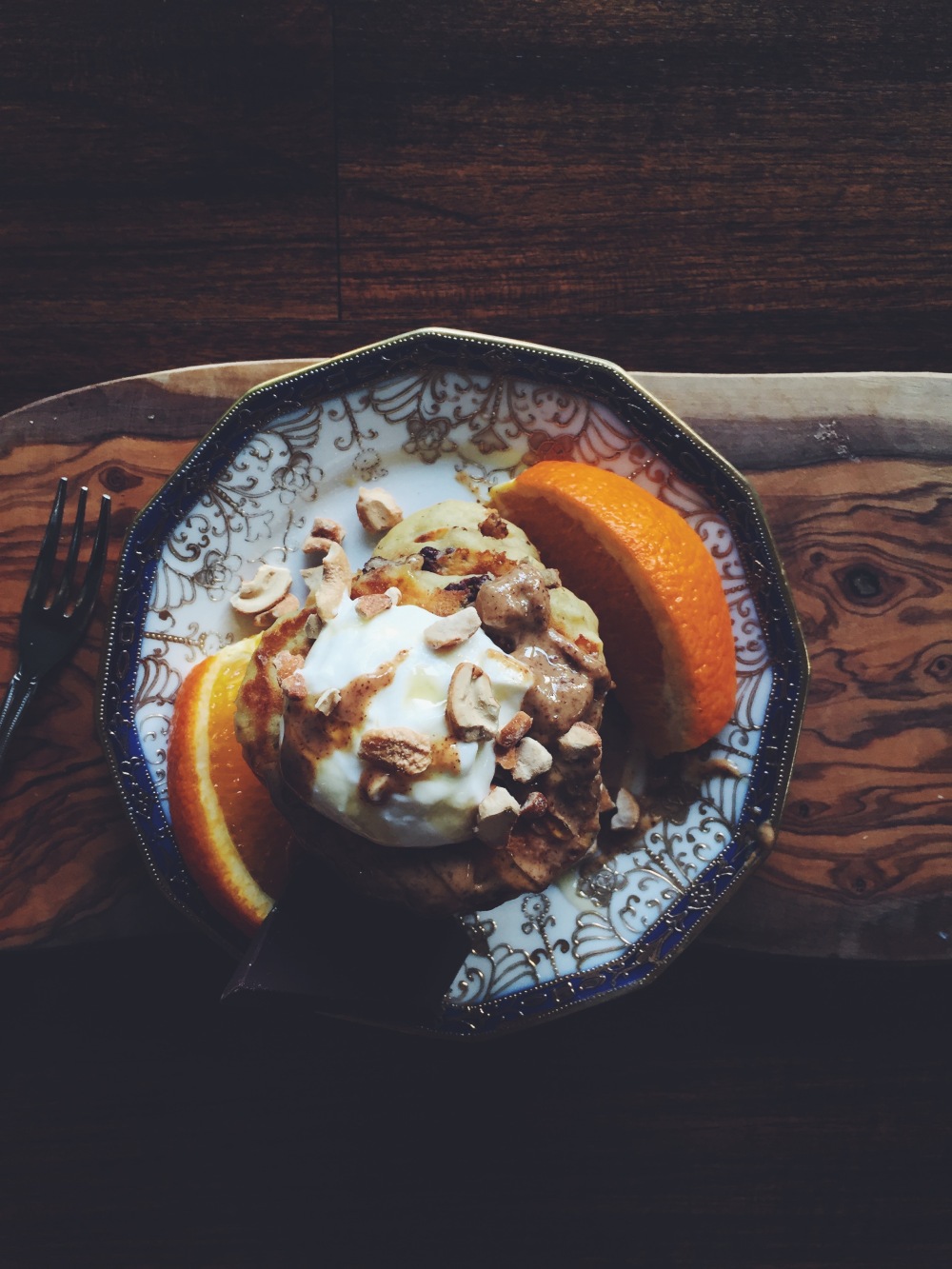
Processed with VSCO with f2 presetProcessed with VSCO with f2 presetProcessed with VSCO with f2 preset Processed with VSCO with f2 preset

Chocolate Orange Pillow Pancakes (makes around 10, adapted from my classic pillow pancake recipe)

Ingredients

190g all-purpose flour

3 tbsp white sugar

generous pinch of salt

1 tsp baking powder

1 tsp baking soda

1 egg

50g unsalted butter (slightly less than 4 tbsp)

1 tsp vanilla extract or the insides of half a plump vanilla bean (or a skinny meek one)

120ml (1/2 cup) whole milk/ buttermilk; use store-bought or make your own by mixing 230ml whole milk with 1 tbsp white vinegar, and let the mixture sit for 5 minutes before using).

30g chopped dark chocolate (I used a bar of 70% cocoa content)

120ml (1/2 cup) freshly-squeezed orange juice; about one medium orange

Directions

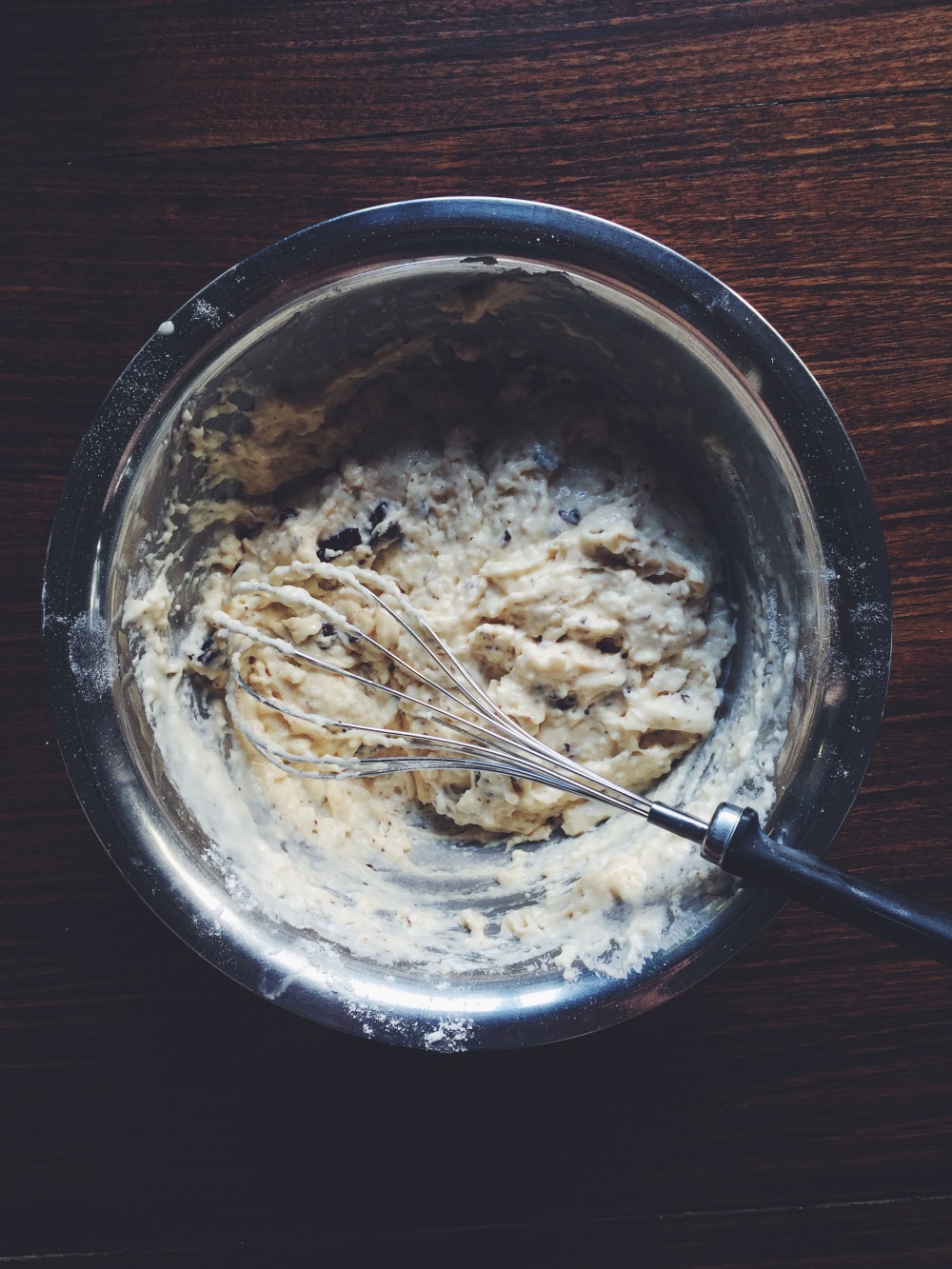
In a large bowl, whisk together the dry ingredients (flour, sugar, salt and leavening agents). In a small microwave-safe bowl, melt the butter in a microwave and set it aside, letting it cool. In another medium bowl, whisk together the egg, buttermilk, orange juice, vanilla and melted butter. Pour the wet mix into the dry mix and mix briefly with a wooden spoon or a normal dinner spoon. Continue to mix until everything is justt combined, which means there will still be a few lumps, but no more streaks of flour. The batter will be thick and somewhat lumpy.

Preheat your pan on medium heat and ready some butter. You know the pan is hot enough when you flick a little water onto its surface and there’s a clear sizzle. At that point, generously butter the pan and ladle tablespoonfuls of batter. I didn’t have to wait for bubbles to pop before flipping; the batter is thicker than usual and there’s no need to wait. Flip the pancakes when you notice the edges stiffening a little, or when you can slide your spatula whole underneath the bottom of the pancake. It will rise a little upon flipping, as if that action gives it life, and hence, breath. The surface should have a brown mosaic thanks to the hot butter. Once the second side is done (will take no more than 20 seconds), let cool on a paper towel. As mentioned above, these freeze wonderfully, so you can make a whole batch, have a small stack and stash the rest in a ziploc bag in the freezer. Easy!
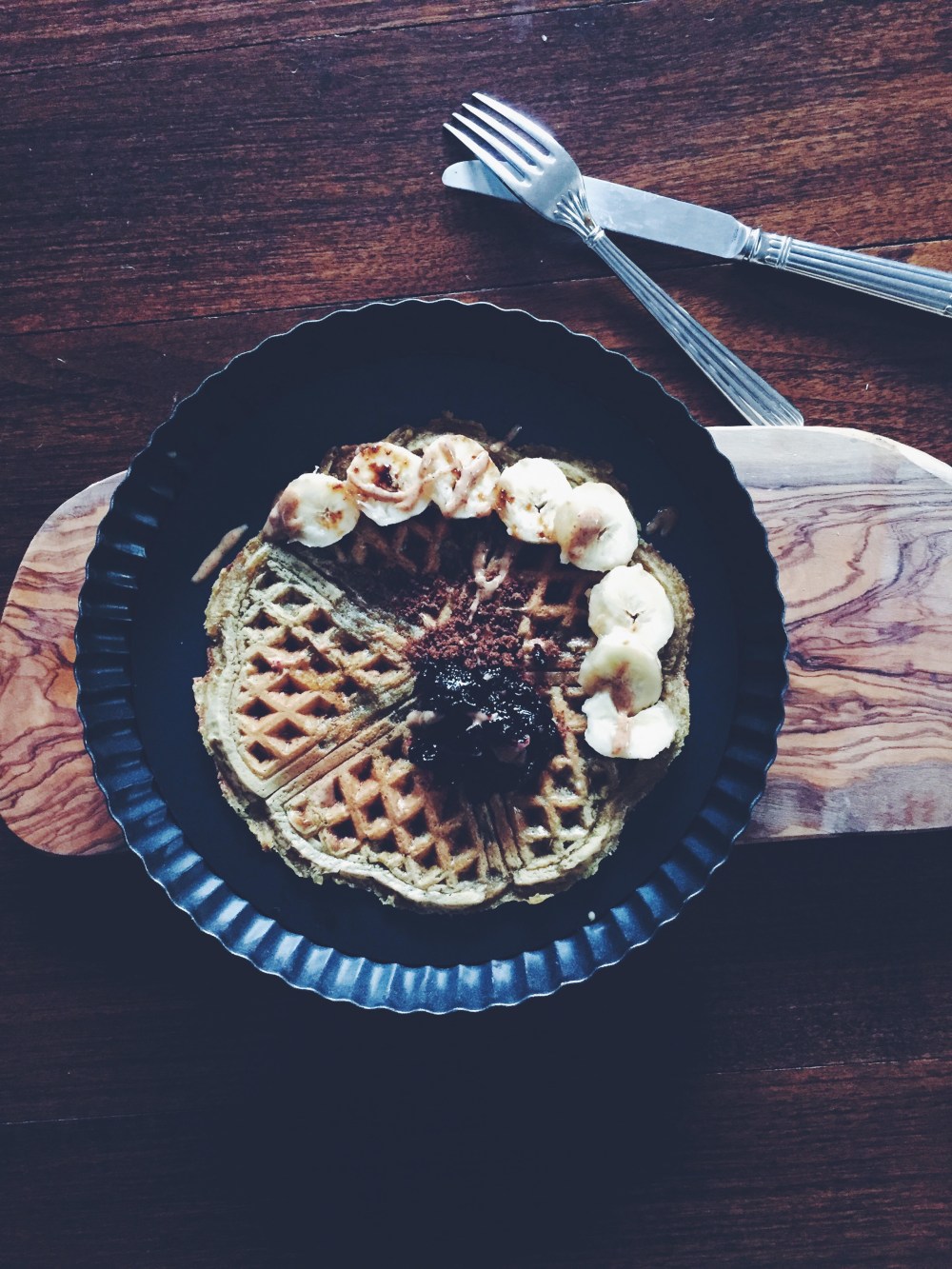


Pandan Waffles

Processed with VSCO with f2 preset Processed with VSCO with f2 preset

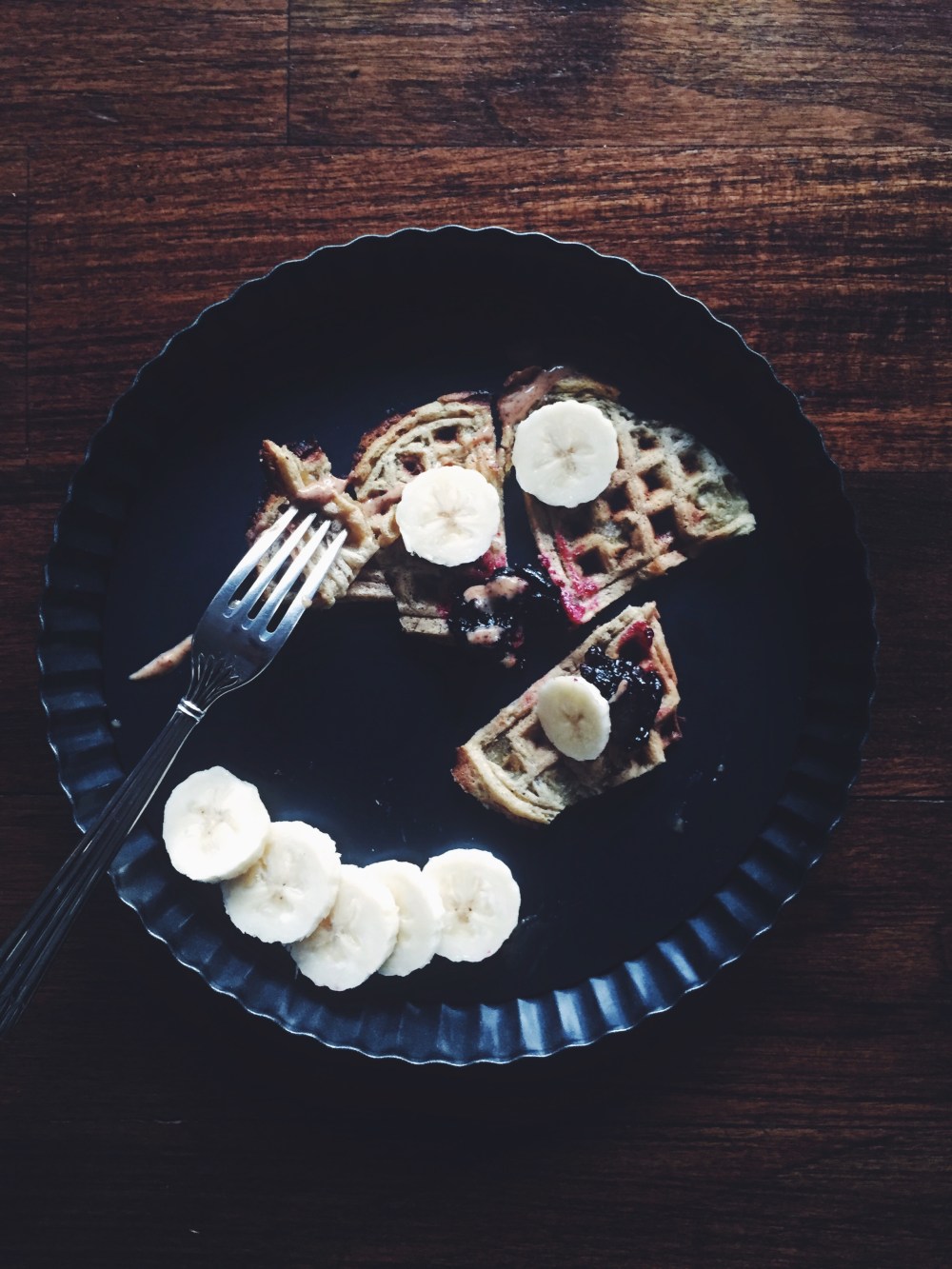
Really a pretty great thing.

After a long day at the lab (currently participating in a long but fascinating internship involving incredibly novel anticancer research, and I couldn’t be more grateful at this point in time), I relished a wholesome family dinner, then tried to resist a nighttime urge to bake, or do anything at all in the kitchen. As usual, I failed miserably.

I don’t like to stick to a certain theme more than once or twice at a go, but after making kaya mochi just a few days ago, there lingered the odd inclination to play around with one of my favourite childhood spreads once again. Kaya, if you don’t know already, is the most delicious South East Asian coconut pandan spread, which to me is right on par with drippy, sweet, delicious almond butter or a lovingly homemade marmalade– yes it’s that sublime. Pandan is the tropical leaf from which kaya is made from. Earthy, sticky, sweet. There are lots of made-for-toast spreads out there that I adore, but kaya is childhood, kaya is rich nonchalance. What I spread on my burnt toast with butter, each bite a sticky mess of equal parts green and white (from unmelted butter).

This recipe is based on one of my favourite personal recipes– soda water waffles! Clickidy click that link for a classic version, or if you don’t really have a thing for kaya/anything pandan-flavoured. It’s the soda water that breathes life into the batter, added just before the kiss of heat, making the final result as light and airy as ever. Another perk? Made using sweet potato flour as a rather haphazard and weird experiment, it’s entirely gluten-free. Haphazard because this is my first time experimenting with sweet potato flour, which is one of the finest, almost delicate flours I’ve come across. Everything made with it will be of a relatively thin consistency, permeated with an au natural chew. Definitely looking into using it more, for what I’m not sure just yet; I’m only excited to incorporate more gluten-free options to accommodate any of you coeliacs out there. Of course, you can substitute this with normal flour, and this will yield a slightly less chewy and probably more refined-looking waffle. Indeed, this isn’t the prettiest of waffles, but goodness the outside crisp is outrageous. The chew on this is also slightly ridiculous, and funnily enough reminds me of that kaya mochi I made not too long ago. An eerie similarity resulting from subconscious fashioning of the past. Processed with VSCO with f2 preset

Pandan waffles (makes 6-7 thin Swedish waffles, modified from here)

Ingredients

240g sweet potato flour (substitute with 200g all-purpose flour)

1 tbsp baking powder

1/2 tsp baking soda

pinch salt

2 tbsp coconut sugar (or brown sugar)

2 eggs

1/2 cup milk of choice (I used almond)

3 heaping tbsp store-bought or homemade kaya

1 drop pandan extract (bought at your local oriental store)

80g melted, unsalted butter

1 cup soda water


Directions

Preheat your waffle iron according to the manufacturer’s instructions. In a large bowl, whisk together the dry ingredients– flour, leavening agents, salt and sugar. Add the egg, milk, pandan extract, melted butter, kaya, and lastly, the soda water. Cook in the preheated iron according to the iron’s instructions. In my Sevren waffle maker, it took 4-5 minutes before the edges went crisp and golden.

These freeze wonderfully. Let the waffles cool on a cooling rack, before layering them with pieces of parchment between each waffle so they don’t stick together when you take them out the next morning. The next morning, take them out, microwave for 20 seconds, then stick in the toaster until golden and crisp again. Go wonderfully with banana, anything coconut-themed (I used coconut sugar), and peanut butter!

Kaya Mochi

A few of you have asked me previously about my diet, and why I blog about breakfast and dessert specifically. I must say, I have recently made a minor, albeit profound change. To sum it up, I adopt a mostly plant-based, whole foods diet. The main reasons for this are:

Eating Animals

Forks over Knives

The China Study

Why the deprivation? Meat tastes the best!! I modified my About and FAQ’ page to cover a few points, but the above links are what induced a fixated curiosity on our warped nutritional conventions in the 21st century. So go ahead, click click click. On all the links.

Despite everything I say on adopting this diet, part of me feels a little sad because I do still eat a little meat, rendering my conviction less extreme, less concrete. It’s cultural convention to eat meat prepared for you, say, by your genius cook of a grandmother. This is why I still eat meat, albeit much less, replacing most of it with more starch and vegetables. And you know what? I haven’t felt better. Since the difficulty is justified, for reasons both ethical and environmental, ‘plant-based’ no longer carries the weight of ‘deprivation’ anymore. It really doesn’t. And I’ve finally come to realise that this is the right thing to do. If any of you have a similar experience with this, I’d love for you to share.

The second bit on why I choose to blog about breakfast and dessert specifically is also in the FAQ. I mean, my sweet tooth obviously deserves a bit of criticism. So check out the page for all that jazz as well.

Ok. Let’s talk about mochi!

Actually, I don’t know why that elicited an exclamation, because truth be told, I never was the biggest fan of mochi. I honestly just felt like trying something a little different. Increased exposure and this experiment indeed reversed my dislike.

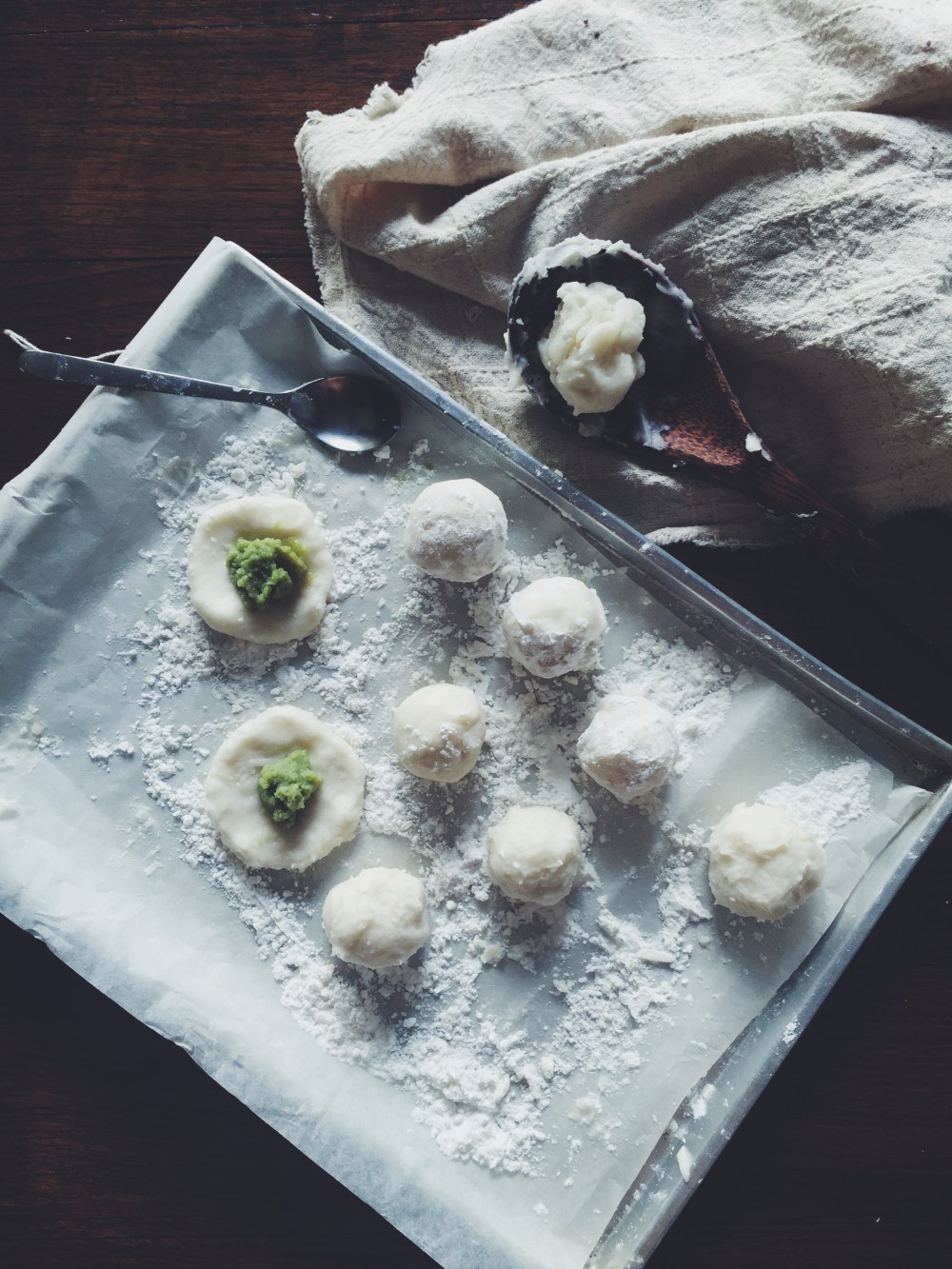
Mochi is a delicate Japanese dessert, its name being derived from the type of flour used to make it– mochiko (rice) flour. Plus points for anyone who would potentially benefit: rice flour is gluten-free, with a substantial amount of niacin and B6. Amazing how it still yields such a chewy texture after being combined with the other ingredients. Typically stuffed with this divine, sticky red bean paste, but I changed it up just a little, deciding instead to fill it with homemade kaya (pandan spread). Weaved nostalgic taste into a minor innovative tweak. Each bite was sticky, slightly chewy, and bursting with the earthy, coconutty goodness of kaya.

Processed with VSCO with f2 presetProcessed with VSCO with f2 presetProcessed with VSCO with f2 preset

Kaya Mochi (makes around 10 depending on how big you like them, mochi dough recipe)

Ingredients

160g mochiko (rice) flour

180g icing sugar

300ml (1.25 cups) water

cornstarch for dusting

8-12 tsp kaya

Directions

Ready a large bowl full of cornstarch for dusting your hands and the mochi.

In a saucepan, whisk together the flour and water. Turn the stove heat to medium, add the sugar, and use a wooden spoon to continue stirring. Cook the mixture until it starts to look almost gelatinous, around 7-10 minutes. You will see the mixture thicken, and look slightly glassy on top. Leave to cool for another 10 minutes before touching and fiddling. Dust your hands with cornstarch, then scoop a bit of the mixture with a teaspoon. This bit onwards is a slightly sticky ride, but it’ll be worth it! Roll between your palms until you get a smooth, white ball. Use your fingers to flatten it a little, and place a tiny dollop of kaya in the middle. Gently pull the sides over the ball, and gently roll the mochi again to get an even sphere.

Dust with a mix of cornstarch and icing sugar before eating. Store in the refrigerator for up to a couple of days.

Date Custard Tart with a Pistachio Crust

Processed with VSCO with f2 preset

In spite of all the pre-planning in the world, my usual baking endeavours still entail some degree of dilly-dallying beforehand. Well, not this time. I was standing in the kitchen, and knew I wanted a tart. A good tart with a finely baked crisp crust, and some sort of fudgy, gooey middle. Something with depth and exuberance and sin all round.

Put simply: I’ve been sooo into dates recently. Nothing really beats a huge, gooey medjool date. Peel one open and you get an untidy split down the middle, unveiling a thin seed and bountiful, sweet, sticky flesh. Yum. So… Date, custard, pistachios? A combination you would perhaps find in a specialty baking store, and a combination I almost haphazardly threw together. A combination that works.

Processed with VSCO with f2 presetProcessed with VSCO with f2 presetProcessed with VSCO with f2 preset

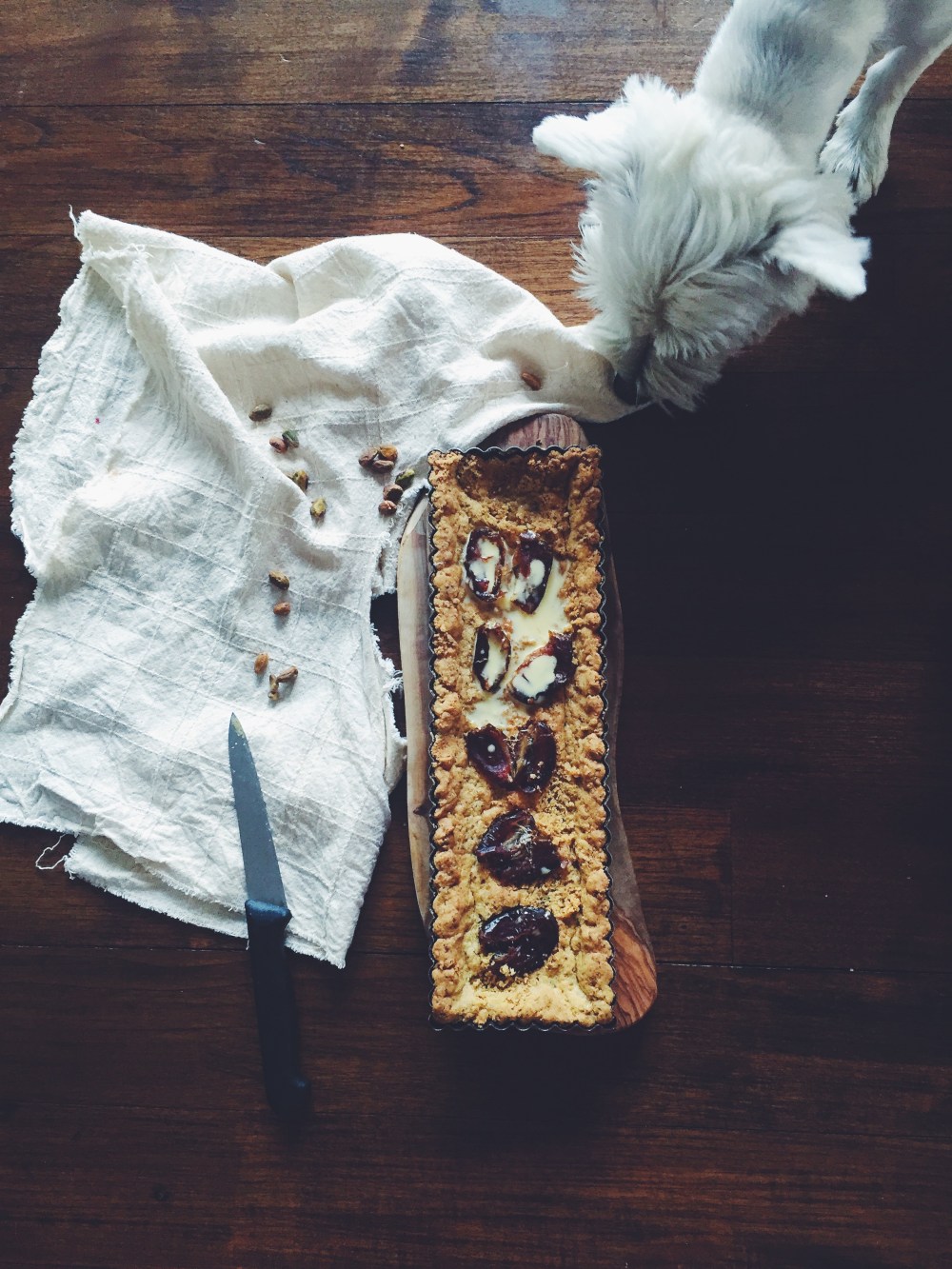
Little Maddie was all too keen on having her nose pressed up against the side of the tart shell. I look at her differently now, especially after finishing Eating Animals by Foer. I personally hold many strong views on meat-eating now, but that’s a whole other story that deserves its own section or post.

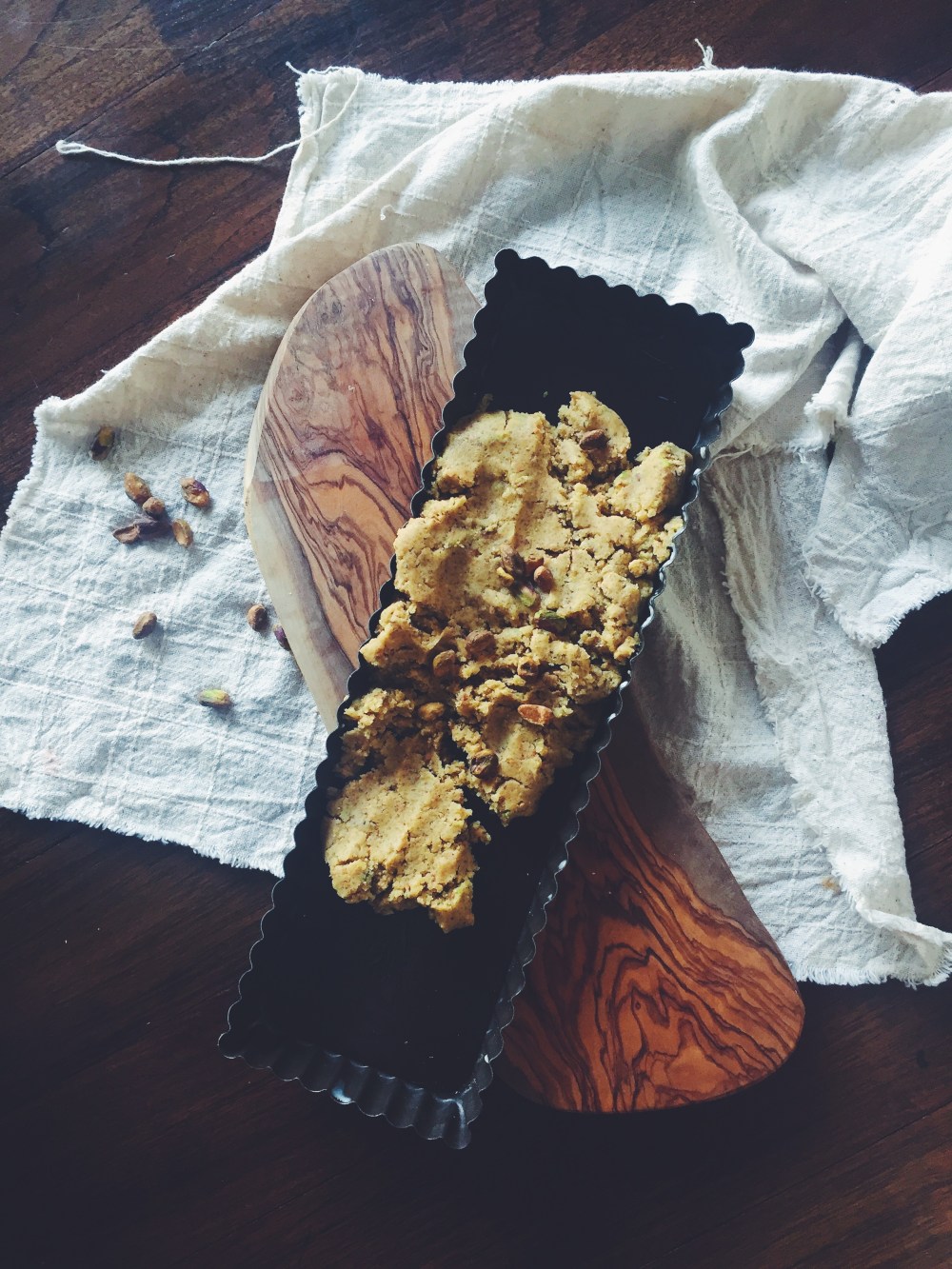
The crust itself is made of just a few things, and is completely eggless– roasted pistachios, flour, butter, sugar and salt. Et Voila. All you really need is a food processor, otherwise you could really just buy ground pistachios and mix the rest in by hand. And the custard? Another story of ease.

Processed with VSCO with f2 presetProcessed with VSCO with f2 presetProcessed with VSCO with f2 presetProcessed with VSCO with f2 preset

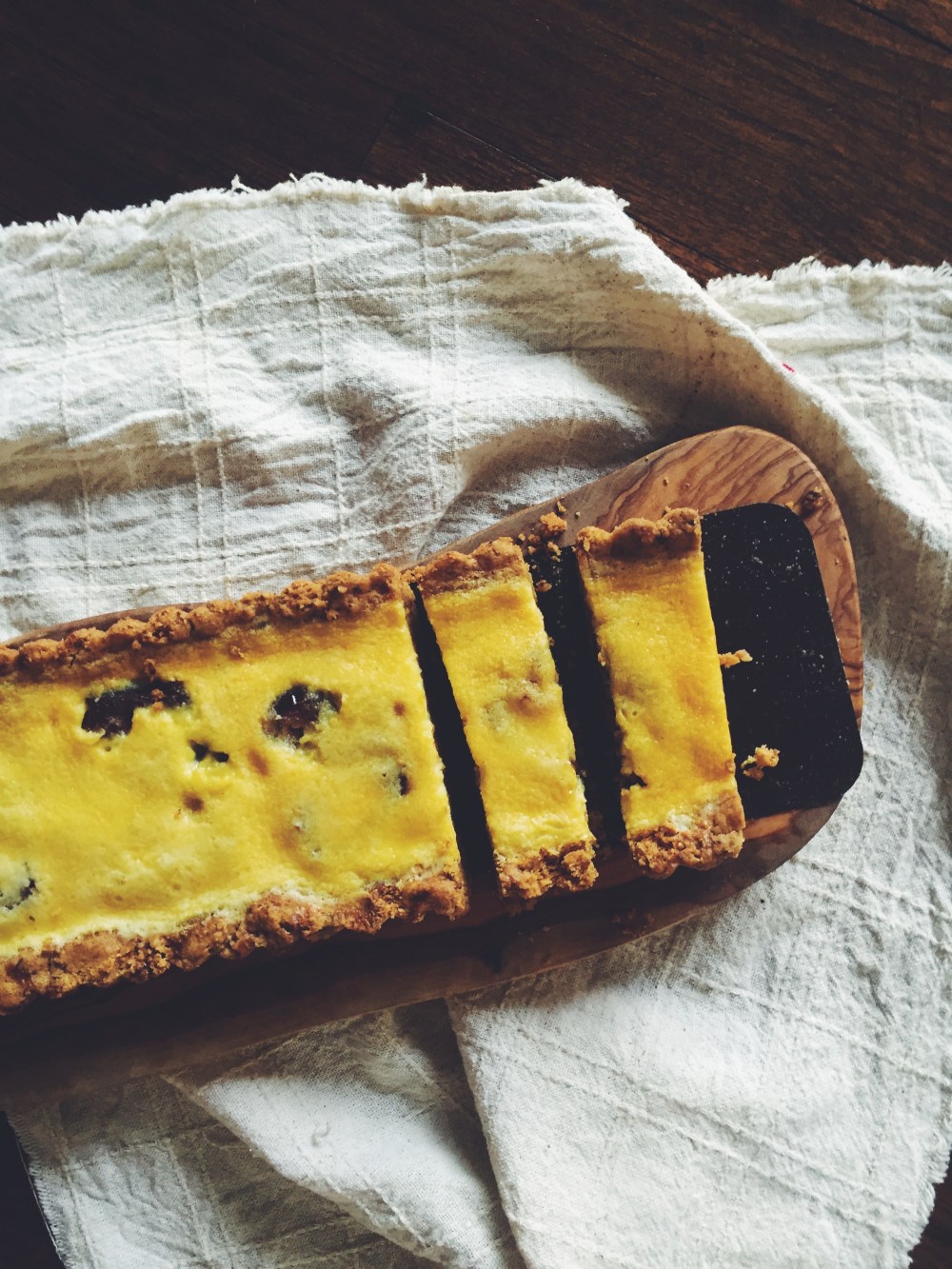
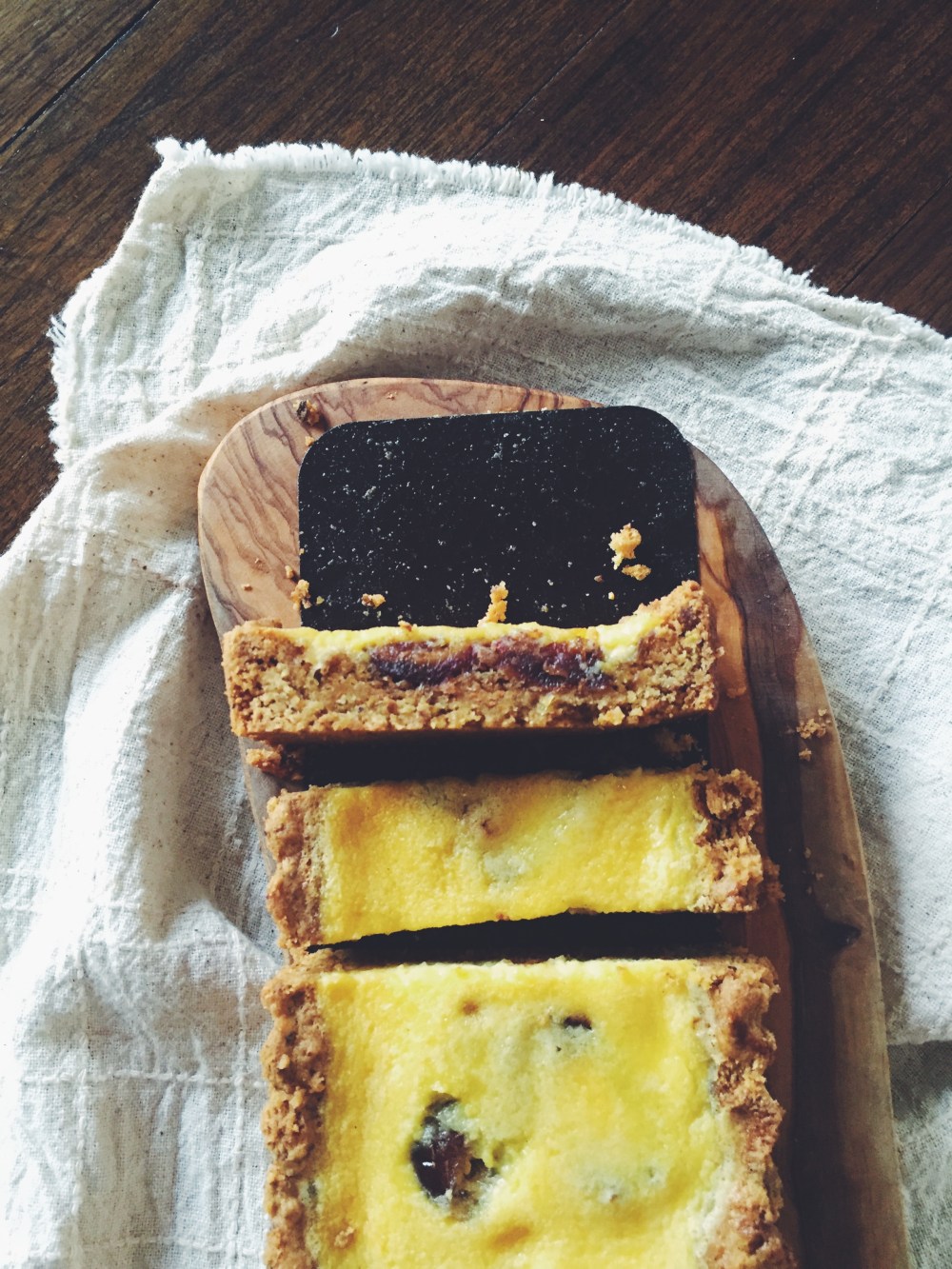
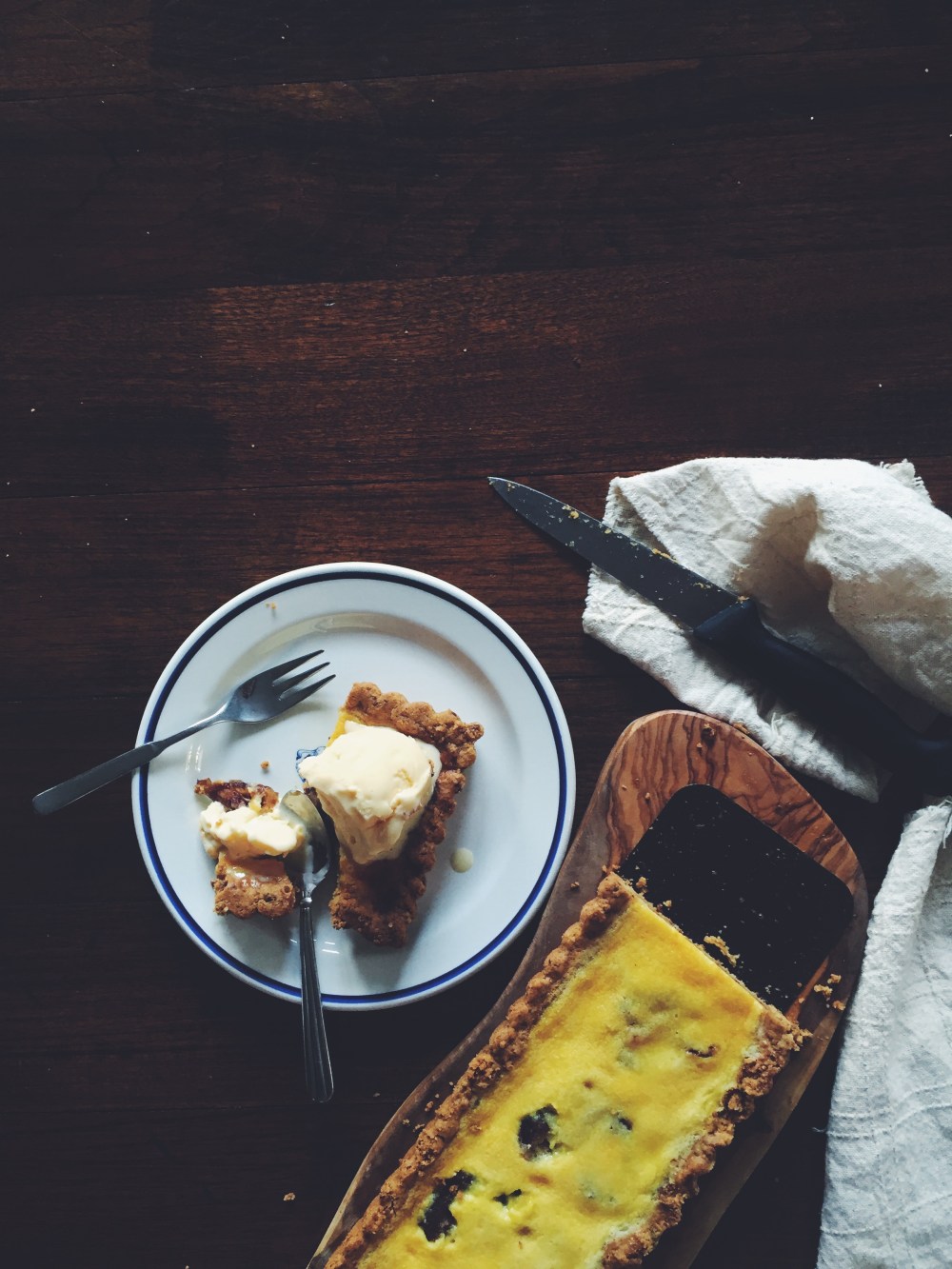
Dates smushed in the middle of a dense custard, offering perfect contrast to the hard exterior. The crust is buttery and flaky, holding little resistance to any give, thanks to the lack of eggs. What I like is that you can eat this tart alone hot or cold, or with ice cream/ cold whipped cream. I had a thin slice straight out the oven with a scoop of plain vanilla ice cream, which was absolute heaven. The next day, I tried it cold as I put the remains in the fridge, and that was equally sublime. The custard was more set, but if you prefer it a little more warm and watery, all you have to do is microwave it for a couple of minutes.

Processed with VSCO with f2 presetProcessed with VSCO with f2 presetProcessed with VSCO with f2 presetProcessed with VSCO with f2 preset

Date Custard Tart with a Pistachio Crust (makes 2 9-inch round tarts, or one 9-inch round and one 4×11-inch rectangular, adapted from here)


Ingredients:

For the crust:

290g (around 10oz or 2 cups) roasted, de-shelled pistachios (salted/unsalted)

260g (2 cups) plain flour

225g (1 cup) white sugar

pinch salt (not needed if you’re using salted pistachios)

250g (2 sticks+13g) unsalted butter, at room temperature


For the filling:

9 medjool dates

300ml heavy cream

1 tbsp vanilla bean paste, or 2 tsp vanilla extract

2 heaping tbsp greek yoghurt (can substitute with more heavy cream or sour cream)

4 egg yolks

3 tbsp sugar


Directions:

In a food processor, grind your pistachios until you get a coarse meal. Chuck in the flour, sugar and salt, and pulse until everything is well incorporated. Tip the mixture into a large bowl and whisk (or mix with a wooden spoon) everything, making sure the pistachio meal is evenly distributed in the dry mix. Add the softened butter, get your hands in and mix everything together. This shouldn’t take too long. The dough will be easy to break apart, yet dense and moist. Put the bowl containing the dough into the fridge for 20 minutes. Preheat your oven to 180C (350F).

After 20 minutes, take the dough out and ready your tart tins. Greasing isn’t necessary because all the butter in the dough does just the job, but if your tart molds are old and not very trustworthy, then go ahead and give them a light greasing. Break your dough in half (or store half in the freezer if you’re just making one tart) and press into your tart mold, making sure to have a thick enough layer on the bottom and sides. Bake the tart for 15 minutes.

While the crust is baking, make the filling. Whisk together the egg yolks and sugar for 5 minutes straight, or until visibly light, runny and fluffy. Whisk in the cream, yoghurt and vanilla. Once the tart crust is half-baked, remove from the oven and press in you (de-seeded) dates as shown in the picture above. The heat of the oven will soften them even more, making the insides even gooier, if such a word could exist. Pour the custard on your tart(s), then put back carefully in the oven and bake for another 10-12 minutes. Check the tart at 10 minutes– the top might have some soft brown, caramelised patches. The tart should still hold a little wobble when nudged at the side.

Remove from the oven and set on a heatproof mat or stand to let cool for a while before cutting. Eat hot with ice cream, or store in the fridge for a while, before tucking into it cold.

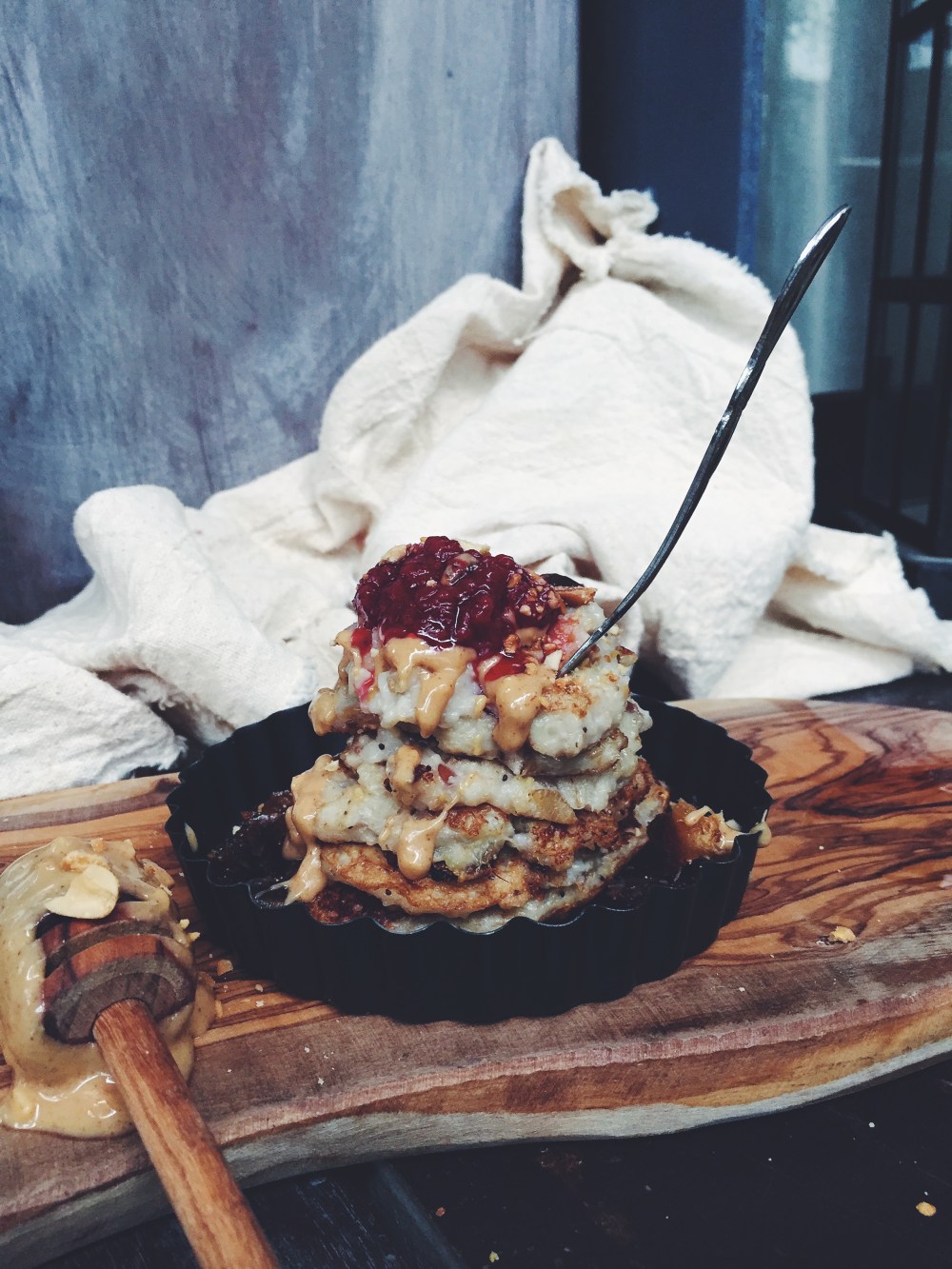
Oatmeal Date Pancakes

Processed with VSCO with f2 preset

Straight up, no fuss.

Post-flight mornings warrant simplicity. Being back in Singapore is still very surreal– everything still feels the same, yet somehow different. Anyways. 13-hour flights typically leave me feeling a little bloated, distended, out of sorts. So all I want to come home to is my morning ritual comprising the papers, iced coffee, and a standard bowl of my favourite banana-based oatmeal. Yet somehow this morning I opted out of this bowl ritual in favour of something more texturally interesting. I craved that same fluffy texture, but it needed a robust edge. Heck, just something with edges. It needed fork and knife action.

Processed with VSCO with f2 presetProcessed with VSCO with f2 preset

Was intrigued by why I favour oatmeal over other breakfast foods some days, or just when I’m especially hungry in the morning. It’s well known that the stuff keeps you feeling fuller for longer, but it’s only recently that I discovered that it has to do with a particular fluid property: viscosity. It’s the viscosity of oatmeal, that sticky, runny texture it has like glycocalyx on epithelial cells, that provides the feeling of satiety. Specifically, it’s the degree of initial viscosity in the mouth and subsequent viscosity in the GI tract that influences the release of appetite hormones. A high initial and subsequent viscosity, apparently best provided with instant oatmeal, will prolong fullness. My current favourite oatmeal is this one. It’s incredibly voluminous, nutritious and chock full of texture.

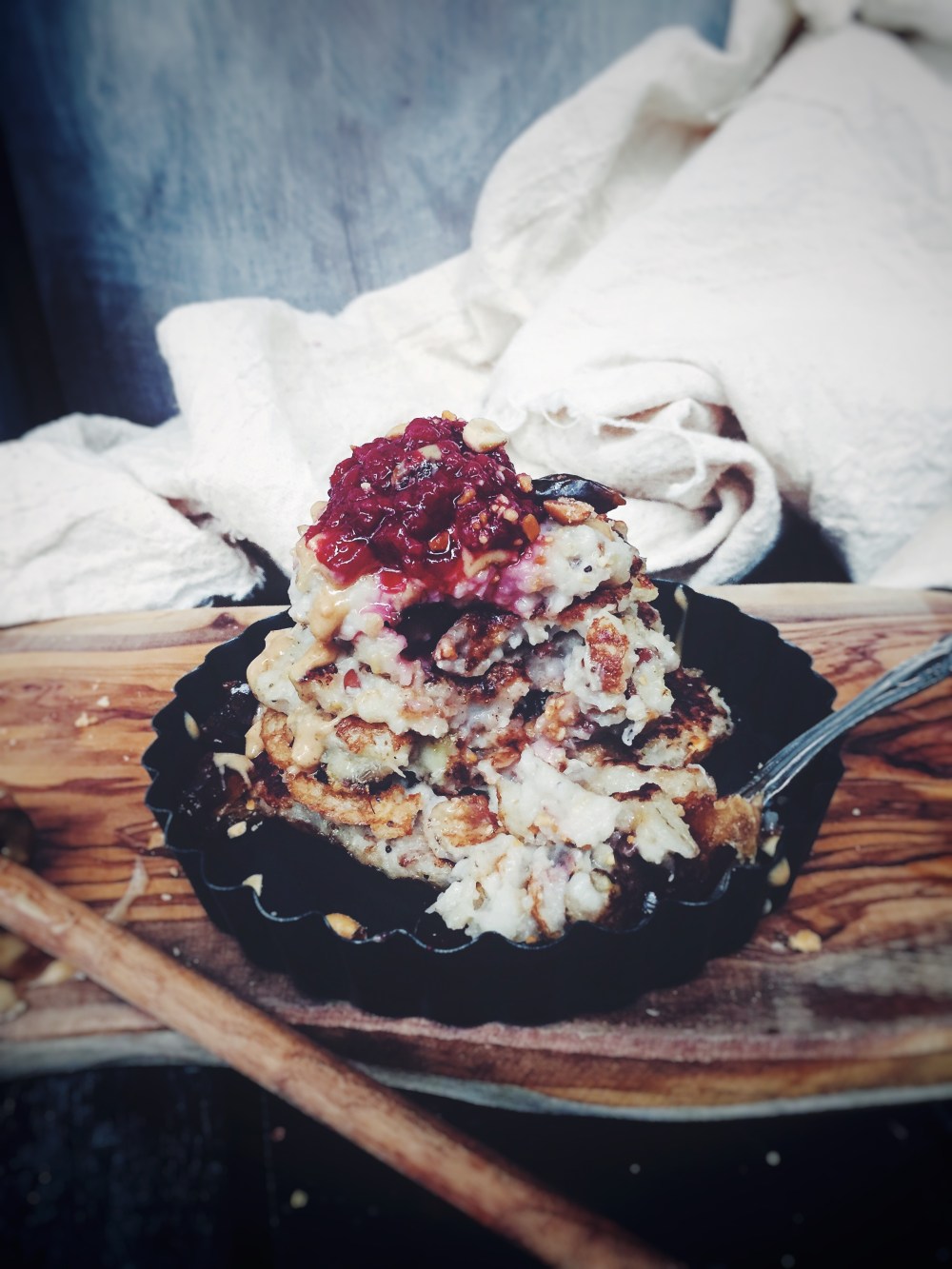
It’s all almost a bit silly. A good silly. Why would you straight up fry a perfectly good bowl of oatmeal? Oh, the wonders of a little pan action. The frying provides a crisp outside, while the inside remains fluffy and a little chewy, depending on how you cook the oats in the first place. The torn up bits of dates provide a good deal of goo and sweetness in each little pancake. These oatmeal pancakes are the halfway mark for proper versions of either oatmeal or pancakes, and I’m ok with that sometimes.

Processed with VSCO with f2 preset Processed with VSCO with f2 preset

Oatmeal Date pancakes (serves 1; makes 4-5 mini pancakes)

Directions

Make one serving of your favourite porridge or old-fashioned oatmeal: In a bowl, mash up half a banana, then add 45-50g (around a half cup) of porridge or old-fashioned oats, half a cup of milk of choice (I adore almond), and half a cup of water. Alternatively, you could use either just milk or water for the liquid bit. Preheat a pan on medium heat and ready some butter. Cook the mixture over the stove or in a microwave until you get the consistency you like. I like to microwave mine for 2 minutes, let stand for 30 seconds, then microwave again for another minute to achieve the perfect, just-under-thick consistency. Take out your oatmeal and stir in a pinch of cinnamon, salt, and brown sugar.

Once cooked, add a knob of butter to the hot pan and let sizzle. The butter should not brown or burn, indicating the right temperature. Ladle spoonfuls of oatmeal onto the pan and use the back of the spoon to flatten into a circle if it’s on the thicker side (as I like mine). Add the bits of date (optional) to the surface of the batter. Let cook for 2 minutes, then slide a spatula underneath to see if it’s done. Flip and let the second side cook for 1 1/2 minutes. Remove using the spatula and let cool on a paper towel while you cook the rest.

Serve as a stack, topped with peanut butter, more date bits, and maple syrup. I added some homemade raspberry chia jam for some tangy oomph.