Make This Oatmeal Now (updated recipe with a twist)

I thought I had it all figured out, given the number of times I’ve made oatmeal in my life. Overnight, hot, cold, lukewarm (ew), apple-pied, black sesame-ed, peanut buttered, I’ve done it all. I even wrote a post about it here exactly a year ago, yet I only just discovered what I think is the perfect method for making the thickest, creamiest oatmeal ever. Trial and error does pay off sometimes. It’s more reliable, oats coming out perfect every time. Mind you, this method is preferable is you like the super thick and gloopy sort, but even if you don’t, you just have to take your oats out of the microwave a little earlier.

Catch– it involves the microwave. I can hear the disappointed sighs. They’re boring into the screen already, reaching me, slaps in the making.

I get it, I do. I used to think the only way to achieve the perfect, creamy consistency for oats is to do it the proper and old-fashioned stovetop way. The whole process just makes more sense, it wants you to feel like you’re doing it the better way, doesn’t it?

Funnily enough, this microwave method not only yielded the most desirable consistency, it also seemed to enhanced the flavour of mashed banana, the one ingredient I always put in before cooking my oats for added sweetness and creaminess.

No wait. Just do.

Directions 

The night before, mix together a half cup of rolled oats, half cup of water, half a mashed banana, and a half cup of milk of choice (I always use a mix of whole and almond) in a relatively large, microwave-safe bowl (because this mixture will se. Leave this in the fridge overnight.

The next morning, put your bowl in the microwave and microwave on high for 2 minutes. Take a spoon and mix, then put in the microwave for another minute. At this point, your oatmeal should be noticeably more voluminous and thickened, depending on the power setting of your microwave. Microwave in 30-second increments until you have oatmeal that seems to have more than doubled in volume. Just check your oatmeal every 30 seconds, mixing well between each spurt of heating. Err on the side of caution here.

And you’re done! At this point, you can add whatever you want. My standard toppings are more banana, a heaping tablespoon of almond butter (cashew/peanut/almond), blueberries for a nice tang to cut through the sweet goop, and plenty of honey or maple syrup. Once the oatmeal is a little cooler, I also add a dash of cold, whole milk.

BUT. In this case, I highly recommend trying out this kaya and coconut twist. It’s the sort of combination I’ll be coming back to again and again, for the flavours are close to my heart and it’s a nice break from your typical snack of kaya and butter toast!

The Twist

You should now have a thick, creamy, voluminous mass in your hands. Take the other half or a whole banana and slice it down the middle. Butter a hot pan and fry the banana on both sides. Place the caramelised banana on top of the oats, then add a heaping tablespoon each of almond butter and kaya (I love Breadtalk or Yakun, and my grandma makes a mean one too), a generous drizzle of maple syrup, coconut flakes and a dash of whole milk. Mix everything together, admire the glorious mess, then tuck in happily.

Coffee and Kaya Yeasted Doughnuts

Yeasted doughnuts filled with kaya and drizzled with a strong coffee glaze. 

A tribute to one of my all-time favourite morning traditions.

In other words– butter, kaya, bread and coffee. It doesn’t get any better, or simpler, than that. Sometimes it’s butter and honey, or butter and jam, but most of the time it’s butter and kaya. It’s really common here in Singapore, where you eat butter-kaya (a pandan-flavoured spread) toast from Yakun or some hawker stall with soft-boiled eggs, all downed with smooth, creamy kopi (local coffee made with condensed milk, AKA the best drink ever alongside teh halia… ok and maybe Coke). Yes, I’m talking processed white toast, pre-cut and plasticky; sometimes I get the fancy sort from the bakery if I feel like it, but usually it’s just that and not much more. The sort of bread you would squeeze and press with glee as a kid because the degree of artificiality pretty much makes it more playdoh than bread, and I know you know what I’m talking about.

Toast.

Let the Nespresso machine kick into gear. Slather two almost-burnt slices toast with salted butter, because I like my toast that way and because salty butter is a must in my morning regime. Anything else and I feel that I’m cheating myself of flavour. Salty and sweet forever, unless I’m baking, in which case I always stick with unsalted butter and add the salt myself.
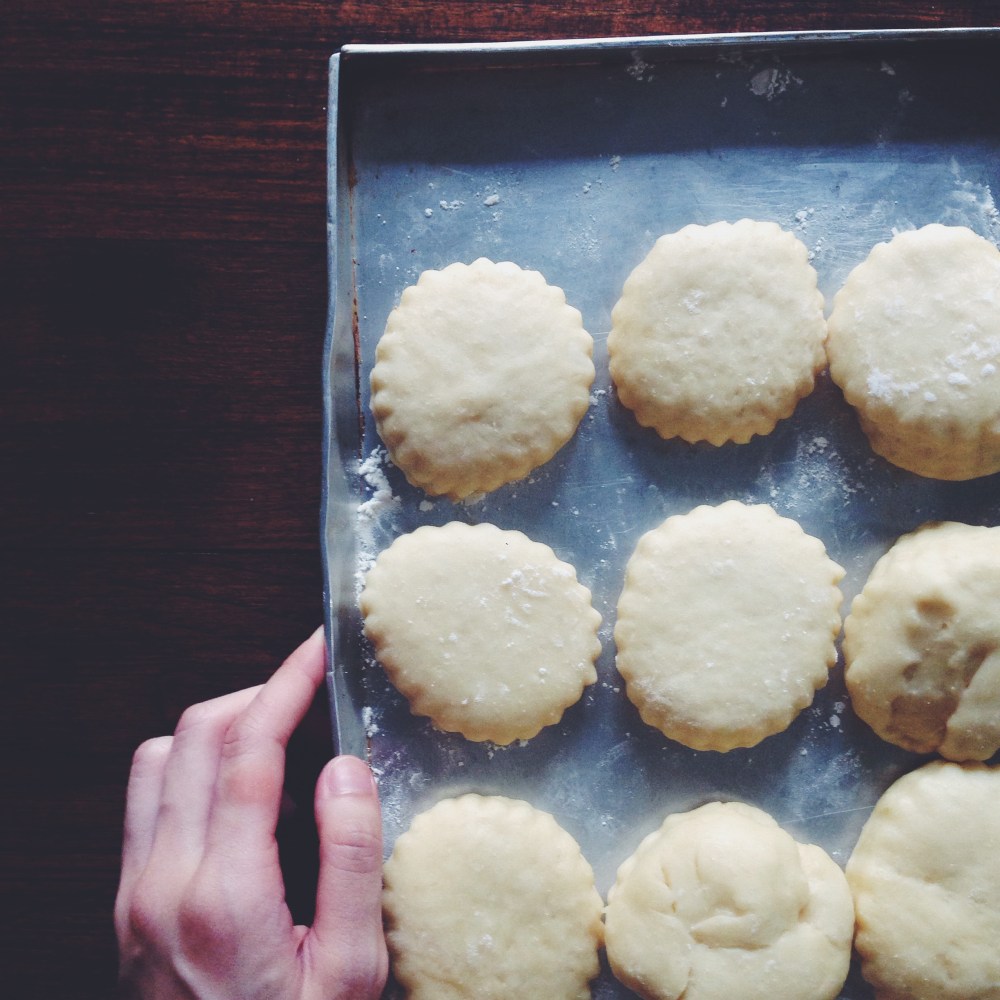
(Yes, they were spread further away from each other after this shot.)

This recipe represents this magical, true-to-local-taste flavour combination. Doughnut form. I’ve been itching to make yeasted, fried doughnuts for quite a while now, and when I got my hands on Baking Illustrated, with all the recipes tested and compiled by America’s Test Kitchen, I couldn’t wait to try their version of it. After 2 trials, a bit of tearful upsets and a lot of joyous finger-licking, I think I fell in love with the fluff and harmony of the final product. Their recipe advocates the use of vegeetable shortening instead of normal vegetable oil, and although they state that Crisco (veg shortening) yields the best result, I used canola oil in the second trial and couldn’t detect any distinct change in flavour or texture, so I doubt the change would produce a drastic difference if you used either.

This was my first time making fried doughnuts, but definitely not my last. There’s a certain ecstasy involved in replicating something so ubiquitous, yet undeniably delicious. Perhaps I’ll test the recipe again with a different flavour combination, or just anything that involves a delirious sprinkling of icing sugar after everything is done and dusted.

Coffee and Kaya Yeasted Doughnuts (makes around 16 doughnuts, adapted from Bakers Illustrated)

Ingredients

For the doughnuts:

450g (around 3 cups) all-purpose flour

2 1/4 tsp (1 envelope) instant yeast

6 tbsp white sugar

1/2 tsp salt

160ml (2/3 cup) whole milk at room temperature

2 eggs, at room temperature

85g unsalted butter, at room temperature

1.1 litres (6 cups) vegetable shortening like Crisco, or vegetable oil

For the filling and glaze:

1 cup (or more) of kaya, homemade or store-bought

4 tbsp freshly brewed espresso

160g icing sugar

Directions

In a medium bowl, whisk together the flour, sugar, salt and instant yeast. Set aside for the time being. In your large mixing bowl fitted with a standard dough hook, mix together the eggs and milk. You could do this in another bowl if you don’t have a stand mixer such as a KitchenAid, just make sure the bowl is larger than the one in which you put the flour, and you will have to knead the dough for a little longer later in the process.

After mixing the milk and eggs, add the flour. Mix on low speed with the dough hook until you see a ball of dough forming. At this point, take your butter and add it in 4-5 additions, mixing well into the dough between each addition. The butter should be soft, not cold and hard, to make the process easier and faster. After all the butter has been added, mix the dough for another 3 minutes. If you’re doing this by hand, knead the dough for around the same time or longer, until you get a soft, plump and pale ball of dough. Have extra flour on hand in case you need more; you should have a soft but firm ball. Not too sticky, but not too firm, either. Shape your ball (remove the slightly stickier bits from the dough hook first) into a ball if it’s not like that already, then place back in the bowl, cover with a towel and let rise until doubled, around 2 hours. It should be visibly voluminous when you come back to check on it later.

After 2 hours, check on the dough– press lightly with a finger, it should feel tender but still quite firm. If not, leave for another 15 minutes. When ready, flour your work surface and tip your ball onto the counter. Take your rolling pin and flour that too, to prevent it sticking to the dough. Roll the dough out until it’s around 3/4 of an inch thick. Take a 3-inch wide circular cutter (or in my case, a scallop-edged one because I was feeling odd) and cut out circles of dough. Take the scraps left over and re-roll, then cut more circles. Place your doughnut circles onto a floured baking sheet and let rise for a half-hour more.

In the meantime, heat up your oil in a deep and wide sauce pan, or large Dutch oven. Prepare another sheet that’s lined with paper towel, so you won’t get an oily counter afterwards. Stick a candy thermometer by the side of the pan and let it heat up until 375F, or 191C. Take your risen doughnut cut-outs and place gently using a spatula or large slotted spoon into the simmering oil, 4 or 5 at a time. Wait 20 seconds for the first side, then flip to fry the other side, which will take another 20 seconds. They will be golden-brown, puffy and all moreish-looking. Place the fried doughnuts onto the paper towel. Repeat until all doughnuts are fried. Let them cool on the paper towels for at least 15 minutes before filling.

To fill, place the kaya in a piping bag, or into a large ziploc bag and cut off one corner just before filling. If using the piping bag, insert the nozzle into the side of a doughnut, and then pipe until full; the kaya will leak a little around the side if you pipe too much, too fast. If using the ziploc bag, use a knife to make a small incision at the side, before inserting the corner of the bag into the side and piping until full. To make the glaze, mix together the freshly brewed espresso and icing sugar. Dip the tops of the doughnuts into the glaze and let some drizzle down the sides. Sprinkle with chocolate curls before eating immediately, or at least on the same day.

Keep these doughnuts at room temperature for up to 2 days, else they just won’t taste fresh!

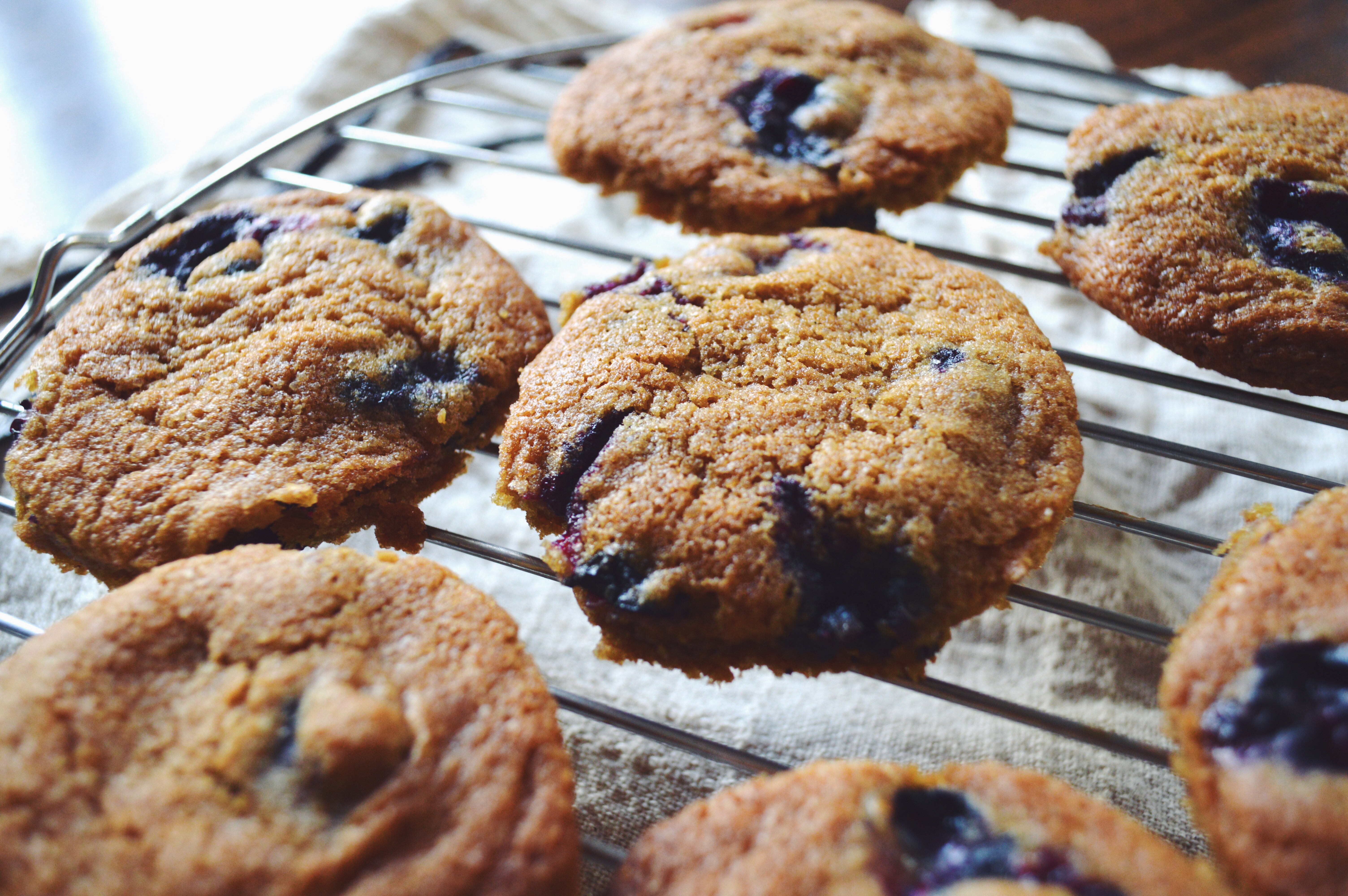
Blueberry Vanilla Bean Sandwich Cookies with Lemon Coconut Cream

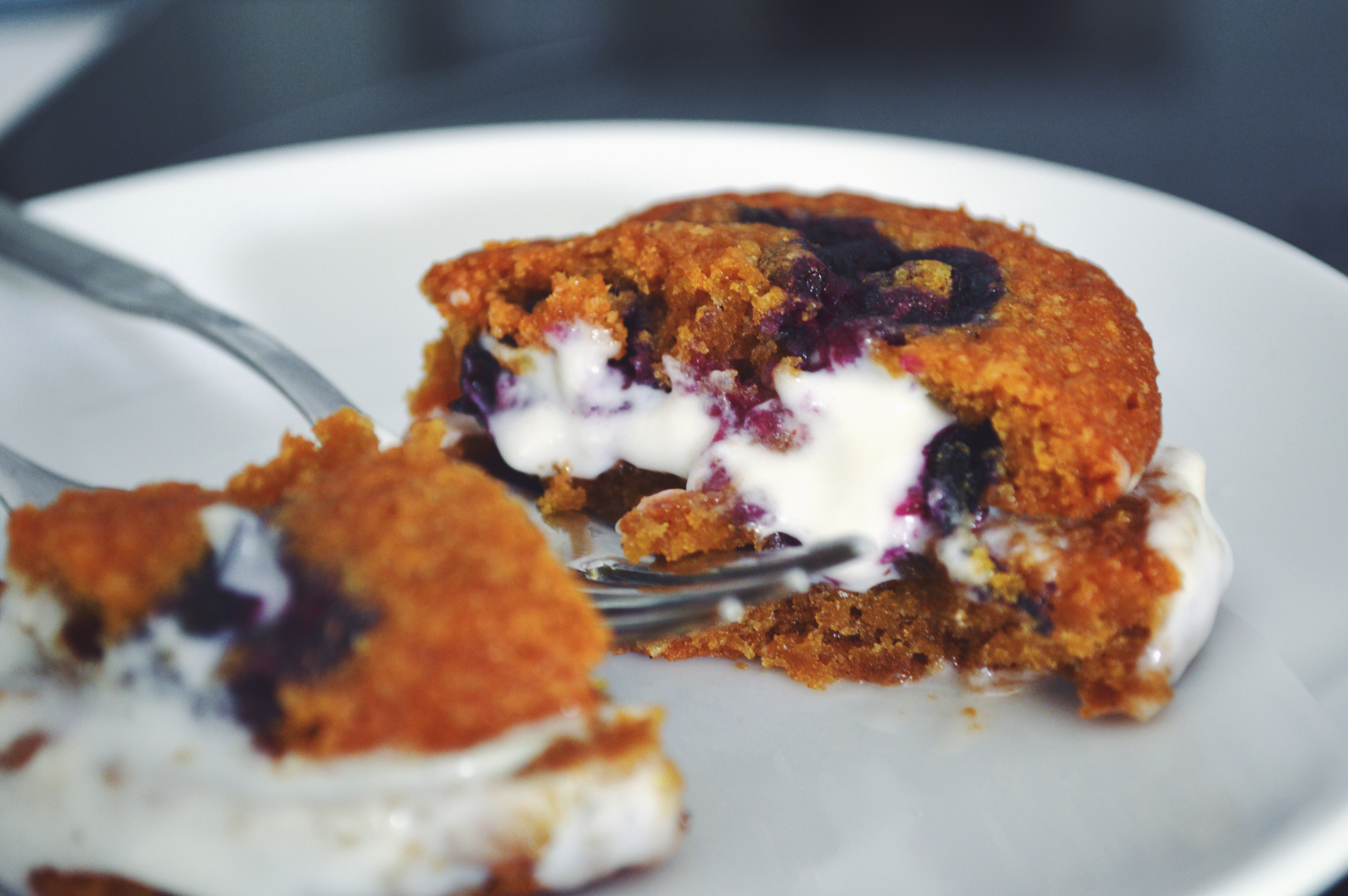
Whipped, marshmallowy coconut lemon cream sandwiched between two chewy and tender blueberry-and-vanilla-bean-littered cookies. 

After returning from a trip to Penang with a friend who’s seen me through the best and worst of times (thanks for tolerating me Ruru, if you’re reading!), I felt like making something which would preserve a few key memories just that much longer. There was one night we were sipping cocktails by the beach, the undulating waves smoothing out the ridges of our minds left behind by whatever burdensome thoughts or happenings that inhabited its corners. Thought back to a creamy pina colada. Lemon and coconut. Blueberries. Beach and zen. The picture was made whole.

The trip was filled with laughter, food so good just thinking about it makes my heart beat a little faster, unanticipated hair-lightening treatments from the glaring sun, and ease apace with excitement. I remember waking up at 3:15am the last night at the hotel for no reason at all, caught in a mild trance, so happy to be alive. Surreal, but hopeful. Time spent with the right people and the accompanying in-depth discussions on anything and everything unleashes new takes on life and all it has to offer. When the glimmer of the world seems to disappear, a little getaway revs the psyche.

IMG_5016

The factors which elevate this cookie sandwich to a whole new level are:

– the right ratio of white to dark brown sugar. Dark brown sugar provides the desirable hit of molasses, but it’s also slightly more acidic so it reacts more with the baking soda, making it rise more. It must be balanced with the right amount of white sugar for the perfect combination of fudge and crisp.

– melted butter. This produces denser, chewier cookies; the creaming process incorporates too much air so I chose to do away with it, though it may be desirable in other cake-based recipes

– refrigeration. Yes, it makes a mammoth difference, and you can read more about it here. More on this a bit later.

– and finally, the almost pornographic smushing together of warm cookie and cool, whipped lemon coconut cream. The combination of flavours here just can’t be beat.

I mean, really.

Have the cookies by themselves, in which case you won’t be missing out on much. Each cookie is charmingly ridged at the edges, character obtained only by the mandatory chilling before baking. This serves to dry out the cookie dough a little, thereby concentrating the sugars to produce a chewier, more flavourful cookie. The use of dark brown sugar in this case means that you end up with a rich hint of molasses, and a moist interior devoid of excess ‘doughiness’. The cookies also spread a little less during baking because the fat is solidified during the crucial resting process, and though one would think this would reduce the chewy factor, it only does the opposite.

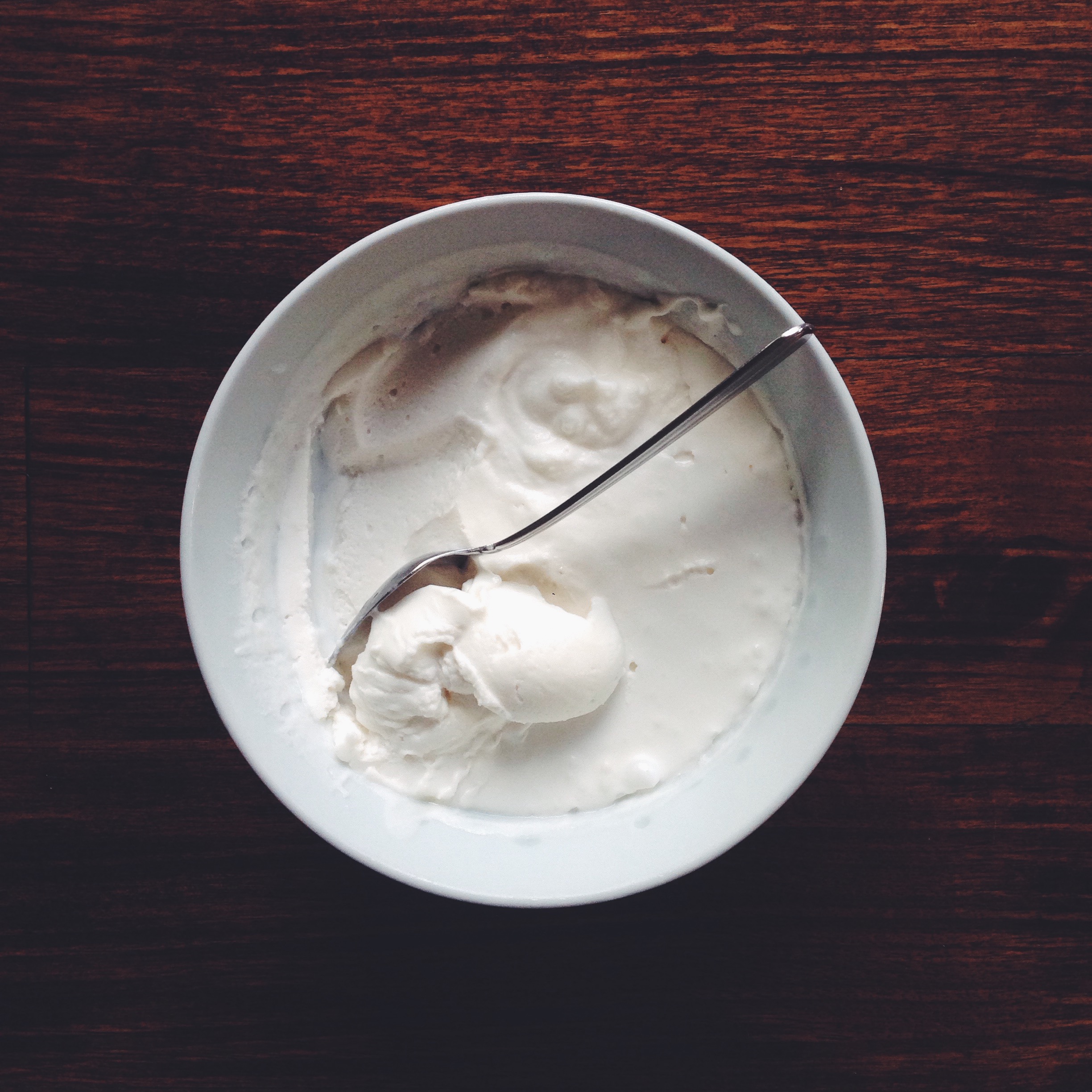
Or crown them with this divine lemon curd-flavoured cream. It’s a magical dance of pina colada-esque beachside vibes and the natural purity of a chewy cookie lucky enough to be on the sunny island in the first place. I might be getting a bit carried away.

Blueberry Vanilla Bean Sandwich Cookies with Lemon Coconut Cream (makes 11-12 medium-sized, or 3-inch wide cookies; adapted from my an old cookie recipe)

Note: Feel free to double this recipe! I halved and adjusted the quantities from my previous experiment just to test it, and the first trial turned out much better than I thought. So go ahead and multiply accordingly, if you so wish.

Ingredients

For the cookies:

95g (3/4 cup) all-purpose flour

half a vanilla bean with the insides scraped out, or substitute with half a teaspoon of vanilla extract

85g (half cup) white sugar

70g dark brown sugar

115g unsalted butter, melted

1 egg

pinch of salt

1/2 tsp baking soda

70g (half cup) fresh or frozen blueberries

For the coconut lemon cream:

150g chilled, canned coconut milk (take a can and leave it in the fridge overnight, then open it to reveal a thick, more ‘whipped’ consistency)

50g (2 heaping tbsp-fuls) of lemon curd

Directions:

In a medium bowl, whisk together the flour, baking soda and salt. In a separate, smaller bowl, rub the vanilla bean into the white sugar. Skip this step if you don’t have vanilla bean. In a large bowl, whisk together the melted butter, dark brown sugar, white sugar speckled with vanilla bean, vanilla extract (only if you’re not using the vanilla bean, and the egg. Add the flour mix to the melted butter mix and stir briefly until just combined with a wooden spoon. Add the blueberries and quickly mix them in gently (sounds ironic, I know). A little pop here and there won’t hurt, but it’s better to let the oven to the work, creating those pockets of warm blue goo.

Cover your bowl with plastic wrap and refrigerate for at least an hour, or overnight.While waiting for the cookies to cool, make the lemon coconut cream. In a bowl with an electrical whisk, beat together the chilled coconut milk and lemon curd. Beat on high for ~1 minute, at which point the coconut milk will look thick but the mixture is still pretty runny. Place the bowl in the fridge, during which time it will thicken into a more mousse-like texture. It’s quite magical.

Preheat your oven to 190C (375F) and line a baking sheet with parchment paper. Once the cookies have rested, take them out of the fridge and use a tablespoon to scoop out the batter, then use your palms to roll gently into little balls. Place the balls on the cookie sheet and press down slightly to flatten them a little. Bake the cookies for 12 minutes.

Let the cookies cool for 10 minutes on the pan on a cooking rack before removing. Sandwich two with the chilled lemon coconut cream. Fear not, the cookie sandwich has made one hell of a comeback.

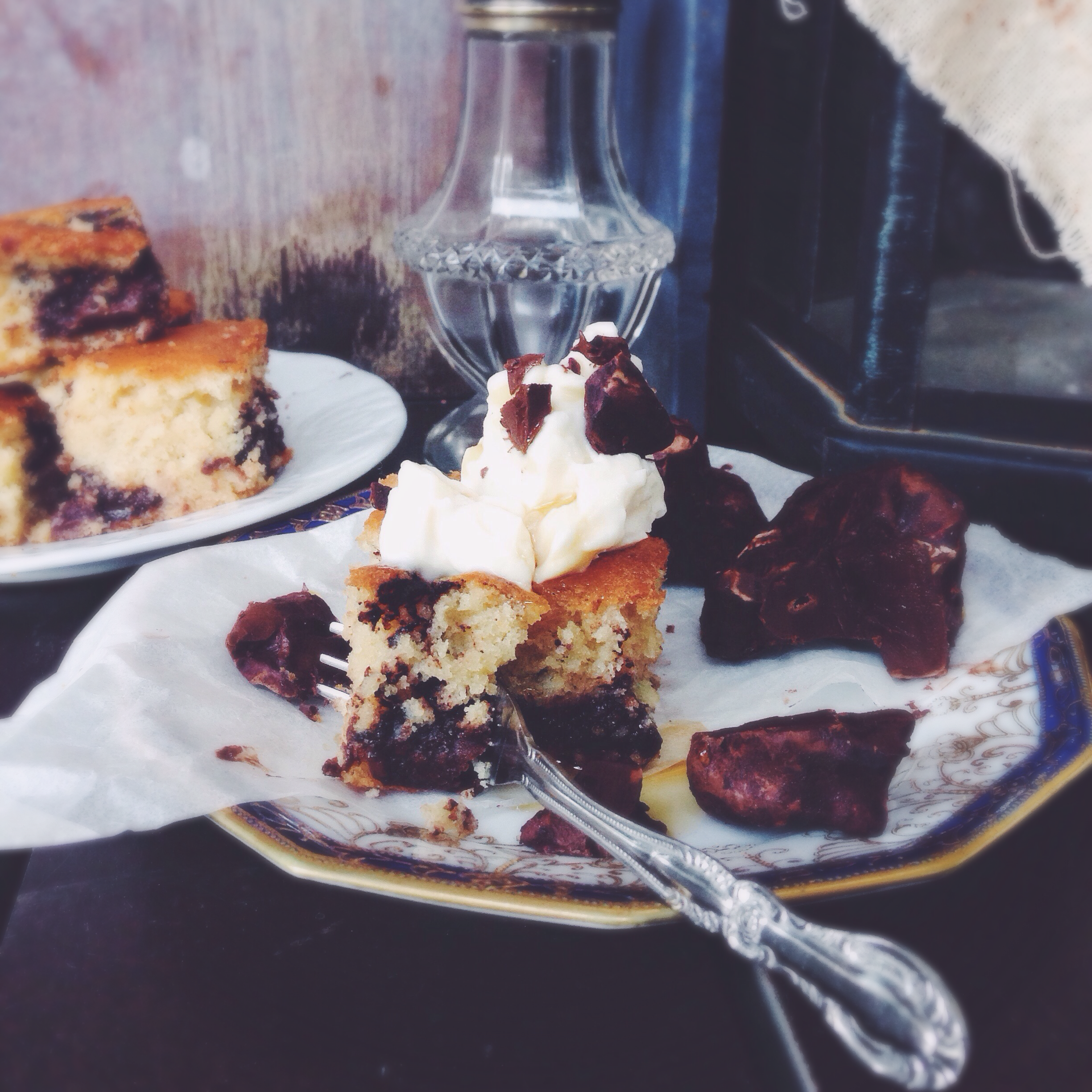
Chocolate Truffle Maple Syrup Cake

IMG_4776

Describe the taste of maple syrup.

Research informed me that it depends on the degree of roasting flavour. Typical notes are coffee, chocolate and chicory, and for the strong roasting flavour, you get hints of burnt sugar and smoke. Whatever the degree, there’s something incredibly enticing about this ingredient in particular. I use it several times a week without fail, almost always on toast and always on the occasional Sunday pancake session, yet it only recently occurred to me how deeply embedded it is in my kitchen system. It sits there day after day, use after use, so giving, so heartwarming. I love maple syrup, and there are few things I like more than chocolate and maple syrup. The sophistication of a rich, dark truffle stuck in honey-coloured, maple-flavoured fluffy cake is a welcome picture.

With so many truffles lying around the house, I thought I might as well put them to good use. The sort I use here are 60% cocoa; your standard, powdered, melt-at-room-temperature truffles. My hands were an absolute mess working with them, but the mess only enhanced the pleasure of the whole process, even as I witnessed some smaller bits melt a little into the batter before anything even hit the heat of the oven.

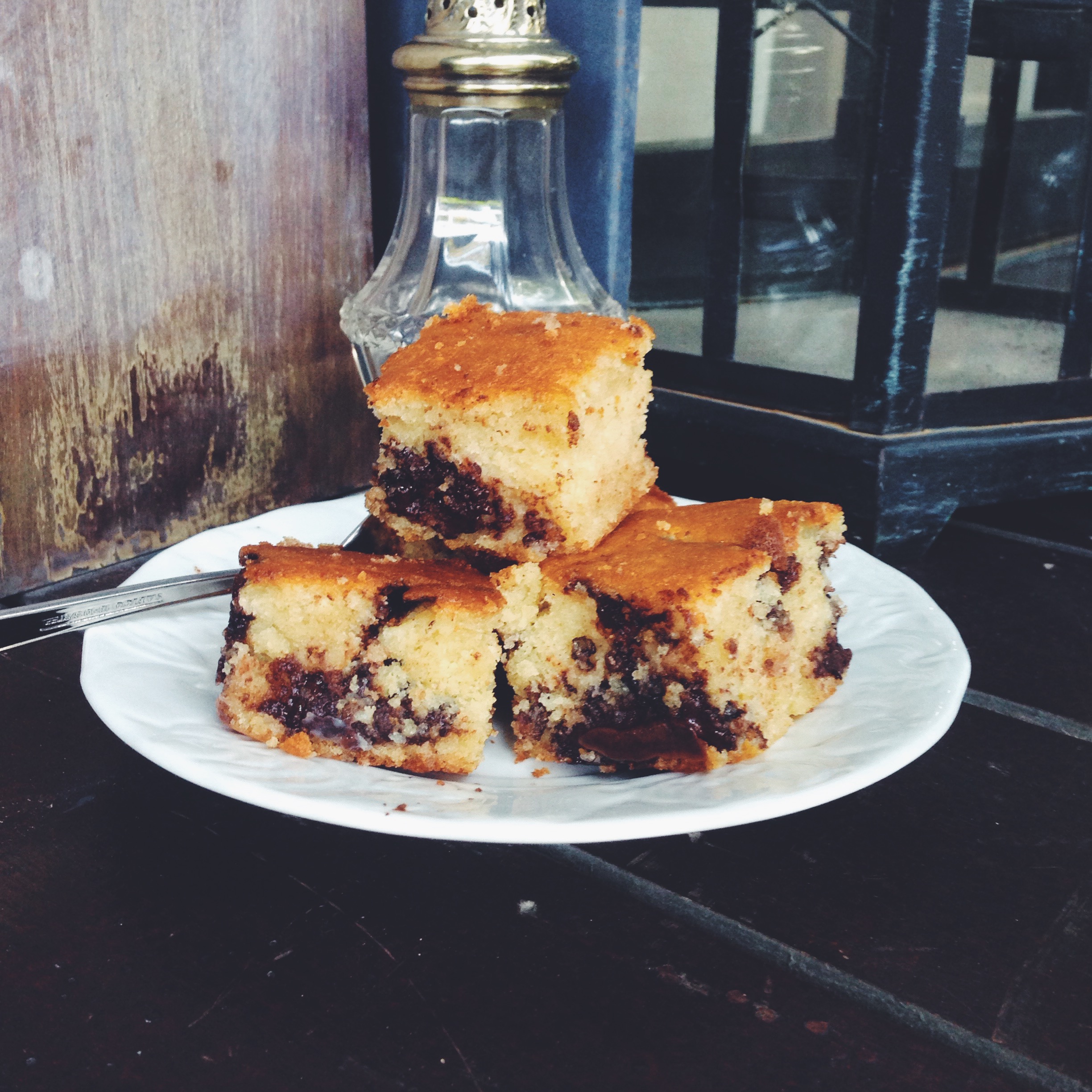
Your fork dives in. Zero resistance as it goes right through the pale, tender, moist body, and then maybe just a little once you hit a pocket of slightly stiffened chocolate goo. Break the cake apart. It’s a mess of black and white, a welcome juxtaposition of soft, fluffy crumbs and dangerous dark hotpockets. Sin trapped in something all too normal, all done before. No truffles? That’s ok, just use broken up bits of your dark chocolate bar. The effect won’t quite be the same with the whimsical shape irregularities and molten middles, but I would think it would be almost as delicious.

IMG_4782

Chocolate Truffle Maple Syrup Cake (makes 16 squares, heavily adapted from my cinnamon coffee cake)

Ingredients

165g all-purpose flour

1 tsp baking powder

1/4 tsp baking soda

1/2 tsp salt

55g (less than 1/4 cup) white sugar

115g unsalted butter at room temperature (or microwave cold butter in 15-second increments until it’s a little warmer and soft to touch)

120ml (1/2 cup) buttermilk, or make your own by putting half a tablespoon of distilled white vinegar into your measuring cup or jug and filling it up to the mark with whole milk (let this mix sit for 5 minutes at room temperature before using).

1 tsp vanilla extract

1 egg

100ml (1/4 cup and 1 tablespoon) maple syrup, and more for drizzling

9-11 medium-sized (around 2 inches wide) chocolate truffles, a few broken up into smaller pieces, or if you don’t have truffles, just broken up bits of a good quality dark chocolate bar.

Directions

Preheat your oven to 177C (350F), and butter and line an 8×8-inch square baking pan. What I like to do is butter the pan liberally, before placing down a piece of parchment that has 2 sides which are 8 inches, and the other 2 slightly longer so that it’s easy to pull out the bars once cool. Whisk together the dry ingredients (flour, baking powder, baking soda and salt) except for the sugar in a medium bowl.

Beat together the butter, maple syrup and sugar in a separate bowl. In a smaller bowl (yes there are 3 bowls here, but the washing up is not much pain, promise), whisk or beat together the egg, buttermilk and vanilla extract. Add half of the dry ingredient mix and half of the egg-buttermilk mix to the butter and maple syrup mix, and then beat to mix. Then add the rest and gently mix everything together, starting with a wooden spoon, and then switching to a rubber spatula to make the job easier.

Into your buttered and lined pan, add half of the batter, which should be smooth and slightly thick, and then dot the batter with chocolate truffles. Add the rest of the batter on top and smooth it out. Bake in the preheated oven for 33-35 minutes, or until a wooden skewer inserted into the centre emerges clean. The top should be slightly darker than when you first put it in, and brown around the edges. Enjoy this with vanilla ice cream or whipped and sweetened mascarpone (as in the pictures above) and a drizzle more of pure maple syrup.

Avocado Yin Yang Mousse

Black and white. OK, green and white. It’s balance, it’s harmony, it’s almost meant to be.

I’m all for avocado and all the variations it can take on. This will be a short one, because I’m aching to get the directions out; it’s ridiculously easy and delicious. Plop everything into your blender or food processor and you’re in the groove. Chocolate avocado mousse has been done before, aka the wholesome take on a classic chocolate pudding. Look, I love the green stuff, but I still think a good chocolate pudding deserves to be just that– sinfully chocolatey, donned in cream and your normal sugar. But wait! Let’s think thick, rich, glorious breakfast toast spreads here. Maybe a snack, or something along those lines. With dark chocolate done, why not experiment with white? This one here incorporates both dark and white chocolate, with a few different ingredients thrown in here and there to enhance the chocolate theme, simultaneously complementing the natural richness and creaminess of avocado.

I was pleasantly surprised by the texture of the white chocolate variant in particular. The incorporation of the special ingredient –tahini– is what made it lush, thick and deliciously spreadable. No graininess, nothing. Just ease. Smoothness, a slight hint of salt, the childlike sweetness from melted white chocolate. That’s what I love about white chocolate. It appears to lack dimension and sophistication, but it’s the perfect medium for so many other things.

Avocado Yin Yang Mousse

Ingredients

For the dark chocolate take:

half an avocado

2 tbsp cocoa/cacao powder

1 tbsp honey/ maple syrup

1 tsp milk of choice

pinch salt

For the white chocolate take:

half an avocado

30g white chocolate, melted in the microwave

2 tbsp milk of choice

1 tbsp tahini (optional, but highly, highly recommended)

pinch salt

Directions

Blend the ingredients for the respective versions together in a food processor or blender. If you wish to make both (of course!), start with the white chocolate take first so that you won’t have to wash out your blender or processor after dealing with the cocoa/cacao powder. Spread on toast or eat on its own, maybe with a couple of dark chocolate truffles, mmm. This will keep for a week in the fridge.