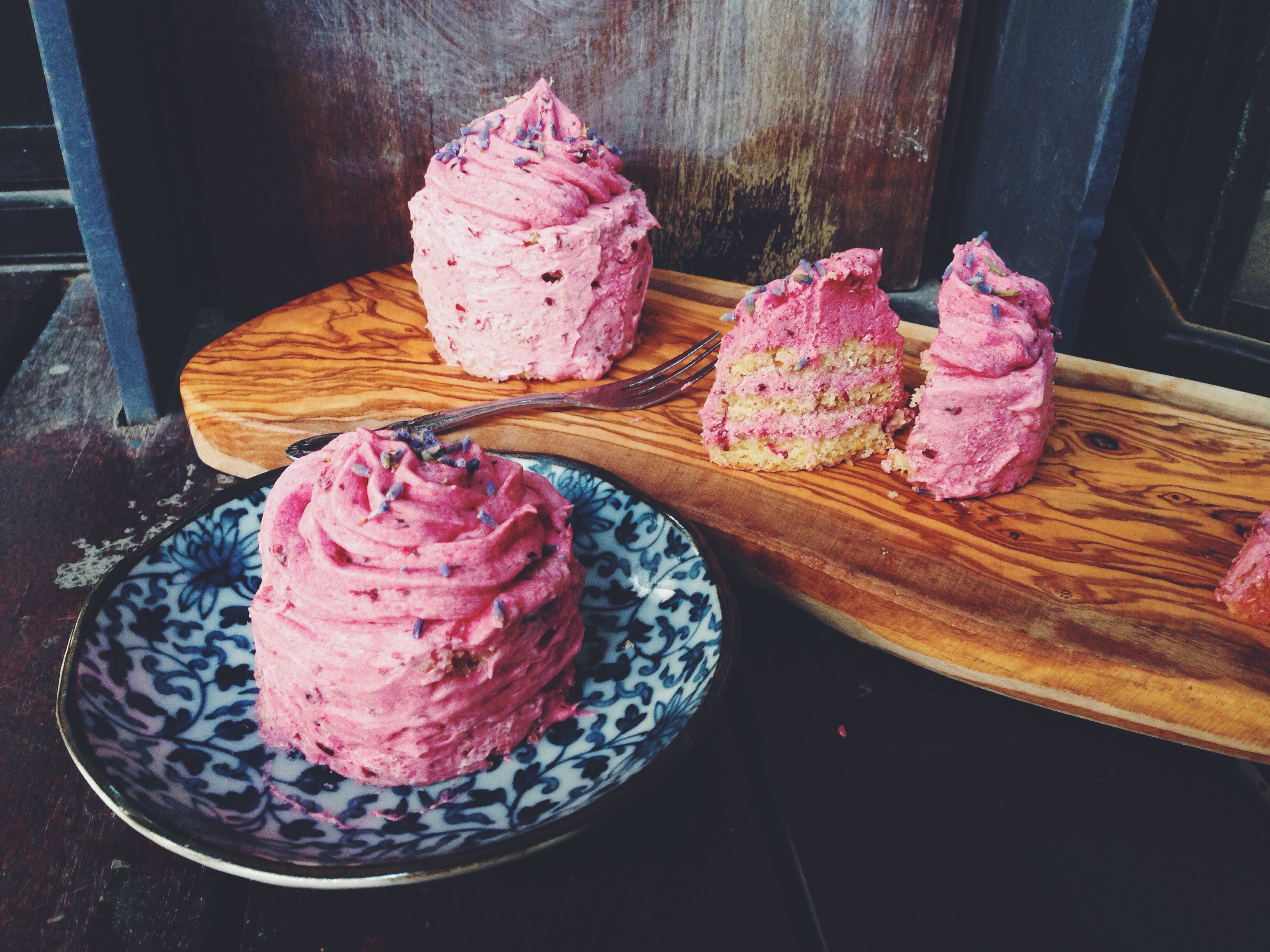
Mini Orange Layer Cakes With Blackberry Lavender Buttercream

Processed with VSCOcam with f2 preset

I’ve learnt a few things in the past few days. Firstly, it is actually impossible for me to do a tripod headstand. I’m sure this is a familiar term for all you yogis out there. I’ve been practicing yoga for years (to be fair, not so much during the later years of high school) and I still haven’t mastered it. It bothers me to no end.

Secondly, 1984 is almost blowing my mind. Not the literal 80s, of course, but Orwell’s magnum opus. I’m almost done and can’t wait to get my hands on Animal Farm. Sadly, I’m pretty slow with the classics.

Thirdly, right about this time of year, I feel completely and utterly at ease. Yet, I’m perfectly aware of the fact that way, way too much suffering is going on in the world to be ignored. Everyday I go about my business– practicing yoga, journalling, a little revision for my future course here and there, baking (what’s new!), fretting about hair and makeup… And all around me, bombs are dropped, little ones suffer, the clocks stop ticking for thousands, millions. With all the privileges that surround me, it’s easy to take things for granted. To continue living in a bubble of selfishness and oblivion. I just hope most people in the world are more.. aware. That’s all. Me included.

I shall now proceed to wax lyrical about my favourite (orange) cake recipe in the world. And that says something because I’ve made a fair bit of cake in my lifetime.

Processed with VSCOcam with f2 preset

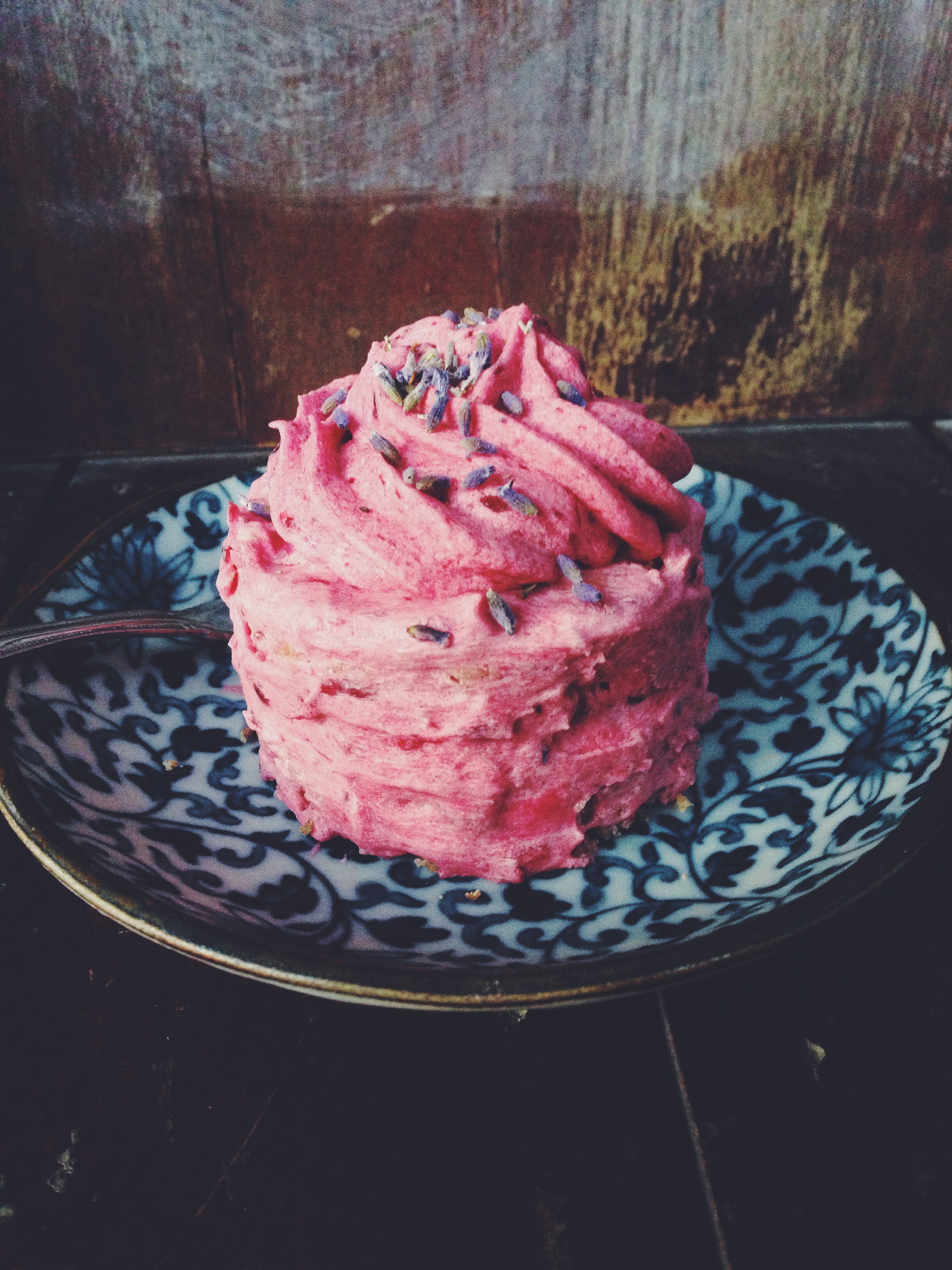
Oranges, oranges. I initially thought lemon, but lemon and blackberry is already a kill-me-classic, and with fresh, sweet oranges in the pantry, what’s there to fear? The citrus note of the cake using these was indeed milder, yet the flavour and goodness of that pulp and zest did all the talking. It still feels odd to have so much free time with the holidays in full bloom. Experimentation takes flight all the time, anywhere. Ideas flying left, right and centre. If I’m not thinking about what biology/biochem or fiction book to buy next, I’m recipe brainstorming, and goodness does it feel good. I was dying to sculpt mini layer cakes, because they’re the epitome of simple, refined, easy bakes. The blackberry lavender buttercream sandwiched between three layers of incredibly light, orange sponge adds aesthetic and textural oomph. The sweetness hits the palate just before you enjoy the moist and tender cake crumb. It truly is one of my favourite cake recipes.
Processed with VSCOcam with f2 preset Processed with VSCOcam with f2 preset Processed with VSCOcam with f2 preset

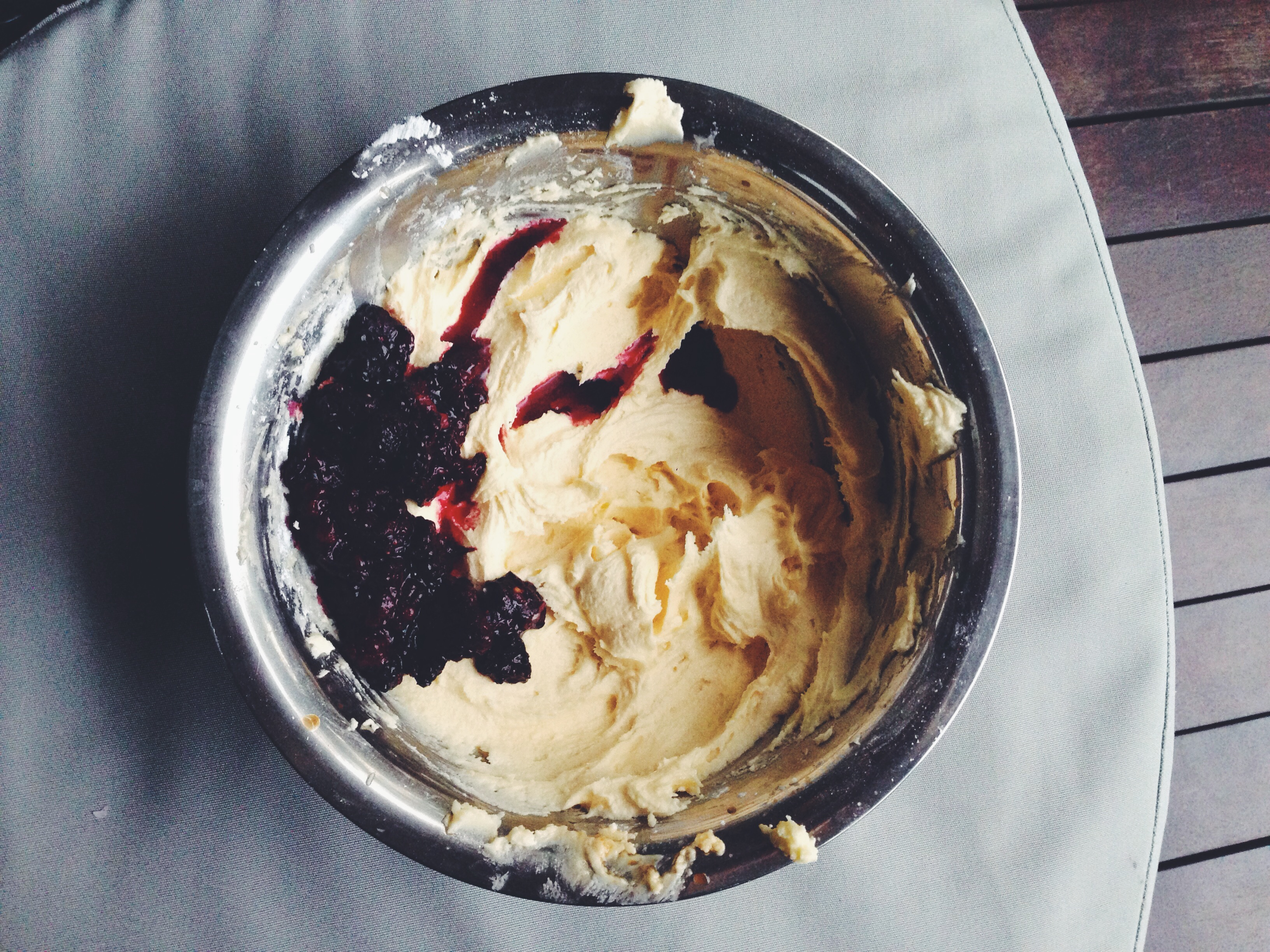
You added actual blackberries…? With the… seeds?

Alright, that part is optional. Though most recipes state the addition of blackberry puree sans all the gritty bits, I personally prefer the addition of the seeds for added flavour and texture. Combined with the dried lavender, each bite is like pink fairy dust. Pink and purple aren’t exactly up there on my list of favourite colours (which actually just comprise black and burgundy), but the saccharine delicacy of each little cake is irresistible. I had to adjust the initial buttercream recipe because it yielded too thin a consistency. It all worked out pretty well in the end. If anything, I might just add a touch more tang, be it salt or cream cheese, to the buttercream.
Processed with VSCOcam with f2 preset

Mini Orange Layer Cakes With Blackberry Lavender Buttercream (makes around 4 mini 3-layer cakes)

For the cake:

188g (1.5 cups) all-purpose flour

3/4 tablespoon baking powder

large pinch of salt

113g (half a cup) of soft, unsalted butter

225g (1 cup) sugar

2 eggs

1 teaspoon vanilla extract

zest of one small or medium-sized orange

160ml (2/3 cup) whole milk

50ml freshly squeezed orange juice

For the blackberry lavender buttercream:

226g (one cup) unsalted butter at room temperature

500 grams icing sugar

1 tbsp vanilla extract

large pinch of salt

1-2 tablespoons of dried lavender (optional)

55g fresh or frozen blackberries (around half a cup)

Preheat your oven to 177C (350F) and grease a 7×9-inch (or 8×8-inch) baking pan. In a medium bowl, whisk together the flour, baking powder and salt. In a larger bowl and with either a normal or electrical whisk, beat the butter and sugar for at least a couple of minutes, until light and fluffy. Beat in the zest of the orange, 2 eggs, and vanilla extract. Add a third of the flour mix, stir briefly with a spatula (no need to fully incorporate), then add half of the milk. Fold in briefly again. Add another third, the rest of the milk and the orange juice. Fold in briefly for a few seconds, before adding the rest of the flour. Mix until just combined. That part is so important, for there is a fine line between tender crumb and dull, dense, bleh. Don’t forget to scrape down the sides of the bowl and make sure the flour at the very bottom is well incorporated.

Pour the batter into the pan and bake in the preheated oven for 19-22 minutes. Put 21 to be safe (that’s how long it took mine). While you wait, make the buttercream.

In a large bowl and with an electrical whisk, beat the butter until it looks lighter and, well, fluffier. Add half of the icing sugar and vanilla, and beat. Take your blackberries and microwave on high for around 20 seconds, until you can see the juices seeping out and they are easy to mash. Mash them with a fork. Add to the mixing bowl, together with the remaining icing sugar. Beat until all is well combined. If you wish, fold in the dried lavender with a spatula. Place most of the buttercream in a piping bag fitted with whatever tip you like. Leave all the buttercream in the fridge for later use.

Assembly:

Once the cake is done, remove from the oven. It should be light brown and ever so slightly domed on top. Let cool in the pan on a wire rack. It will take at least half an hour to fully cool.

Once cool, take a 3-inch round cutter (or scallop-edged, up to you) and cut out little circles. Remove the buttercream from the fridge to let it warm up a little. Save the cake scraps for your family, before you eat everything yourself. You should get around 6-7 little circles, around 2 inches thick. Using a serrated knife, cut each little cake in half horizontally so you end up with two thinner cake discs. Pipe a circle of buttercream on the centre of one half, and press down with the other half. Pipe another circle on this half and then take a half from another cake and press down on that, so you end up with a mini 3-layer cake, each layer around 1 inch thick. Using a normal or palette knife, smear the sides and top with buttercream (reserved from the bowl) for make the crumb coat. Leave the cakes in the fridge to set and firm up for at least 2 hours, or overnight.

Take your piping bag and pipe more buttercream on top, then sprinkle with extra dried lavender.

Ah, life’s a playground.

Chocolate Cinnamon Challah

Processed with VSCOcam with f2 preset

I get all jittery and excited when attempting something new, although instinct forces me to revert to the safety net, a quantum of familiarity. Challah was one of those ideas which I wrestled with in my head. I wanted to feel good about turning it into something like french toast/ some flavoured version/lay on the stuffing options, please, that kind of thing. I came across a recipe for double chocolate chip challah quite a while ago but stuffed it in the back of my mental archives; I’m always timid when it comes to doing something old and traditional justice. The first attempt yielded too dry a texture (second photo below), though the taste and crumb itself wasn’t too far off the mark because the cocoa and decent amount of sugar incorporated into the batter made it more flavourful than expected. One does love surprises. So I adjusted the oil quantity to bump up the moisture, took it easy on the flour.

If you wish, you can attempt a chocolate gradient version– to each of the sections in the braid, you can add different quantities of cocoa, then adjust the remaining flour quantity from there. Who wouldn’t hit that stuff with a good knob of butter and honey? Please tell me, do.

IMG_9013

Processed with VSCOcam with f2 preset

Chocolate Cinnamon Challah (makes one large or 2 small loaves)

600g all-purpose flour

12.5g active dry yeast (1.5 tbsp)

300ml warm water

1 tsp white sugar

35g cocoa powder (Hershey’s Special Dark works wonderfully here)

2 eggs

170g sugar

1 tsp salt

1 tbsp cinnamon

2 tsp vanilla extract

65ml vegetable oil

1 egg (for the egg wash)

pearl sugar (for sprinkling before baking)

In a small bowl, mix together the yeast, sugar and water. Wait 6-10 minutes for the yeast to activate, forming a thick layer of light brown foam on top.

Weigh out the flour and cocoa and put the two in separate bowls. In a large mixing bowl, whisk together 200g of the flour (a little more than 1.5 cups), the salt, sugar and cinnamon. Once the yeast has foamed up, add it to the flour mix and stir in briefly using a wooden spoon. Then, mix in the vanilla extract, eggs and vegetable oil. Add 125g of the remaining flour and stir into the dough. If using a mixer, switch to the dough hook attachment, but otherwise make like Simpleton Alex and use a wooden spoon or your hands to incorporate the flour. At this point, the dough will still be a little wet and shaggy. Almost limp.

Take the dough and roughly divide it into three. I just used my hands and eyes to guesstimate here. If you’re feeling very scientific, you may use a weighing scale for precision. Put each dough third into separate medium bowls (re-use your mixing bowl for one of them). To one of the dough thirds, add half the cocoa powder, a tablespoon at a time, and 60g of flour, give or take. I needed 60g but you might need a little more of less. I say a tablespoon at a time because it really depends how dark you wish to go with your bread. Do the same for another third. To the remaining third of dough, add the rest of the flour, though you might not need all of it. All thirds should have a similar texture after kneading for around 5-10 minutes– smooth, elastic, with a little bounce when you press its surface. Let the dough thirds rise in their individual bowls (greased first) for 2-3 hours.

Preheat the oven to 177C (350F). Remove the dough thirds, which should have at least doubled in size, from the bowls and place them on your work surface. Roll each to at least 12 inches or more in length. If you’re making 2 smaller loaves, divide each in half first before braiding. Press the tops together and start braiding like how you would do with your hair. Left over middle, right over middle, you get the gist. Once you reach the tails, brush the loaf (or loaves) with one beaten egg, and sprinkle with pearl sugar. Let rise for an hour, before baking in the preheated oven. The challah should feel fluffy to the touch, still retaining that bounce. Bake for 25-30 minutes. I took mine out at 17 minutes and it was perfect by then. The top of the chocolate part should be dark and shiny, and the plain part of the braid will be golden-brown. Mmm.

Freeze this loaf and slice whenever you want. It reheats wonderfully in the microwave! 20 seconds straight out the freezer to return to room temperature, then toast for maximum pleasure. Butter and jam/honey. Life is sweet like chocolate and cinnamon.

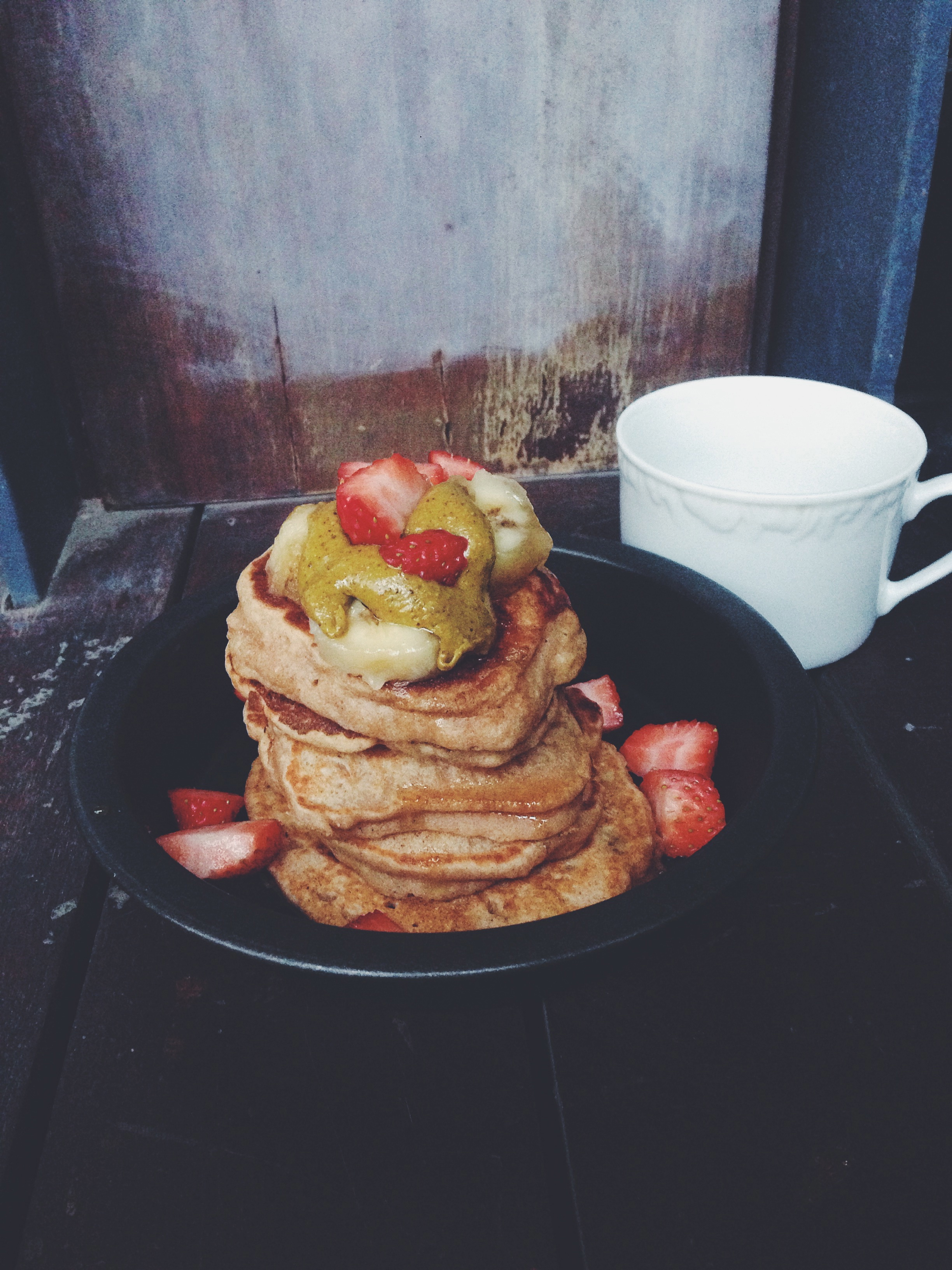
Banana Bread Pancakes

Processed with VSCOcam with f2 preset
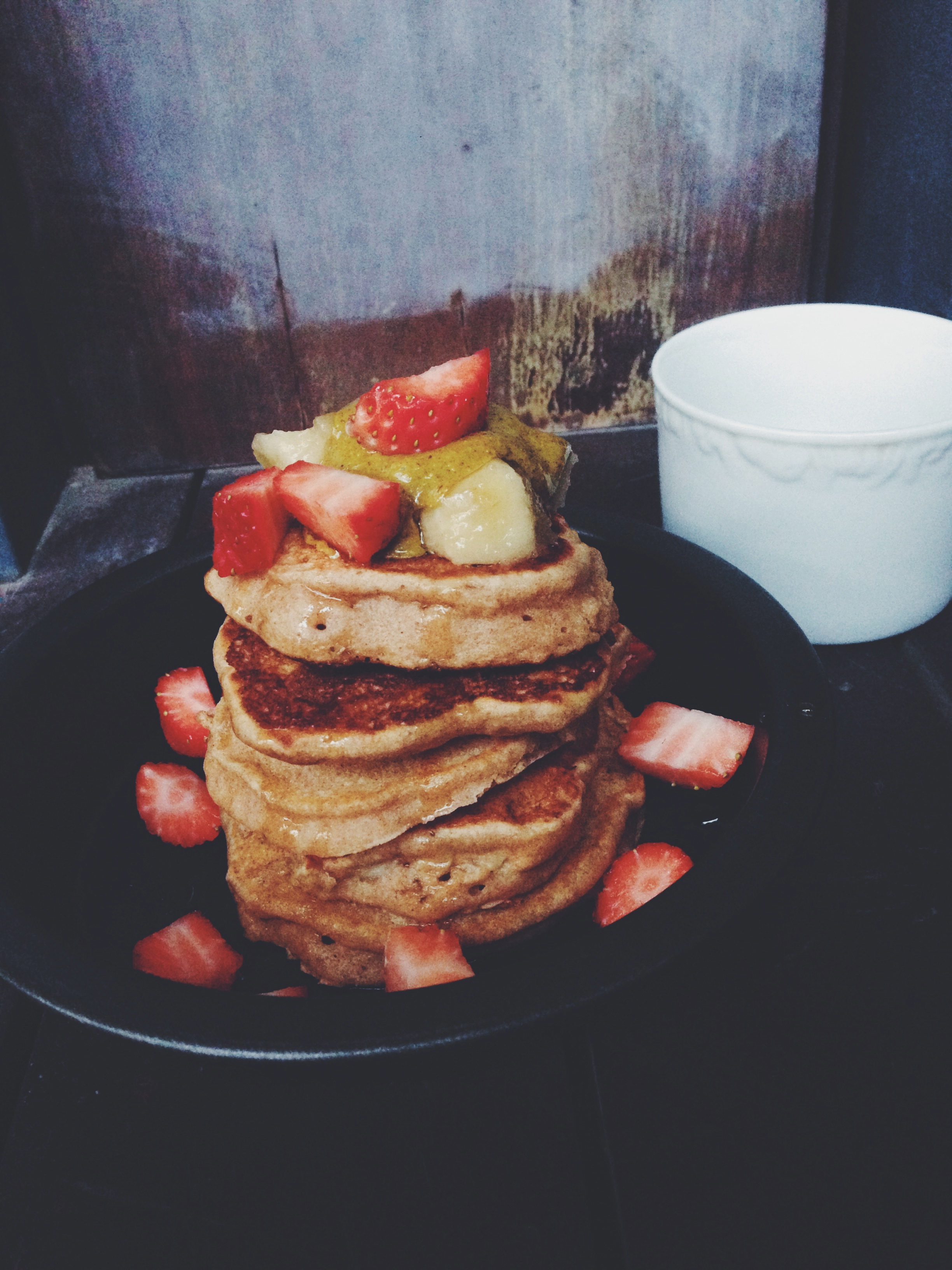
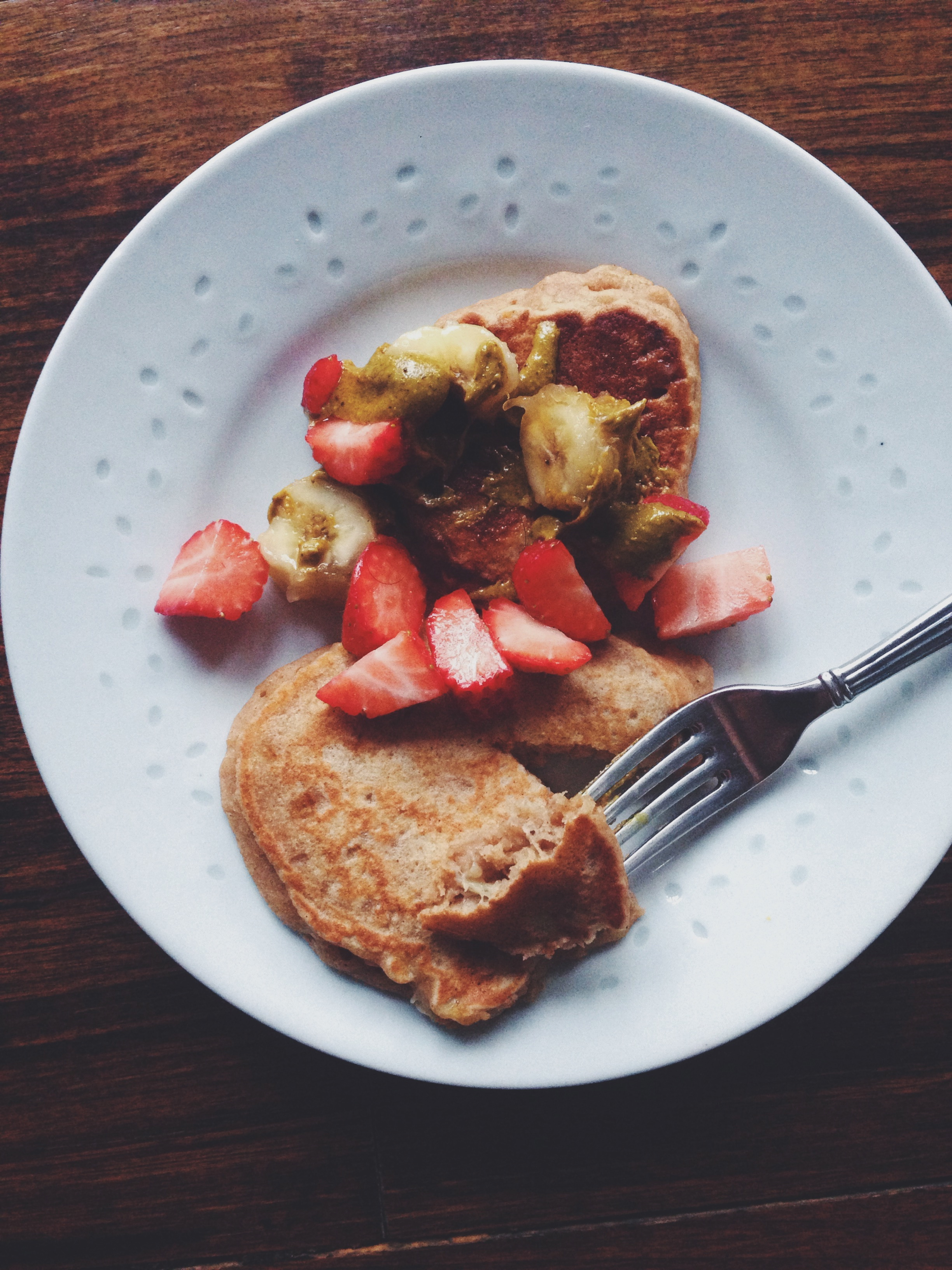
topped with pistachio butter, ripe banana, strawberries and maple syrup

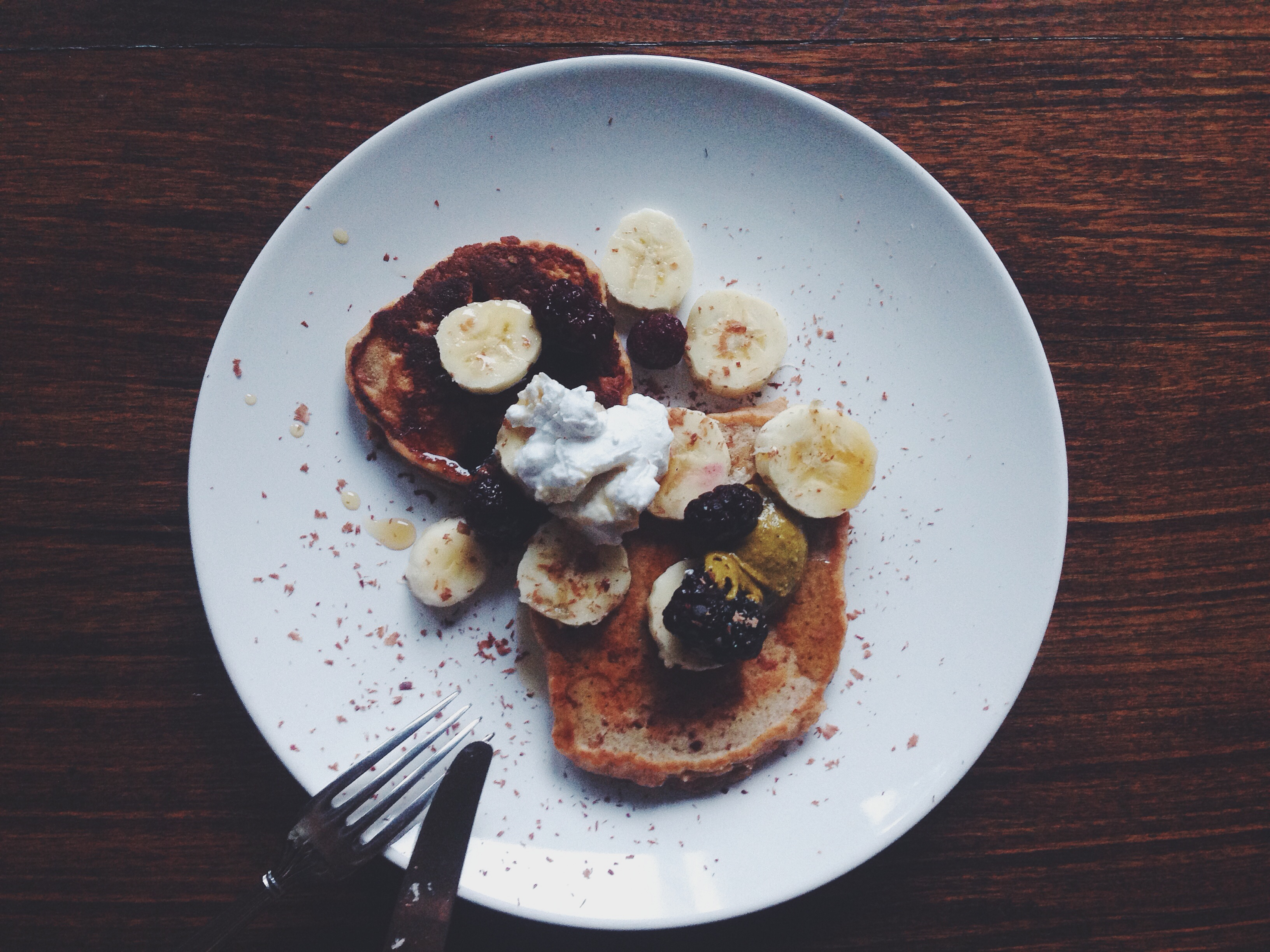
The world has invented a myriad different types of pancakes. You get thick and fluffy, thin and fluffy, thick and dense with sparse holes for maximum stodge factor in each bite, crepes (if you’re talking all English, that is)… And you get pancakes which are basically hybrids between cake and fluff. Like this. I termed it banana bread because that’s the first thing which popped into my head when I took my first bite, warm and fresh off the stove. It tastes like the stuff– thick, bread-like without being dense or packed, tender and fluffy. Look at how thick each one is! Solid yet soft, like fat lazy men (was that a bit too much? Oops). Gives way to the fork as it glides easily down the stack. The best thing? You can whip up a whole load of these and freeze them for more pleasure in the following days of the week.

Processed with VSCOcam with f2 preset
with whipped coconut cream, pistachio butter, banana coins and maple syrup

Processed with VSCOcam with f2 preset Processed with VSCOcam with f2 preset

 Banana Bread Pancakes (makes around 10, adapted from here)

170g all-purpose or whole wheat flour (I used whole wheat here)

2 tsp baking powder

1 tbsp brown sugar

1/2 tsp salt

1/2 tsp ground cinnamon

1.4 tsp ground nutmeg

1 egg

1 tsp vanilla extract

1 tablespoon honey

2 mashed, ripe medium bananas (or 3 small, or 1.5 large)

1 cup whole milk (or buttermilk if you have that on hand)

45g melted butter (a little more than 3 tablespoons), cooled to room temperature

In a large bowl, whisk together the dry ingredients– flour, baking powder, brown sugar, salt, cinnamon and nutmeg.

In a medium bowl, whisk together the milk, melted butter, egg, vanilla, honey and mashed banana. Add this mix to the dry mix and, using a spatula, fold until just combined. Which means there will be lumps. It won’t be smooth and that’s what you want.

Butter a pan or griddle on low-medium heat. If the heat’s too high, the bottom will brown too quickly but the insides will remain raw. Using a quarter cup measurement, dollop on the batter and spread into circles or whatever shape you like, because it’s too thick to spread freely by itself. Wait to see a few little bubbles come to the surface, around 1-2 minutes, before flipping and waiting for another 30 seconds or so. The second side always takes a shorter time. If serving for many people, put the ones you’ve cooked in a heated oven, until all the batter is used up. If not, just set aside a few for yourself and put the cooked ones on a kitchen towel to absorb excess moisture.

Top with whatever you want, be it butter and maple syrup, or fruit, nut butter and honey/maple syrup (my personal favourite combination).

Nut Butter Stuffed Matcha Cupcakes (updated)

I include two different nut butter options here– pistachio and almond. Oh yes, and two special frostings. I guess you have to read on if you want to know the specifics *annoying seductive winky face*.

Processed with VSCOcam with f2 preset
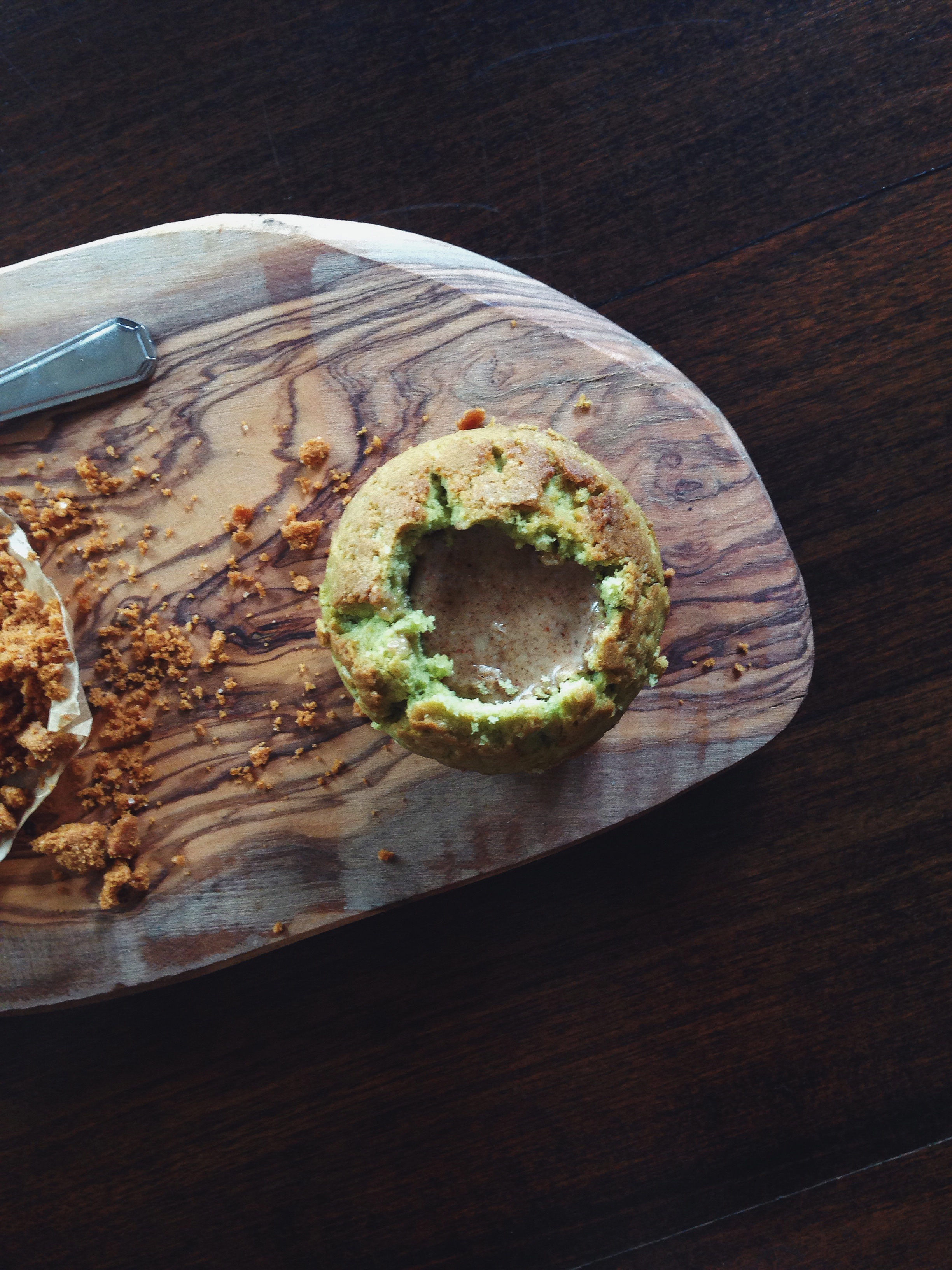
almond butter stuffed; topped with salted caramel cream cheese frosting and speculoos biscuit
Processed with VSCOcam with f2 preset
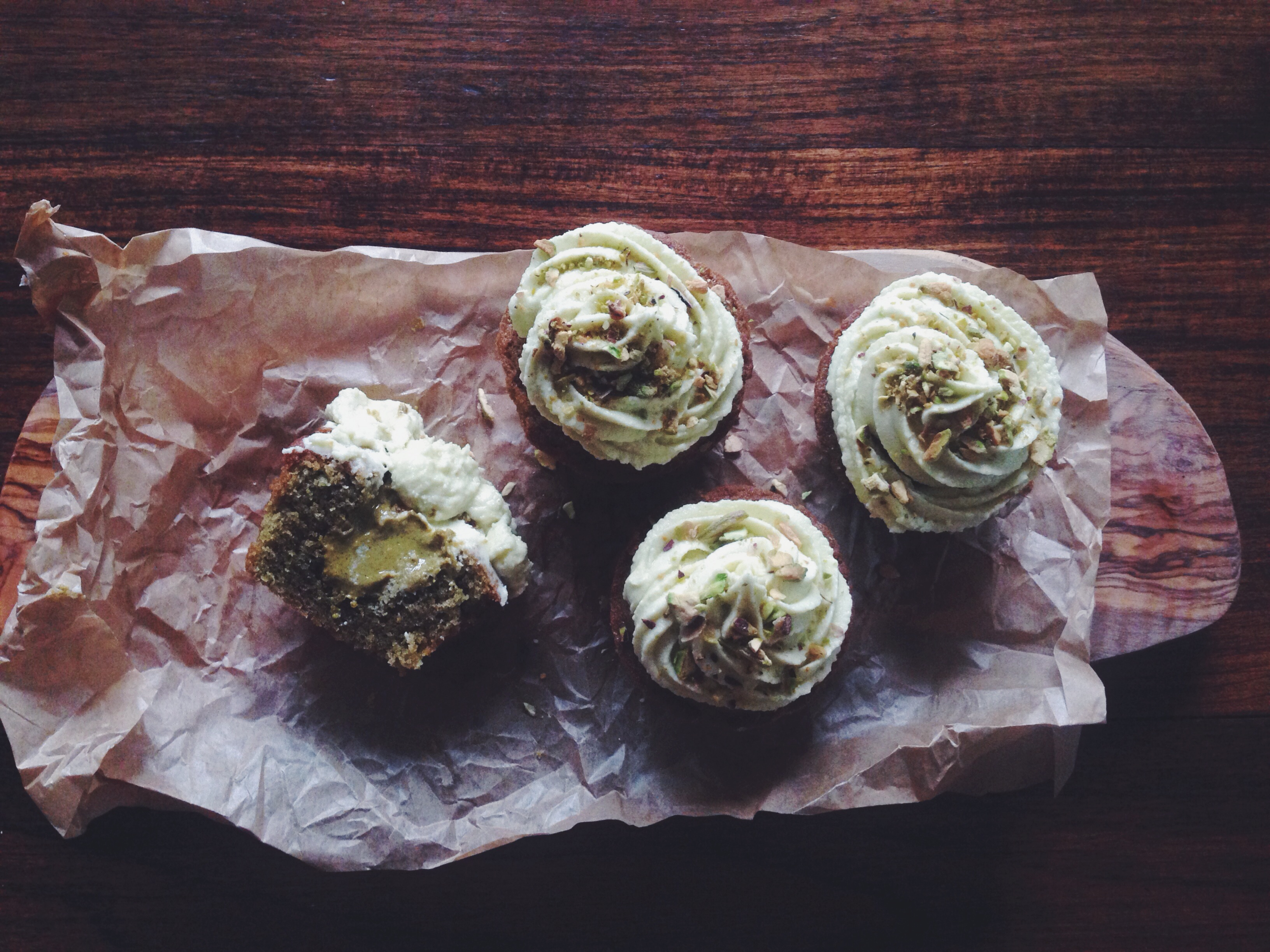
pistachio butter stuffed; topped with matcha buttercream and chopped pistachios

The first time I made these cupcakes, I relied purely on instinct and an old, old recipe found deep in the recesses of my dusty and grainy mental archives. The second time round, I modified a recipe from Cupcake Jemma, and they turned out absolutely perfect. No really. I hate these sorts of exaggerations, all the ‘reallys’ and ‘trulys’, so I’m officially going against personal principle for the sake of emphasis and honesty. These are the lightest, fluffiest little things, and I adore how the flavour of green tea is pronounced, and not hidden like some odd side element.

Anyways, it was a lucky shot. I always start a baking experiment with some wild or novel idea, but the initial framework always ends up being littered with side details and spontaneous ‘wait, I should use this instead of that!’ moments. They speckle the total perfection, so whatever I end up with is never what I meant it to be. Take this, for instance. I’ve recently been on a slight matcha roll (note to self: try out matcha rolls) because of its subtle green tea flavour. The bitter aftertaste lingers on the back of your tongue, never quite overwhelming it, making whatever you’re tasting just that much more sophisticated. Almost healthful, and no, not just because of that deceiving light green hue. I could list all the healthy characteristics of a teaspoon of matcha powder, but let’s face it, we’re talking about cupcakes here. I guess it’s further redeemed by the soft, oozing, rich dollop of almond butter right in the centre, but I haven’t gotten on to the frosting yet. Life is about balance. This is balance.

I was a little afraid of making cupcakes for two reasons.

1. I’ve made them (well, everyone makes them a lot) so many times that I was afraid the repetition bug would strike out against me and unleash a sudden curse on my beauties. Call me deranged.

2. They could very well and most likely be sub-par cupcakes. People want astounding, not average things.

That second point got me thinking. So if I made a good cupcake, it has to be made even better by some novel pairing or ingredient.. we’ve all been down the red/blue/green velvet path at least once, or maybe tried that wonderful chocolate or vanilla buttercream frosting to up the ante a bit, but something an inch more atypical would work better. That’s when I thought of matcha and almond (not quite novel just yet)… topped with salted caramel cream cheese frosting, topped with crushed speculoos biscuits (Lotus biscuits as everyone knows them here) and drizzled with more salted caramel. Think soft matcha sponge encasing a large dollop of creamy, rich nut butter, topped with lightly salted caramel cream cheese swirls and light, cookie-based crunch on top, or, in another case, delicate swirls of thick and fluffy matcha buttercream. The crumb is soft and firm, and the best part of these cupcakes is that post-baking, you get this wonderful sugar-crusted, crumbly top, which breaks away easily when you want to stuff the little holes with nut butter. I do love this matcha and almond/pistachio pairing, the upper-class rigidity of the flavours totally offset by the playful done-it-before frosting options.

Processed with VSCOcam with f2 presetProcessed with VSCOcam with f2 preset  Processed with VSCOcam with f2 preset

Processed with VSCOcam with f2 preset Processed with VSCOcam with f2 preset

Nut Butter Stuffed Matcha Cupcakes 

For the cupcakes (makes 10-12, adapted from Cupcake Jemma):

125g self-raising flour

135g soft, unsalted butter

125g white sugar

2 eggs, lightly beaten

1 teaspoon vanilla

pinch salt

quarter teaspoon bicarb soda

1 teaspoon matcha powder

Option 1: Matcha buttercream

270g icing sugar

150g softened, unsalted butter

1 tsp vanilla extract

1 teaspoon matcha powder, dissolved in a splash of whole milk

Option 2: Salted caramel cream cheese frosting (after many personal trial and error stints):

170g cream cheese, at room temperature

150g brown sugar

75g icing sugar

75g butter, softened

1 tbsp salted caramel sauce (store-bought or homemade)

for the topping: crushed speculoos biscuits and extra salted caramel sauce for drizzling

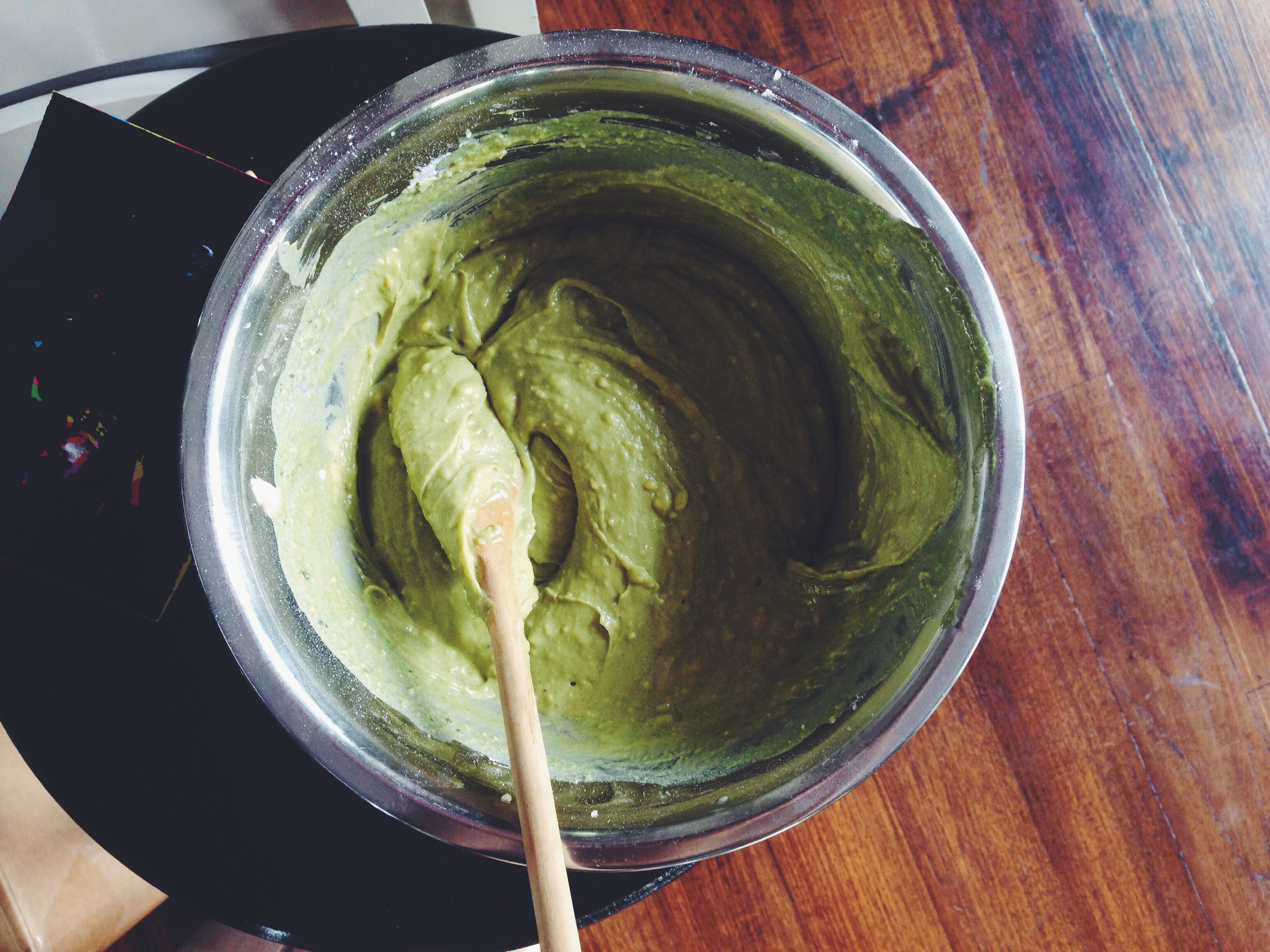
Preheat your oven to 170C (350F) and spray a muffin tin. In a large bowl and with a normal or electrical whisk, beat the butter and sugar together on high until pale and fluffy. Beat in the eggs and vanilla. In another smaller bowl, whisk together the dry ingredients- flour, bicarb, matcha powder and salt. Using a spatula, fold the flour and matcha mixture into the wet mixture.

Place the cupcake tin into the preheated oven and bake for 20-22 minutes. I took mine out at the 21-minute mark. Leave them to cool on a wire rack. The tops will be crusty and a light golden, and will look relatively flat. Leave to cool on a wire rack before removing to dig holes and stuff them silly.

Salted caramel cream cheese frosting:

Whilst they cool, make the frosting. Beat the brown sugar and butter together using a handheld electrical whisk, then beat in the cream cheese, icing sugar and salted caramel sauce. This is my favourite salted caramel cream cheese frosting which uses more brown rather than icing sugar, so it’s handy when you’re running low on icing sugar. Put the mix into the fridge until ready to use.

Matcha buttercream:

In a large bowl, beat together the icing sugar, softened butter, teaspoon of vanilla, and matcha/milk mix. Beat until visibly light, thick and fluffy. Stuff a piping bag with the mix and leave in a cool place (I put mine in the fridge overnight and let thaw for around 15 minutes the next morning) until ready to use.

When the cupcakes are mostly cool (around 15-20 minutes post-baking), take a teaspoon and dig right into the heart of the cupcake, before scooping out some cake. This part is mostly up to you; if you want more nut butter per mouthful (you lovely hedonists) then go ahead and dig deep, but if not, a teaspoonful of cake will suffice. Using another teaspoon, spoon in a heaped (or however much you want) of nut butter into the hole. I used homemade almond and pistachio butter; my mum makes batches in the kitchen all the time and it’s the most divine thing in the world. Using a large spoon or piping bag, frost the cupcakes with the salted caramel frosting or matcha buttercream. For the former, add crushed speculoos biscuits and more salted caramel drizzled on top. For the matcha buttercream, pipe the buttercream on top, whizz up some pistachios in a food processor and sprinkle on top. I also added salted caramel to this version because, well, why the heck not.

Maple Pearl Sugar Brioche

Processed with VSCOcam with f2 preset

There’s nothing wrong with reverting to the classics. I’m a serious fan of innovation and weird mismatches that actually work (referring to my previous post here), but I was overcome by the staunch determination to conquer something truly ubiquitous, something most of us rely on the real professionals for. I’m only an amateur baker who does all this whizzing, whisking and whipping in the kitchen for pure fun, but knowledge of and experience with the classics is required for any further exploration, right?

I’ve made brioche pretzels before, dived right in the deep end, no basic loaf or anything first, just a ‘ah-how-posh-and-fun’ kind of feel. Even added some chocolate chips and lemon zest to add to the childish fun. However, thanks to underestimation of the proofing and kneading time, I merely scraped by with a pseudo-brioche. Flat, dense, and just a little too hard on the bottom. The inside was fluffy, but the exterior betrayed a better could-be texture. Think I’ve got it this time, but the method I use here is adapted from something a little more unorthodox, whereby it’s all in the hand work, and the kneading time isn’t too horrid. I also used a little less yeast, because the first loaf I got using the original recipe was a tad too yeasty and the rise wasn’t as perfect as could be. Making this bread is actually fun, if you like to get down and dirty. It’s going to be sticky, wet and yellow, but that’s the magic of excess fat, eh? Rich, eggy, sublime.

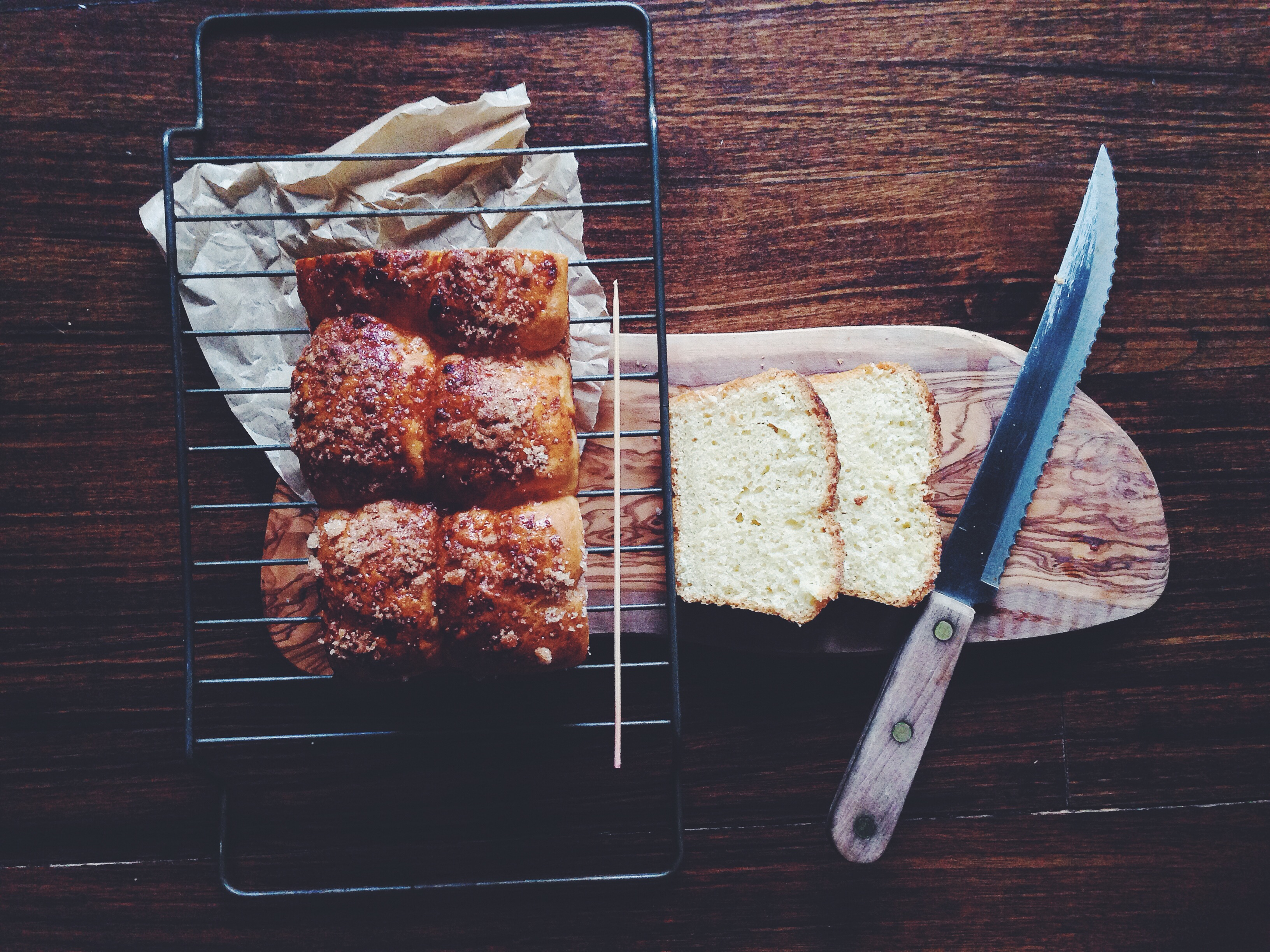
The crumb is light and tender, with the slightest stretch, though never feeling or tasting under proofed. The final result will look yellow. Easy to freeze, then microwave and cut for whatever you want really, be it toast, topped with good butter and honey or maple syrup, or dunked in freshly whipped eggs for a french toast morning.

Processed with VSCOcam with f2 preset

Brioche (makes one standard 9×5-inch loaf, adapted from La Tartine Gourmande)

For the loaf:

210g all-purpose flour

5g instant yeast

78g unsalted butter at room temperature, cut into medium-sized chunks.

2 tbsp white sugar

pinch salt

80ml milk, warmed slightly in the microwave

2 eggs

1 egg for the egg wash before baking

For the maple pearl sugar:

60g white sugar

1tsp maple syrup

The day before you make the brioche or earlier in the day, make the maple pearl sugar. Mix the sugar and maple syrup in a bowl using your fingertips. It should be wet and clumpy. Tip the maple sugar on a plate and flatten using your fingers, about a half-inch thick. Cover the plate with cling wrap and leave in the fridge to set. After 4-6 hours, the sugar will have formed a malleable, solid layer, which can be broken up into smaller chunks, similar to that of pearl sugar. Yum yum. Leave it in the fridge before using.

Now for the brioche. Use a mixer if you wish, but I used my hands for everything. In a large bowl, whisk together the flour, sugar, salt and yeast. Make a little well in the centre and, with your hands or a wooden spoon, mix in the warm milk briefly. Work in the butter (I find it easier to use your hands for this part) chunk by chunk, making sure each chunk is mostly incorporated before adding the next. It will be sticky and oily, but don’t fret.

Add in the eggs one by one. Stir the first egg in with a wooden spoon, then use your hands to really work it in. It will look messy and clumpy at first, but keep trying to incorporate the dough and egg together. I ended up working the dough when it was suspended in the air, stretching it then folding it over itself again, like kneading in mid-air. It worked, and I saved myself a lot of clean-up hassle later on. Do the same for the second egg. It will be very sticky, difficult and incredibly wet. That’s exactly what you want.

Once the eggs are worked in, dump the soft, yellow mass of dough into the same bowl and continue to ‘knead’ with a wooden spoon. Beat it with your wooden spoon, mimicking the kneading action in the bowl. Knead for a good 5-7 minutes. The dough will look like a pale baby’s bottom, smooth, taut, flawless, but still very sticky. After kneading, leave the dough in bowl (it’s already greased enough), cover and let the dough rise for an hour. After an hour, put the dough in the fridge and leave for another 2 hours, or overnight.

After the couple of hours, take the dough out of the fridge and the bowl. Preheat your oven to 190C and grease a 9×5-inch loaf tin. Punch the dough down a little, then weigh the dough and divide it into 6 equal pieces. My dough weighed around 450g total, so each piece was 75g. The cold dough is a dream to touch and work with. Roll each piece into a ball and pop into the greased loaf pan. After rolling all the pieces into balls of the same size, you should get a 2×3 row of balls in the loaf pan. Beat an egg and brush the top of the loaf with the egg wash. Finally, take the maple pearl sugar and sprinkle it on top of the loaf. You will get pea-sized chunks as well as normal sprinkles.

Bake the loaf for 30-35 minutes. If you wish, take a piece of aluminium foil and cover the top of the loaf after 15 minutes to prevent over-browning. I used the middle mark and stopped the baking after 33 minutes, and it turned out perfectly.

This loaf can be put in a freeze-safe container and left in the freezer for a couple of months. It can be left at room temperature for 1-2 days and nothing more (especially in this bloody hot weather). Whenever you want a nice, slightly sweet treat, just take the loaf out, microwave on high for 20 seconds, cut with a bread knife, then toast or dunk in egg for… Well, does french toast need any explanation anyway?