Maple Pearl Sugar Brioche

Processed with VSCOcam with f2 preset

There’s nothing wrong with reverting to the classics. I’m a serious fan of innovation and weird mismatches that actually work (referring to my previous post here), but I was overcome by the staunch determination to conquer something truly ubiquitous, something most of us rely on the real professionals for. I’m only an amateur baker who does all this whizzing, whisking and whipping in the kitchen for pure fun, but knowledge of and experience with the classics is required for any further exploration, right?

I’ve made brioche pretzels before, dived right in the deep end, no basic loaf or anything first, just a ‘ah-how-posh-and-fun’ kind of feel. Even added some chocolate chips and lemon zest to add to the childish fun. However, thanks to underestimation of the proofing and kneading time, I merely scraped by with a pseudo-brioche. Flat, dense, and just a little too hard on the bottom. The inside was fluffy, but the exterior betrayed a better could-be texture. Think I’ve got it this time, but the method I use here is adapted from something a little more unorthodox, whereby it’s all in the hand work, and the kneading time isn’t too horrid. I also used a little less yeast, because the first loaf I got using the original recipe was a tad too yeasty and the rise wasn’t as perfect as could be. Making this bread is actually fun, if you like to get down and dirty. It’s going to be sticky, wet and yellow, but that’s the magic of excess fat, eh? Rich, eggy, sublime.

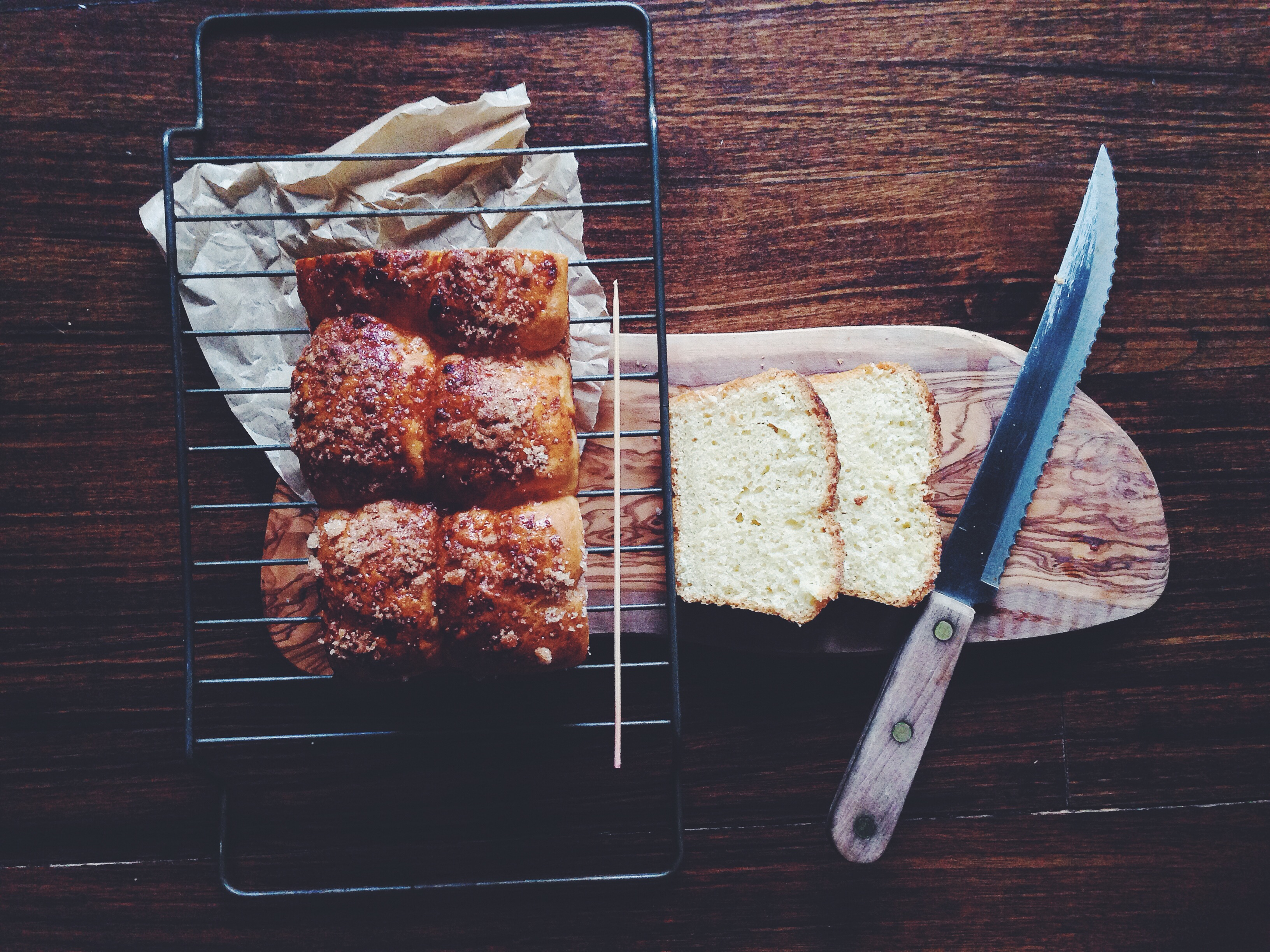
The crumb is light and tender, with the slightest stretch, though never feeling or tasting under proofed. The final result will look yellow. Easy to freeze, then microwave and cut for whatever you want really, be it toast, topped with good butter and honey or maple syrup, or dunked in freshly whipped eggs for a french toast morning.

Processed with VSCOcam with f2 preset

Brioche (makes one standard 9×5-inch loaf, adapted from La Tartine Gourmande)

For the loaf:

210g all-purpose flour

5g instant yeast

78g unsalted butter at room temperature, cut into medium-sized chunks.

2 tbsp white sugar

pinch salt

80ml milk, warmed slightly in the microwave

2 eggs

1 egg for the egg wash before baking

For the maple pearl sugar:

60g white sugar

1tsp maple syrup

The day before you make the brioche or earlier in the day, make the maple pearl sugar. Mix the sugar and maple syrup in a bowl using your fingertips. It should be wet and clumpy. Tip the maple sugar on a plate and flatten using your fingers, about a half-inch thick. Cover the plate with cling wrap and leave in the fridge to set. After 4-6 hours, the sugar will have formed a malleable, solid layer, which can be broken up into smaller chunks, similar to that of pearl sugar. Yum yum. Leave it in the fridge before using.

Now for the brioche. Use a mixer if you wish, but I used my hands for everything. In a large bowl, whisk together the flour, sugar, salt and yeast. Make a little well in the centre and, with your hands or a wooden spoon, mix in the warm milk briefly. Work in the butter (I find it easier to use your hands for this part) chunk by chunk, making sure each chunk is mostly incorporated before adding the next. It will be sticky and oily, but don’t fret.

Add in the eggs one by one. Stir the first egg in with a wooden spoon, then use your hands to really work it in. It will look messy and clumpy at first, but keep trying to incorporate the dough and egg together. I ended up working the dough when it was suspended in the air, stretching it then folding it over itself again, like kneading in mid-air. It worked, and I saved myself a lot of clean-up hassle later on. Do the same for the second egg. It will be very sticky, difficult and incredibly wet. That’s exactly what you want.

Once the eggs are worked in, dump the soft, yellow mass of dough into the same bowl and continue to ‘knead’ with a wooden spoon. Beat it with your wooden spoon, mimicking the kneading action in the bowl. Knead for a good 5-7 minutes. The dough will look like a pale baby’s bottom, smooth, taut, flawless, but still very sticky. After kneading, leave the dough in bowl (it’s already greased enough), cover and let the dough rise for an hour. After an hour, put the dough in the fridge and leave for another 2 hours, or overnight.

After the couple of hours, take the dough out of the fridge and the bowl. Preheat your oven to 190C and grease a 9×5-inch loaf tin. Punch the dough down a little, then weigh the dough and divide it into 6 equal pieces. My dough weighed around 450g total, so each piece was 75g. The cold dough is a dream to touch and work with. Roll each piece into a ball and pop into the greased loaf pan. After rolling all the pieces into balls of the same size, you should get a 2×3 row of balls in the loaf pan. Beat an egg and brush the top of the loaf with the egg wash. Finally, take the maple pearl sugar and sprinkle it on top of the loaf. You will get pea-sized chunks as well as normal sprinkles.

Bake the loaf for 30-35 minutes. If you wish, take a piece of aluminium foil and cover the top of the loaf after 15 minutes to prevent over-browning. I used the middle mark and stopped the baking after 33 minutes, and it turned out perfectly.

This loaf can be put in a freeze-safe container and left in the freezer for a couple of months. It can be left at room temperature for 1-2 days and nothing more (especially in this bloody hot weather). Whenever you want a nice, slightly sweet treat, just take the loaf out, microwave on high for 20 seconds, cut with a bread knife, then toast or dunk in egg for… Well, does french toast need any explanation anyway?
Fig, cinnamon and apricot whole grain loaf

Processed with VSCOcam with f2 preset

“There is no science without fancy, and no art without facts.”

I’ve lately been fascinated by the whole idea of intellectual promiscuity. I came across it on this Brainpickings article the other day and was intrigued by the term, which basically means not to limit oneself to one academic field, and instead embrace both science and the arts, something I fully agree with after my own educational experience. Two fields which complement and enhance each’s developmental stages, instead of diminishing the importance of one or the other in any way. I’m still young and have much to learn about the world, but the paradox of finding creative genius outside of these constructed stereotypes (just think of Da Vinci– horses and formulas and planes galore!) is something to appreciate.

It’s been rather a long time since I made a loaf. It’s usually something simple and easy to put together like banana bread or a moist orange cake I made at the end of last year. All bing bam boom and poof!, it’s done in the oven within the same hour. However, a few days ago, I thought it would be lovely to indulge in the old-fashioned labour of kneading, of being a little more physical with the ingredients, bestowing them with more TLC if you know what I mean, instead of taking embarrassing shortcuts. I just wanted it to be me, some flour, these hands, and the oven. I came across a gorgeous recipe for cinnamon swirl bread on the Smitten Kitchen blog, run by the most hilarious and passionate lady ever. It was the original inspiration for this recipe, so check it out if you can. After fiddling about with the ingredients and measurements, I came up with my own version. What I love about her method is the kneading-then-wait-then-knead-again method, which sounds horribly tiresome and unnecessary now, but it really helps in developing the gluten, chew and resulting flavour of a good, well-risen loaf.

Processed with VSCOcam with f2 preset Processed with VSCOcam with f2 preset

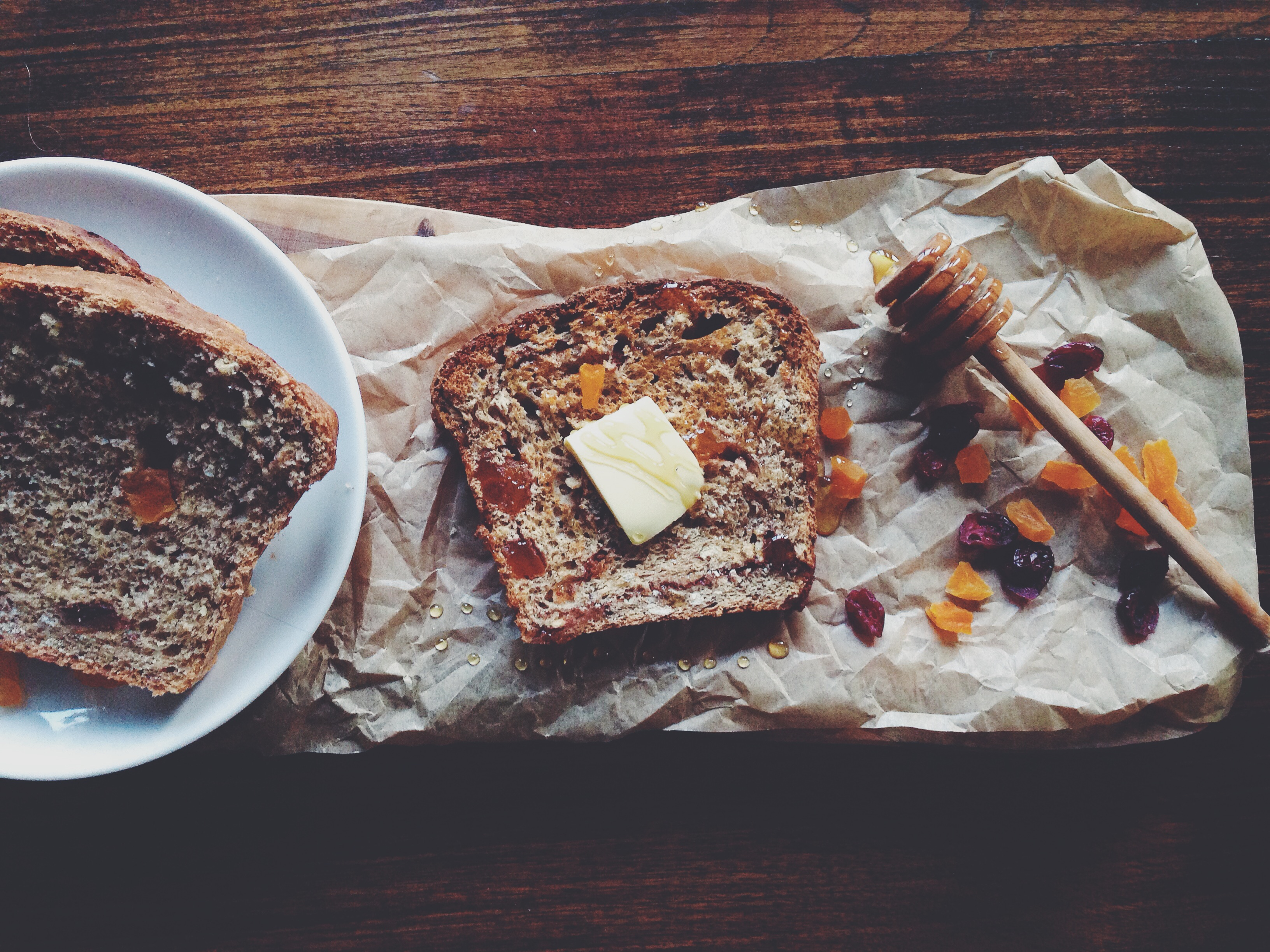
I was a little hesitant to add figs, but no regrets existed when they turned into the sweetest pockets of thick goo strewn throughout the cooked loaf. The bread itself is sweet and hearty with the benevolent addition of whole grains, cinnamon and figs, so it’s wonderful toasted on its own, or topped with good salty butter and a selfish drizzle of honey. It’s my favourite way to have it. It tastes almost nutty, since I use ground flax and whole wheat flour (which, by the way, can be exchanged for your classic all-purpose, promise!). The best part without a doubt is the outrageously crackly, hard crust, best relished with even more butter and honey on the side. Thinner and slightly drier than what you would get from a banana bread loaf. It’s what I’ve been looking forward to every morning the past few mornings, if I’m being completely honest. I mean my mind is always filled with thoughts other than food (believe me), but some things are annoyingly irresistible, cutting off sense and sensibility, and this is one of them.

Processed with VSCOcam with f2 preset

Fig, cinnamon and apricot whole grain loaf (makes 1 standard 9×5-inch loaf)

For the loaf:

320g whole wheat flour (or a mix of whole wheat and all-purpose)

80g whole grains– I used 15g of ground flaxseed and 65g rolled oats. If you wish, use 80g of either, or try experimenting with oats ground in your food processor.

7g instant yeast

1tsp (7g) fine salt

25g brown sugar

1 egg, beaten

40g unsalted butter, melted in the microwave (use 20-second bursts)

150ml tepid water

150ml milk, microwaved for a while so it’s not fridge-cold

extra flour for dusting work surface

For the filling:

50g white caster sugar

1 tbsp ground cinnamon

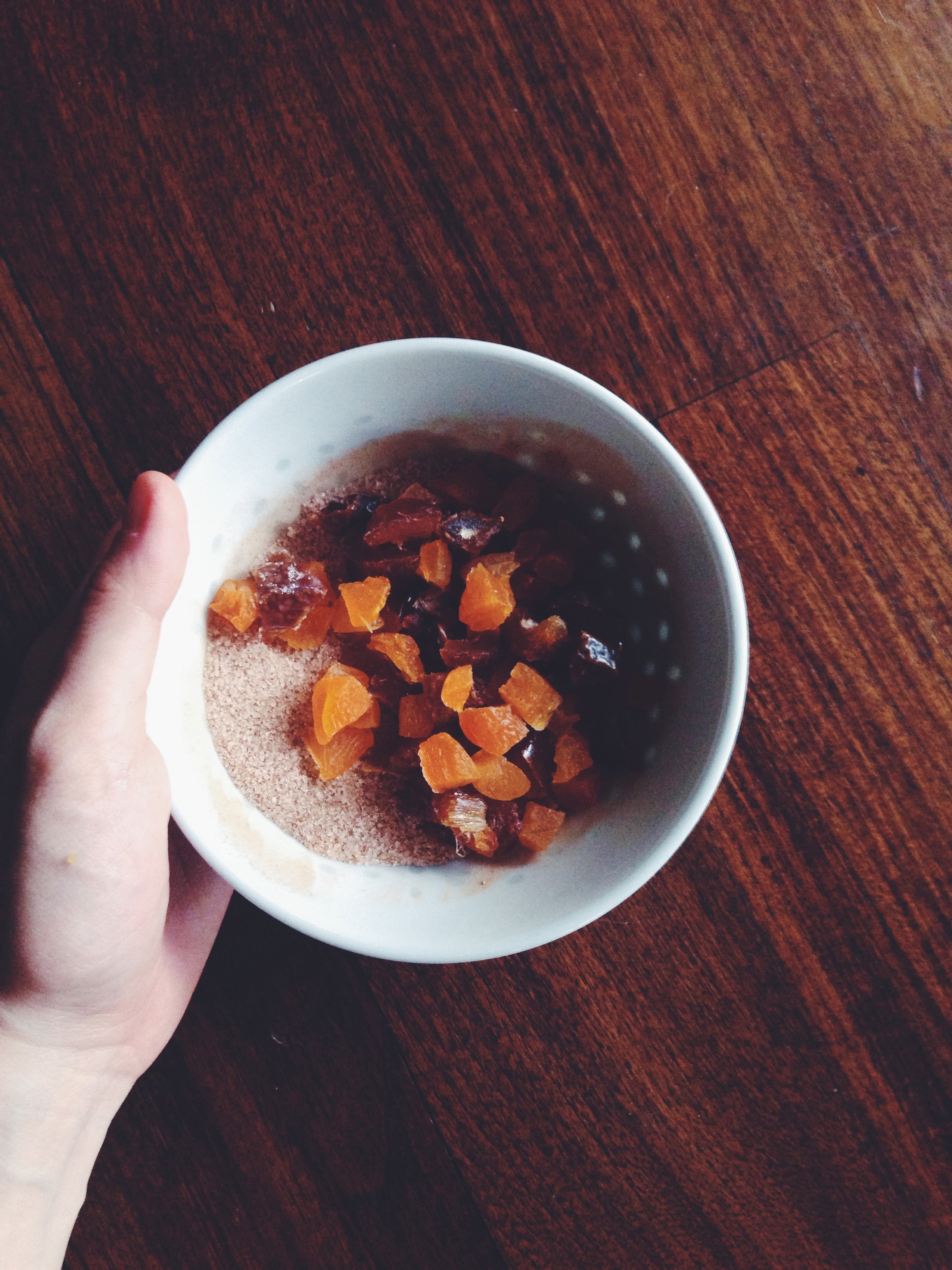
half a cup of chopped figs and dried apricots (you can use anything really. If you have nuts/ dried cranberries/ raisins/ currants, then go for it). It should all amount to around 65g.

one large egg, beaten with a splash of water

In a large mixing bowl, combine the water, milk and sugar, then whisk in yeast. Add the egg and butter, and whisk again. In a separate bowl, whisk together the flours, oats, flax and salt. Using a large wooden spoon, stir for around a minute. The mix will immediately turn darker but will retain a coarse texture. Let the mix rest for 10 minutes.

After 10 minutes, mix a little more with the spoon. Just briefly. The dough should look supple, and less ragged. If it’s still obviously wet, add a tablespoon more of flour. Mix more for 3-4 minutes.. and this is where it gets tricky. The gluten really starts to develop here, making the mix more robust and less malleable. 3-4 minutes doesn’t sound long, but the time does get to you when you’re constantly trying to churn power from your two poor biceps. Power through!

Scrape the dough out onto a lightly floured surface. Knead a few more times, just twice or thrice, before forming into a ball and placing into your mix bowl. Place a damp towel on top and let rest for 10 minutes. After 10 minutes, remove the towel, dough and use your wooden spoon to work the dough again briefly, and leave to rest and cover again for 10 minutes. ‘Kneading’ this way avoids some between-the-fingers mess, and keeps the dough in the bowl. Is that lazy? Ha. Repeat the knead-and-cover process just one more time.

To proof, transfer the dough into a clean and lightly oiled bowl. Cover with a damp towel again and let this proof for an hour. If you’re pressed for time, you can leave the dough in the fridge overnight! If you do it this way, make sure to remove the dough 2 hours before you start working with it again. During the hour or after taking out your chilled dough, mix your filling ingredients– cinnamon, sugar, figs and apricots. After an hour, check to see if it has doubled. If it does not look quite as voluminous, leave in the bowl for another 10 minutes.

Dust your work surface and turn out the bread. Press the dough into 10×5-inch rectangle, then brush the dough with the egg and water mixture. Sprinkle on the filling, then roll from the shorter edge. Nothing careful or meticulous here. I didn’t create a swirl like Smitten Kitchen’s version, however the rolling does make sure that the filling is nicely distributed throughout the body. Press the edges closed, then gently place the loaf (I needed spatulas to help me!) in a lightly greased loaf pan.

Now for the second proof: Cover the loaf pan with a damp towel and let rise for 30-45 minutes. Whilst waiting, preheat your oven to 177C/ 350F. Bake the loaf for 40-45 minutes. Mine took 40 minutes and came out a lovely golden colour.

Moist Banana Bread

Because I can’t have this blog without sharing my favourite banana bread recipe. On Earth. Ever. Bread? Cake? Is there a difference between banana versions of either? I personally just call it banana bread, you dashing BB, because I’ve always associated the teatime stuff with a traditional bread-like texture. More robust, hearty, almost wholesome. Less airy-fairy, but call it a cake if you wish. I think I’ll stick to the former. My favourite sweet and dense bread. There are those who like sticky fruit cakes, the sort you can stick your hand into and it feels like muddy air, and this is no different, except perhaps the bits and bobs of banana will stick lovingly to your fingers, and when you pull them out your hands smell like the best bloody thing in the universe.

The smell of banana bread baking and emerging from the oven, then resting for a while, a solid, plump and golden thing, is my favourite ‘oven smell’ ever. One of the purest joys in life.

Processed with VSCOcam with f2 preset

I think there are 3 things which make it brilliant.

1. There’s thick and lush Greek yoghurt in it, for superb moisture and flavour.

2. The whole cup of mashed banana and perhaps more, in some cases where 3 mashed bananas nicely exceed that capacity. If I had to re-label this recipe, it would definitely be ‘double banana bread’.

3. The use of flavourless vegetable oil instead of melted butter, which I think aids in producing a lighter, more tender crumb, and doesn’t mask the natural sweetness or flavour of ripe banana.

Processed with VSCOcam with f2 preset

Processed with VSCOcam with f2 preset

Divine, and so easy that there’s really no other way I make it now. I have serious history with this recipe, and it’s funny how I’m only posting it now. Ridiculous. I’ve tried out so many variations– with and without yoghurt, made with just milk, no oil/no butter… Anyways, here I am and boy am I glad I’m finally spilling the beans.

Classic Banana Bread (makes one 9×5-inch loaf)

Ingredients

3 medium bananas, ripe and mashed (usually amounts to about one cup, and lumps of banana make for better texture)

90g (0.5 cup) light brown sugar

100g (0.5 cup) white caster sugar

2 eggs (vegan sub: 2 flax eggs made from 2 tbsp ground flaxseed mixed with 4 tbsp water)

45g (3 tbsp) melted salted butter/vegetable oil

125g yoghurt, or use almond/soy/coconut yoghurt if you’re vegan

240g (1.5-2 cups) all-purpose flour

*note: I’ve made this using half whole-wheat flour and half all-purpose flour, and the end result was just as brilliant. A little less devious, but equally moist and decadent.

1 tsp each of baking powder and baking soda

Optional add-ins: 150g dark chocolate/nuts/a mix of both

Directions

Grease a standard 9×5-inch loaf pan, line with parchment paper and preheat your oven to 162 C (325F).

In a large bowl, whisk together the mashed banana, sugars, eggs, melted butter and yoghurt with a whisk or a fork. If your butter is not salted then add 0.5 tsp of fine salt now. In another smaller bowl, briefly mix together the flour, baking powder, baking soda and salt with a spoon. Add the chocolate and/or nuts at this point and mix these in well. Add the dry mix to wet mix, and fold briefly until just combined. Lumps are welcome. Pour into the pan and bake for 60-75 minutes. With my oven, I found that the perfect baking time is 70 minutes (1hr and 10 mins). Bask in that smell.

Whole ricotta pancakes (and more babbling)

I have the worst love-hate relationship with social media.

One question: If you’re tweeting about some fabulous party you’re at, are you really having fun there? I don’t know about you, but I imagine someone standing in the corner, desperately trying to capture every moment of the fab food and lights and music, totally losing the purpose of socialising in the process. Pick at the food, dance a little, then back to the phone. Phone phone phone. Tumblr, Facebook, Twitter and Instagram are everyone’s best friends. Let me clarify: no, I’m not saying it’s a bad thing. I’m guilty of it, and so are many people in this day and age. In fact, I’m pretty sure I can go as far as to say that social media defines the 21st century. That, and obesity. Social media helps me stay in contact with my closest friends and is the perfect means to capture totally retarded moments on the spur. It’s funny, casual, fun, and I love it.

That being said, maybe ignorance is truly bliss? The light that illuminates a certain special occasion, a certain personal, intangible factor, is lost in the process of uploading everything real-time to the infinite cloud of technology. It’s so sad to visit restaurants and see parents barely looking up to talk to their children. The kids fiddle with their bolognese, look around, fold the corners of the posh napkins. Parents. Noses to phone, eyes to screens.. hmm, maybe look up to swallow that tiny starter, but soon after it’s always back to the frantic typing, the ‘This is work, dear’, the hair twirling and silent airs. Or when I see friends together and neither of them actually… Talk. I remember having my grandparents take my sister and I out when we were younger than the malleable age of 12, and oh goodness, the stuff we talked about! No screen distractions or clouding of words. Just good food, great conversation, and buckets of love and laughter. I, for one, am sometimes guilty of being that annoying phone addict (though I only recently got Snapchat and am still slightly averse to the idea of Twitter). I can’t not take a picture of a great dish when I’m out. However, I recently read an article on the dangers of social media and found it highly intriguing. Two people attempted to totally rid themselves of any form of social media for at least a week, and the result was basically that they reached a new state of being, almost approaching that of enlightenment, having sought and found freedom from the perils of pleasing others with their shiny self profiles. It’s true, isn’t it? Who would post a picture of daily family fights, of aspects of pain or severe depression? Social media really doesn’t reveal one’s true self, nor does it guarantee you a solid network of friends you can always reach out to. I have my close friends, here and (one) overseas, and love how all these platforms help me stay in touch. I realised this fact a while ago, but I felt the point was expertly reinforced in the said article, illuminating how people today define and appreciate relationships.

I’ll start off with Instagram. I joined the platform in 2012, as one of my nascent endeavours to be part of the more ‘normal’ scene, where I could assimilate into the teen crowd and actually be more engaged with my other tech-savvy friends. Instagram really was one of my first few steps; heck, I only got Facebook in 8th Grade. My love for food and baking grew, displayed for the world to see on this one platform. I love how Instagram served to reinforce this love and passion. I met so many wonderful people and reconnected with old buds. How perfect, how engaging… and yet, incredibly dangerous. Most people know me as the amateur food blogger with a few thousand followers on my account (I admit it’s nothing impressive). It started off as nothing, then I started to post what I baked or what I had for breakfast (stereotypical Asian foodie, I apologise). As I gained more followers, I felt the need to impress, the need to enhance my own streak of perfectionism. Is that so bad? In most cases, it’s not. Nothing’s wrong with wanting to improve yourself in a specific field, being spurred along by supportive friends. But after years of being acquainted with my alter ego alexcrumb, I now fully acknowledge the fact that all the likes and comments in the world will never, ever, be able to satisfy any sort of emptiness, or justify a certain passion for something. It really, really doesn’t. Social media is much too glittery and superficial for that. I developed a few of my own posting rules, and hope they continue to keep me on the less obsessive side of things. When I whip something up, I take a few pictures. Then, I put my phone down. Ha, it’s rather weird typing this out; feels like I’m listing rules when really it’s just part of normal routine now. Anyways, voila! That is how my food stays hot. Great perks. I just put the iPhone down and eat or continue a meal I’m having out. Doing this makes me feel so much better about living in general. Trying to attain the highest degree of aesthetic sense is one thing, living in the present is another. Down, phone, down. It’s only later on in the morning or day that I’ll put it through my favourite filter, then post it with some appropriate (or utterly irrelevant) caption. It’s all good fun, but that’s just about it. What’s the point in letting Instagram eat into the rest of my day, perusing, scrutinising other people’s profiles, when I can work, read or talk to people? Instagram is a public, picturesque diary, and I love the occasional snoop, but life would not be half as purposeful or meaningful without the chance to unplug and tune in to your thoughts. In my case, it’s writing a diary, but for some others, it could be drawing, painting or running. Nowadays when I’m out, I won’t necessarily snap everything I eat, or I’ll just take a sneaky few shots, because I know how annoying it must be for the chef to poach eggs and have someone stand like an utter idiot for half an hour just to get the perfect bird’s eye view of all the food on the table. Been there, done that. Too many photos and standing like a rigid scarecrow= cold eggs with hard middles. Who wants that? I’m learning, I’m learning.

So. Back to the recipe I want to share. I must, oh goodness I must. A bit non-sequitur, I know. Whole ricotta pancakes? So like… ricotta cakes? Almost, my friend. Pretty darn close. I came across this wonderful pancake variant on one of my favourite Instagram accounts @ingwervanille, and couldn’t believe the results I yielded whilst experimenting with one short recipe just a few days ago… love how it turned out so well. It is only very slightly adapted, with less flour and the addition of greek yoghurt. If anything represents ‘light as air’, except perhaps a gorgeous cheese soufflé, then this is it. Punctured throughout with gaping holes of air. Light, slightly sweet and tangy at the same time. Ricotta is very mild, but the hot pan, butter and addition of vanilla brought the existent flavour to life. They do take a little longer to cook than regular pancakes because the cheese has to cook through together with the egg, and there’s hardly any flour at all, but it’s worth it. They will turn out incredibly light, golden, with that pretty patched pattern on both (well at least on one) sides. Sometimes, heaven’s on your side.

Processed with VSCOcam with f2 preset

Whole Ricotta Pancakes (for 2-3)

250g whole milk ricotta (usually one normal tub from the supermarket)

one teaspoon vanilla extract

one tablespoon greek yoghurt (optional, but helps the flavour)

one egg

2.5 tablespoons all-purpose flour

one teaspoon sugar

pinch of salt

Preferable toppings: greek yoghurt, fruit and honey/ butter and maple syrup/ squeeze of lemon, honey and frozen fruit/ nut butter and maple syrup/ the world is your oyster

Preheat your pan on medium heat. Mix all ingredients together, with the exception of the flour, in a medium bowl. This recipe can actually just be done with one bowl and a normal dinner spoon. Using a tablespoon, fold the flour in. If your batter looks too wet to work with, add another half tablespoon of flour. 2.5 tablespoons worked just fine for me, but adjust according to what you see. The batter should be pale and wet, with expected clumps of ricotta. It’s all good.

Butter your pan. Using the same spoon, dollop clumps of batter onto the pan. Make mini coins or large round ones. Whatever you fancy. Wait for bubbles to appear around the sides and in the middle. Once bubbles are visible in the middle, wait a little while longer, for at this point they are still pretty fragile. After around 4-5 minutes, check the underside. Yours might take a little shorter, so just check and see. Once you are able to slide your spatula under the whole underside of a pancake, do a quick flip and cook the other side. The other side takes much shorter to cook, around 1-2 minutes. Layer the pancakes on a kitchen towel to absorb excess grease or moisture, or just serve immediately on plates.

So good.

Frozen berry pudding (two options)

Processed with VSCOcam with f2 preset

I never was one of those girls who have greek yoghurt and fruit (maybe honey, oh my!) for breakfast. Nah. I always needed something carby, or at least warm. The typical day starts with warm oats and tea. Hot on hot on hot… Yes, in this bloody hot weather. But (there’s always a but). I’ve recently experienced a health kick, and decided to experiment a little with all the frozen berry smoothies I’ve been seeing all over the internet. It’s always ‘frozen this’ and ‘frozen that’. The trend has seriously taken the world by storm, but I tweaked it just a little so one need not have to blend everything the morning of. Tired? Got work? Then try this. You may not be the greek yoghurt girl with logos strapped across her bottom, but nevertheless it’s worth a go.

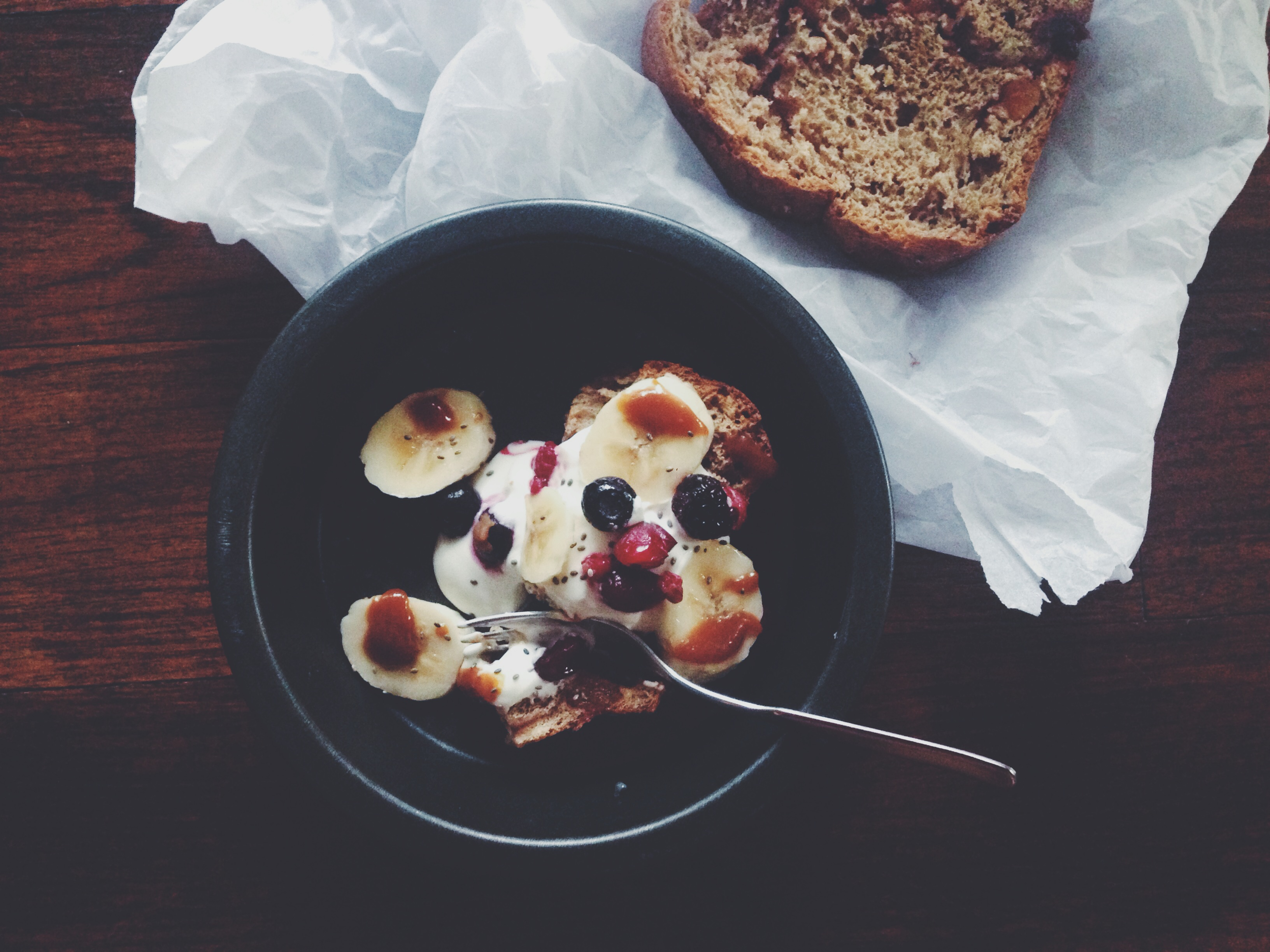
It’s filling, nourishing, chock-full of antioxidants and vitamins. Creamy yet sharp, pseudo-lush yet clearly one of the most healthy things you can have in the morning. This would traditionally be called a smoothie/slushy/ice-cream variant, but I label it a pudding because that’s the word that jumped at me the moment I dug my spoon in the bowl the next morning. Thick, not quite the full-on pudding consistency, but still more pudding-like to me than anything. The chia seeds voluminised the entire body of fruit, so it almost seemed aerated. There are 2 options for this recipe: blend it all in the morning, or blend most the night before, mix in the chia and let sit in the fridge overnight. The second yields a more liquidy, pudding-like result, whilst the former is like ice cream’s sister. Outrageous.

Frozen berry pudding (for 1)

one cup frozen mixed berries

half frozen banana (you can pop in the chopped up banana in the freezer earlier in the day)

40ml milk of choice (I used my mum’s ridiculously thick and creamy almond milk)

pinch of salt

one teaspoon maca/acai/vanilla/cacao powder (optional)

one tablespoon chia seeds

Toppings: nut butters, sliced banana, honey, whatever your heart desires

Option 1: Blend everything except the toppings in a blender (I used a Vitamix) and serve yourself some morning ice-cream!

Option 2: Blend the first 5 ingredients in a blender, then dish out into a bowl. Mix the chia seeds throughly into the thick and cold mixture. The next morning, take the mix out of your fridge and top with whatever you like.